Painting brick in Atlanta calls for a breathable masonry paint over clean, dry, repaired brick, so moisture can escape instead of blistering the coating. Limewash is the alternative: a mineral finish that soaks into the brick, softens its color and wears gradually rather than peeling. We wash the brick, repair mortar where needed, test on a hidden patch and put up samples before any finish goes on.
Updated September 2026
Paint, limewash or leave it natural
Brick does not need paint to last, so painting it is a design choice with a maintenance cost. Painted brick looks crisp and modern and can be any color, but it needs repainting on a cycle like siding. Limewash gives a softer, aged look, is breathable and wears gracefully, but it is limited to whites and pale tints and can be washed back if it goes on too heavily.
Whatever the finish, brick has to be clean and dry, efflorescence (white salt deposits) has to be removed, and cracked mortar has to be repointed. Masonry holds moisture, so we give it more dry time after washing than a painted wood wall.
What changes the cost of brick painting or limewash
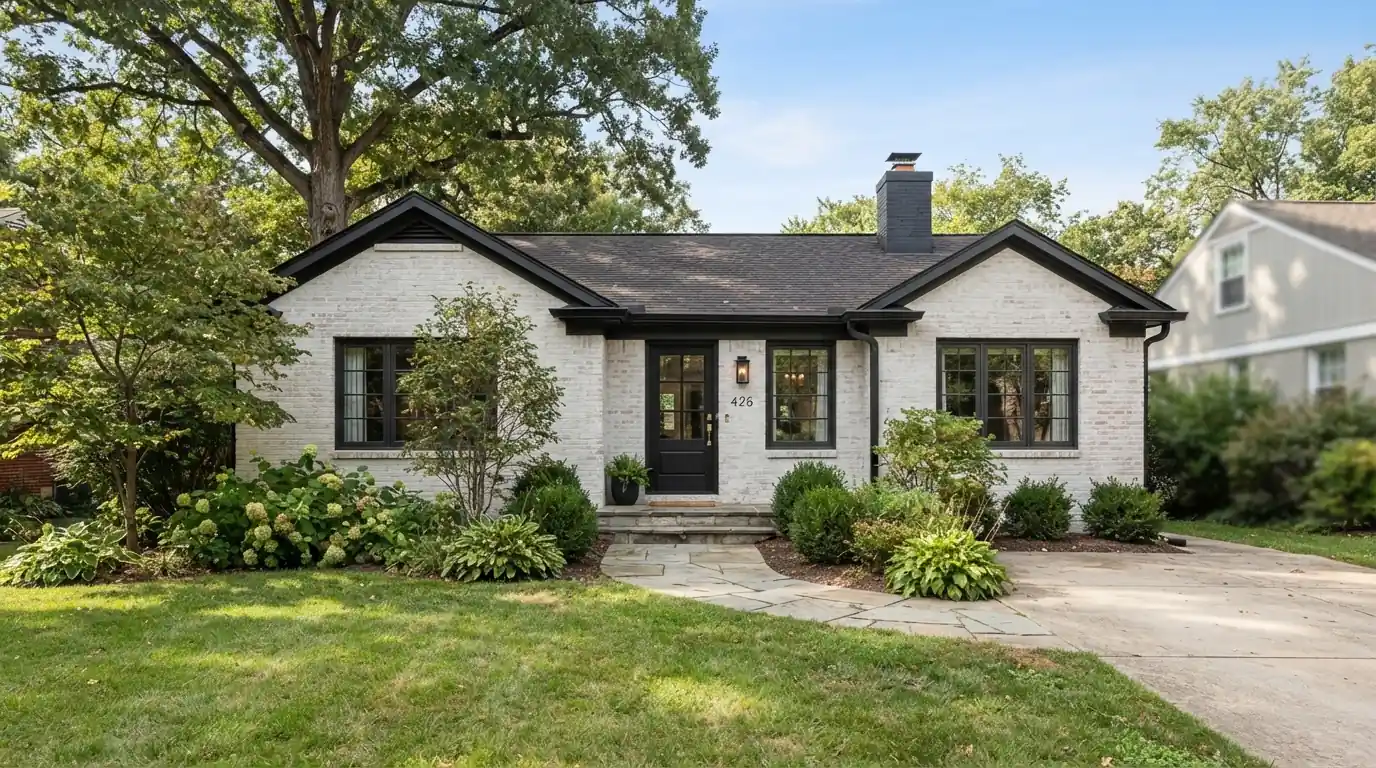
Brick is priced by wall area and finish, with mortar condition as the hidden variable.
- Wall area. Square footage of brick in scope, including chimneys.
- Finish type. Paint, limewash, whitewash and German smear take different labor.
- Mortar repair. Repointing cracked or missing mortar before any finish.
- Efflorescence. Removing salt deposits before coating.
- Brick texture. Rough or deeply textured brick uses more material.
- Height and access. Chimneys and two-story walls need ladders or lifts.
- Trim. Painting window trim and doors at the same time.
Brick finishes side by side
| Factor | Masonry paint | Limewash |
|---|---|---|
| Look | Solid, even color | Soft, mottled, brick shows through |
| Colors | Any color | Whites and pale tints |
| Aging | Repaint on a cycle | Wears gradually, refresh with a coat |
| Reversible | Only by stripping | Partly, while fresh |
| Works on painted brick | Yes | No |
Painted brick
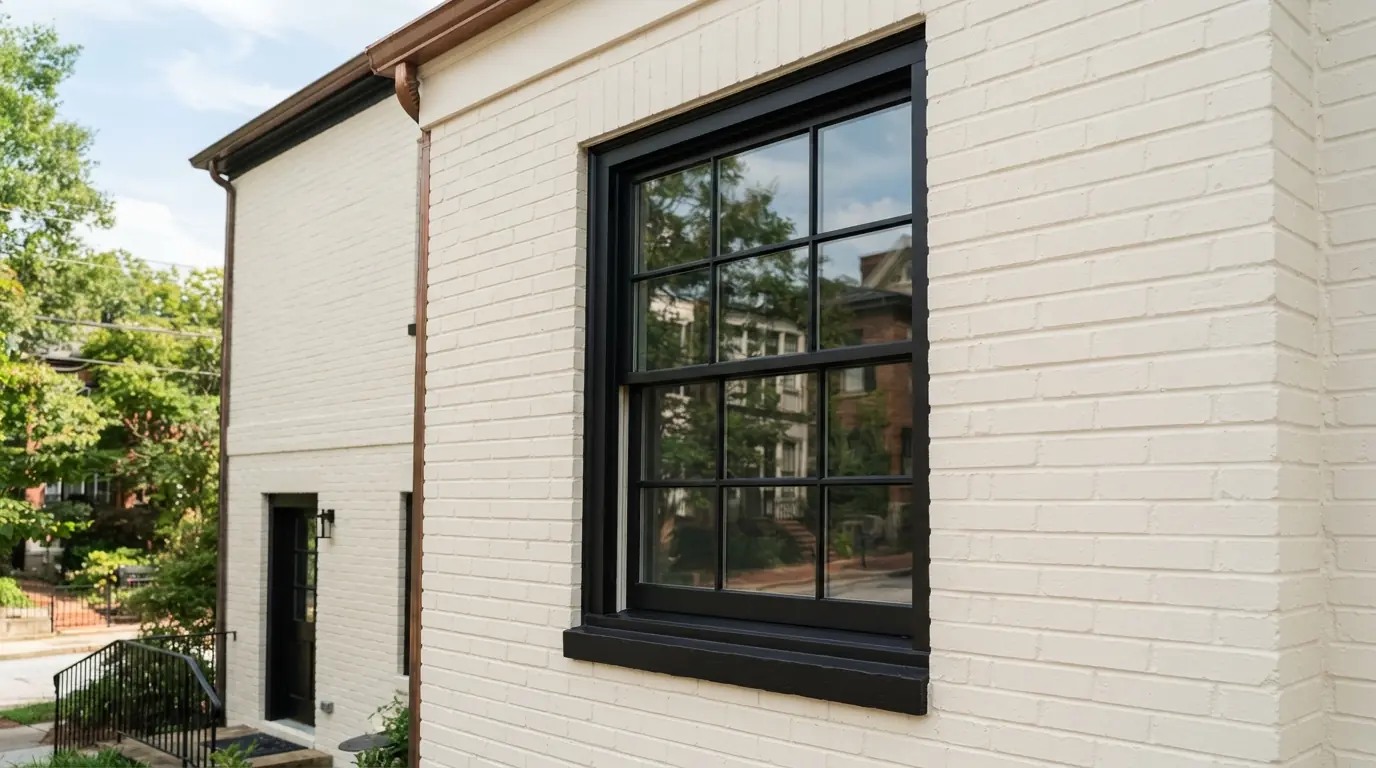
Painted brick uses a breathable acrylic masonry paint, sometimes with a masonry primer on porous or patched areas. The brick is washed, efflorescence is removed, loose mortar is repointed and the wall dries fully. Paint is sprayed and back-rolled so it reaches the mortar joints, then a second coat follows. Solid white and warm white are popular, as are greige and deep charcoal on ranch houses. Once brick is painted, going back to natural requires chemical stripping, so we always put up a sample first.
Limewash finish
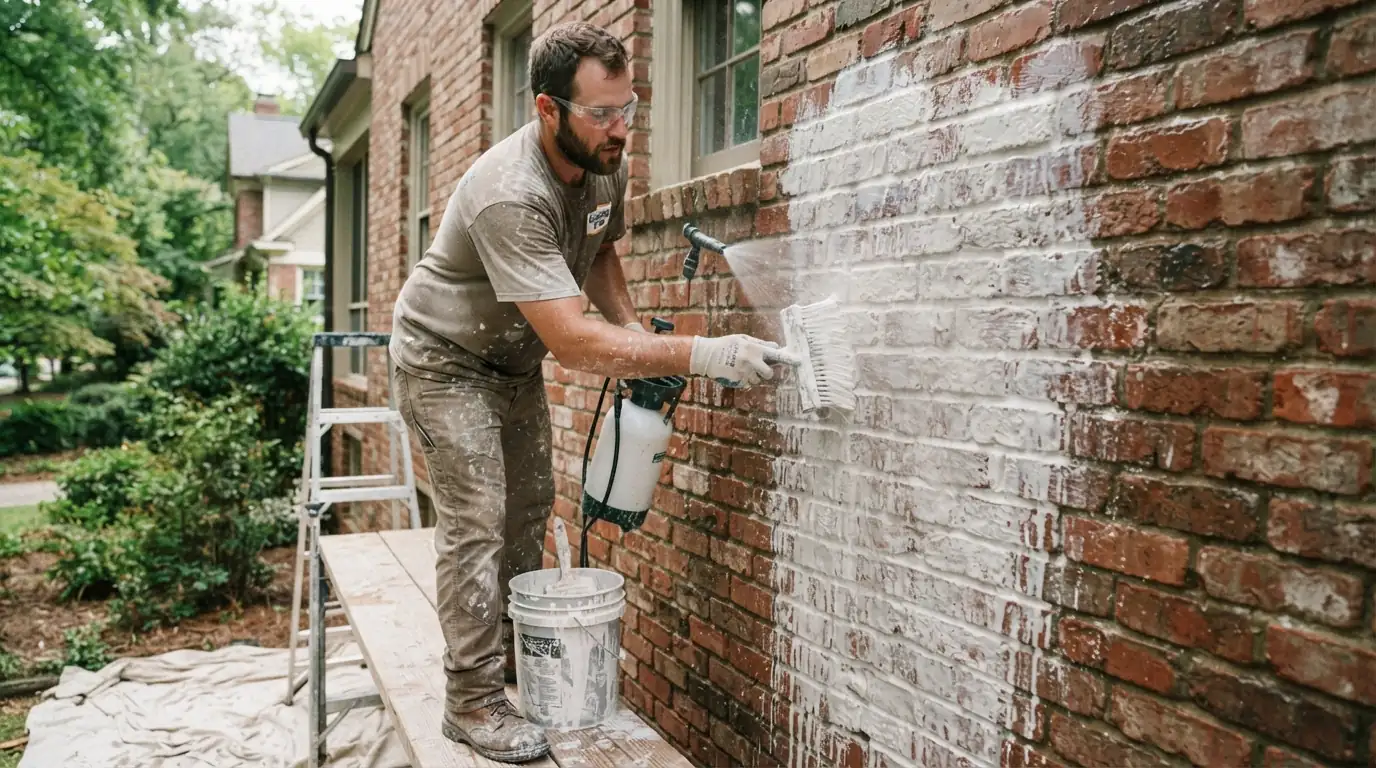
Limewash is made from slaked lime and water, often with mineral pigments. It soaks into the brick instead of forming a film, so it cannot peel. We wet the brick, apply the limewash with large brushes and, while it is still wet, wash some of it back with a sprayer to let brick color show through as much as you want. The look ranges from a light veil to near-solid white. Limewash wears slowly with weather and can be refreshed with another coat. It suits unpainted, porous brick only; it will not bond to painted or sealed brick.
Whitewash and German smear
Whitewash is a thinned paint or masonry stain that tints brick while leaving texture visible, and it is more permanent than limewash. German smear is a mortar wash spread over the brick and partly knocked back, leaving some brick faces covered and others exposed for an old-world, cottage look. German smear is essentially permanent and changes the texture of the wall, so we build a sample panel before starting. Both finishes suit fireplaces and interior brick walls as well as exteriors, with dust protection indoors.
What we see on Atlanta homes
Brick homes are a large part of the housing here, from the four-sides brick houses in Sandy Springs and Brookhaven to the brick ranches built in Ormewood Park in the late 1950s and early 1960s. Owners of those ranches often want a lighter, more current look without residing, and limewash or a breathable paint does that. Before either, we check that the mortar is sound and that the brick has not been sealed, because sealed brick will not take limewash.
How a brick finish goes on
- 1
Test and sample
Hidden-patch test and sample panels for approval.
- 2
Wash
Brick cleaned; efflorescence removed.
- 3
Repair mortar
Cracked joints repointed and left to cure.
- 4
Dry
Extra dry time so moisture is out of the brick.
- 5
Protect
Windows, trim, plants and walkways covered.
- 6
Apply
Paint sprayed and back-rolled, or limewash brushed and washed back.
- 7
Final walk
Every wall checked with you in daylight.
Questions about brick painting and limewash in Atlanta
Not if a breathable masonry coating is used on clean, dry, sound brick. Film paints that trap moisture are the problem.
No. Limewash has to soak into bare, unsealed brick.
It wears gradually and can be refreshed with another coat when it thins.
Only with chemical stripping, which is slow and costly. That is why we sample first.
Yes. Cracked or missing mortar is repointed before any finish goes on.
Yes. See our stucco and EIFS page for those walls.