By Conrad Redmond, Painting Guides Editor. Updated September 2026
The most reliable months to paint a house exterior in Atlanta are April to June and September to November. July and August bring afternoon thunderstorms and high humidity that slow how acrylic paint cures, and late March through April brings a pollen season that coats siding. After washing, siding needs about 48 hours to dry before primer.
The two painting windows
Atlanta has a humid subtropical climate: hot, wet summers with afternoon thunderstorms, mild winters with the occasional cold snap or freezing rain, and long, comfortable springs and falls. Published local guidance names April to June and September to November as the best windows for exterior painting.
In those months, days are warm enough for acrylic paint to cure, nights stay above the minimums on the can, and the air dries out between rains. October in particular tends to be one of the driest and most comfortable months of the year.
Why summer is harder than it looks
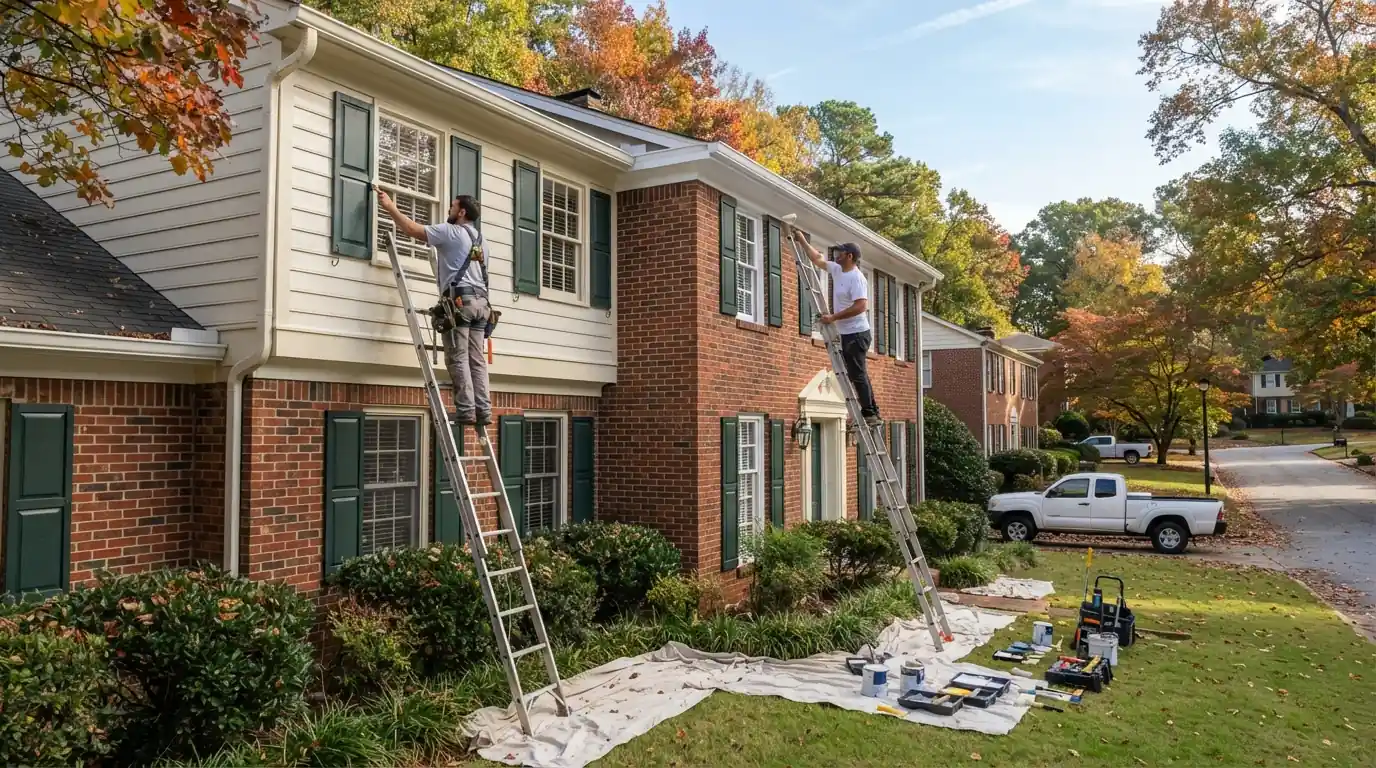
Summer looks like painting weather, but two things work against it. Humidity slows the cure of latex paint, so a coat that should be dry by evening stays soft overnight. And afternoon thunderstorms can hit fresh paint before it has skinned over, leaving streaks and wash-off on the siding.
Painters who work through summer adjust by starting early, painting the shaded sides of the house in the afternoon and watching the radar. It can be done. It just leaves less margin than the spring and fall windows.
Want a spot in the next painting window? Call now and we will plan the scope and colors before the dry weeks arrive.
Call (470) 741-8134Pollen season and the wash
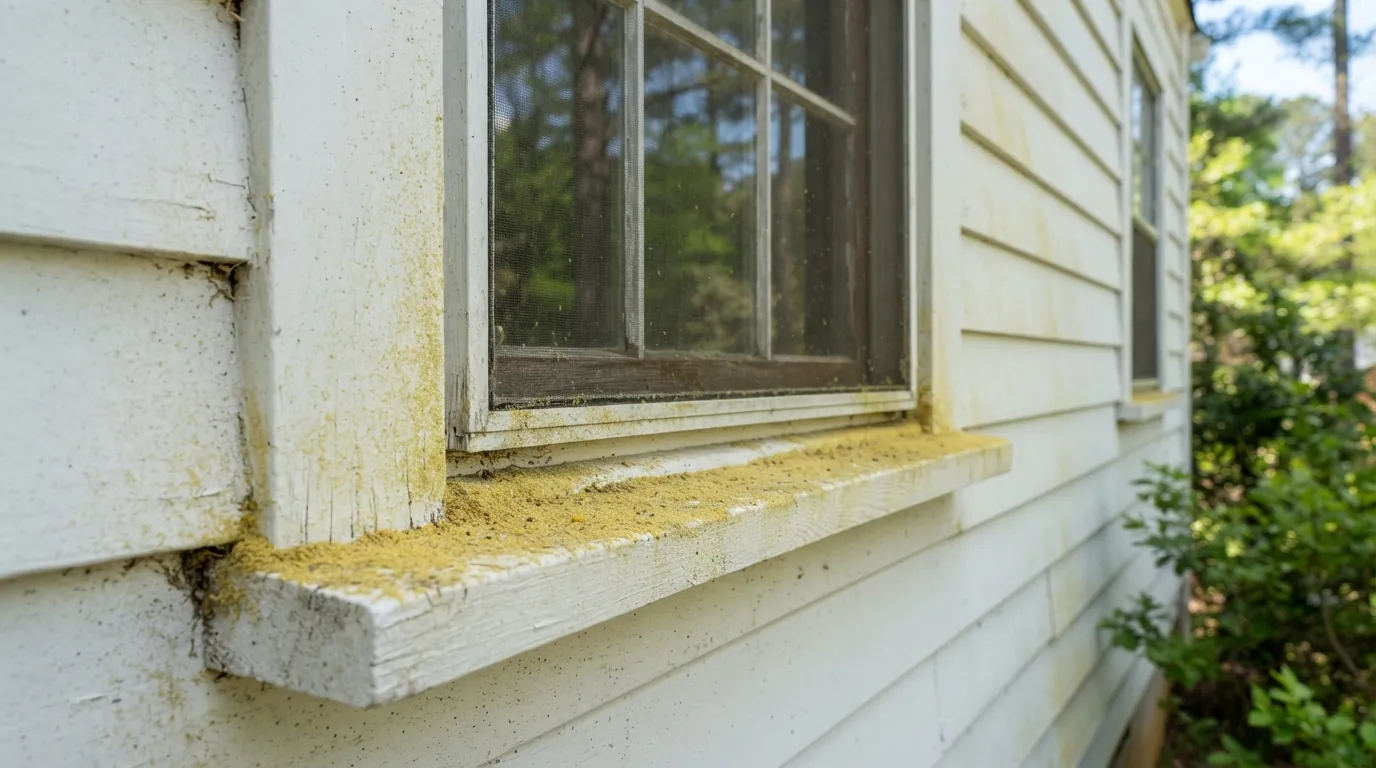
Pine and oak pollen coats every outdoor surface from late March through April, leaving a yellow-green film on siding, decks and windows. Paint applied over that film does not bond; it peels in patches that show exactly where the pollen was.
That is why the wash comes first. Siding is cleaned with a mildew cleaner and rinsed at low pressure, then left to dry about two days before primer. Read more in our guide to painting during pollen season.
What the paint label and the weather both need
Every exterior paint lists a minimum surface and air temperature on the label, and many modern acrylics are rated for cooler application than older paints. The label is only half of it. The surface also has to stay above the dew point long enough for the film to form, and rain has to hold off until the paint has skinned over.
When those conditions are missed, the failures are recognizable. Tan or brown streaks running down fresh paint are surfactants leaching out after dew or a light rain hit it too early; they usually wash off but look alarming. Blistering on sunny walls points to moisture trapped under the film. Mildew returning within months usually means the wash was skipped or the siding never fully dried.
- Check the forecast for the day of painting and the night after.
- Paint sunny walls after the morning dew has dried and before late-afternoon storms.
- Leave two dry days after a wash before primer.
- Stop early enough that the last coat skins over before evening dew.
Winter painting
Atlanta winters are short, and many days are mild enough to paint. The limit is nighttime temperature and dew: a warm afternoon can be followed by a cold, wet night that leaves the surface damp before the paint has cured.
Winter works best for smaller jobs that can be finished in a warm midday window, such as a front door, a set of shutters or touch-ups. Whole-house exteriors are usually better scheduled for spring.
How to plan around the calendar
Good painting windows book up, so call ahead of them. If you want an exterior done in April or May, a walk-through in late winter gives time to plan the scope, pick colors on sample boards and fix rot before the first dry week.
Interior work, cabinets and many commercial jobs run year-round, so summer is a good time to book the inside of the house and leave the exterior for the fall.
- Late winter: walk-through, scope, colors, rot repair plan.
- April to June: exterior painting window, after the pollen wash.
- July and August: interiors, cabinets, early-morning exterior touch-ups.
- September to November: second exterior window, decks and fences.
Questions readers ask
April to June and September to November; October is often the most reliable.
Yes, with early starts and shaded sides in the afternoon, but humidity and storms leave less margin.
About two dry days, so the siding and any bare wood are dry before primer.
Many days are warm enough, but cold, damp nights can prevent curing; small jobs work best.
Yes. Decks and fences need the same dry stretches after cleaning.