Removing wallpaper in an Atlanta home takes a day per room on average: the vinyl face is peeled dry, the paper backing is soaked and scraped, the paste is washed off, and any torn drywall paper is sealed and skim coated before primer. Painting over wallpaper is not something we do because the seams and paste telegraph through within months.
Updated September 2026
Why wallpaper removal is mostly drywall work
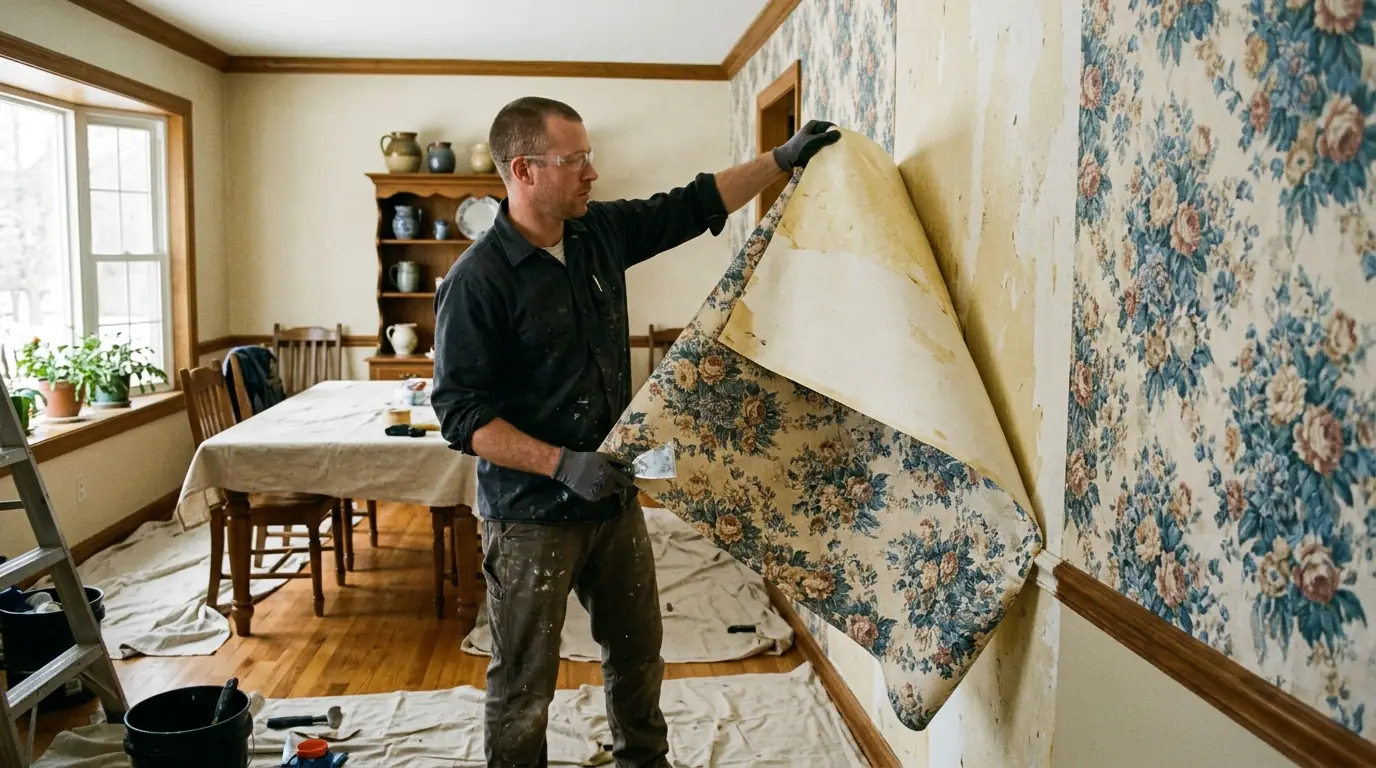
The paper itself is the easy part. Vinyl faces peel off in sheets and the backing comes away with a steamer or an enzyme stripper. What decides how the room looks afterward is the wall underneath: whether the builder primed it before the paper went up, how many layers are stacked, and how much paste is still on the surface.
Unprimed drywall from the 1980s and 1990s gives up its own paper face when the backing is pulled. Those torn spots have to be sealed with an oil or shellac primer, or they bubble under the first coat of paint. Then the whole wall gets a thin skim of joint compound, sanded and primed, so the new paint sits on a surface that reads as one plane instead of a patchwork.
We quote after pulling a test patch in the room, since layer count and how the drywall behaves are what the price depends on.
What decides the cost of taking wallpaper down
Removal is quoted per room after a test patch, and the paint that follows uses the same interior ranges as any repaint.
Planning range from published Atlanta figures: $2 to $6 per square foot; average $2,021, most projects $964 to $3,079; prep such as drywall repair, sanding or wallpaper removal adds $0.50 to $3 per square foot. That is a market range, not our quote; the factors below move a real price up or down.
- Layer count. Paper hung over paper doubles the stripping time.
- Paper type. Strippable vinyl is fastest; old pasted paper and foil papers are the slowest.
- Was the wall primed? Unprimed drywall tears and needs sealing plus a heavier skim.
- Room size and height. Stairwells and two-story foyers need scaffolding to reach the paper.
- Paste residue. Heavy paste means more washing and a second skim coat.
- Trim and fixtures. Rooms with a lot of casework and outlets take longer to work around.
- Paint scope after. Walls only, or walls plus ceiling and trim, changes the finish price.
Strippable and vinyl wallpaper
Modern strippable paper and vinyl-faced paper are the best case. The face comes off dry, the backing releases with warm water and a little stripper, and the paste washes off with a sponge and clean water changed often. In a room where the walls were primed before hanging, the drywall stays intact and the skim coat is light. Older papers from the 1970s and 1980s are usually not strippable and need steaming, and layered paper, where someone hung new paper over old, has to come off one layer at a time. The test patch on the walk-through tells us which case you have.
Skim coating after removal
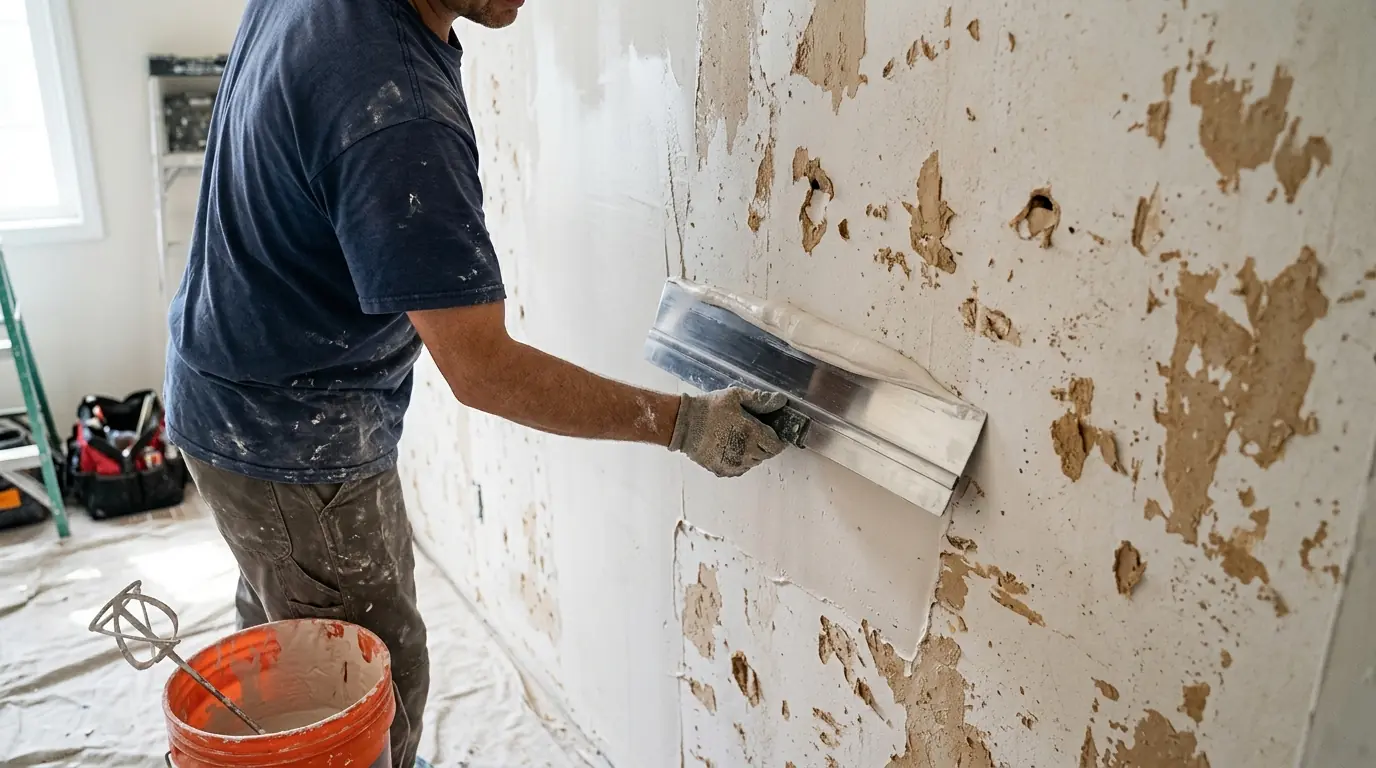
Almost every stripped wall needs a skim coat. Paste residue, small gouges from the scraper and torn drywall paper all show through paint. We seal torn paper with a stain-blocking primer so it cannot bubble, then float a thin coat of joint compound across the full wall with a wide knife, let it dry, sand it smooth and prime again. Two skim coats are common on walls that were never primed. This step is what separates a wall that looks repainted from a wall that looks like it used to have wallpaper on it, and it is included in every removal quote we write.
Wallpaper border removal
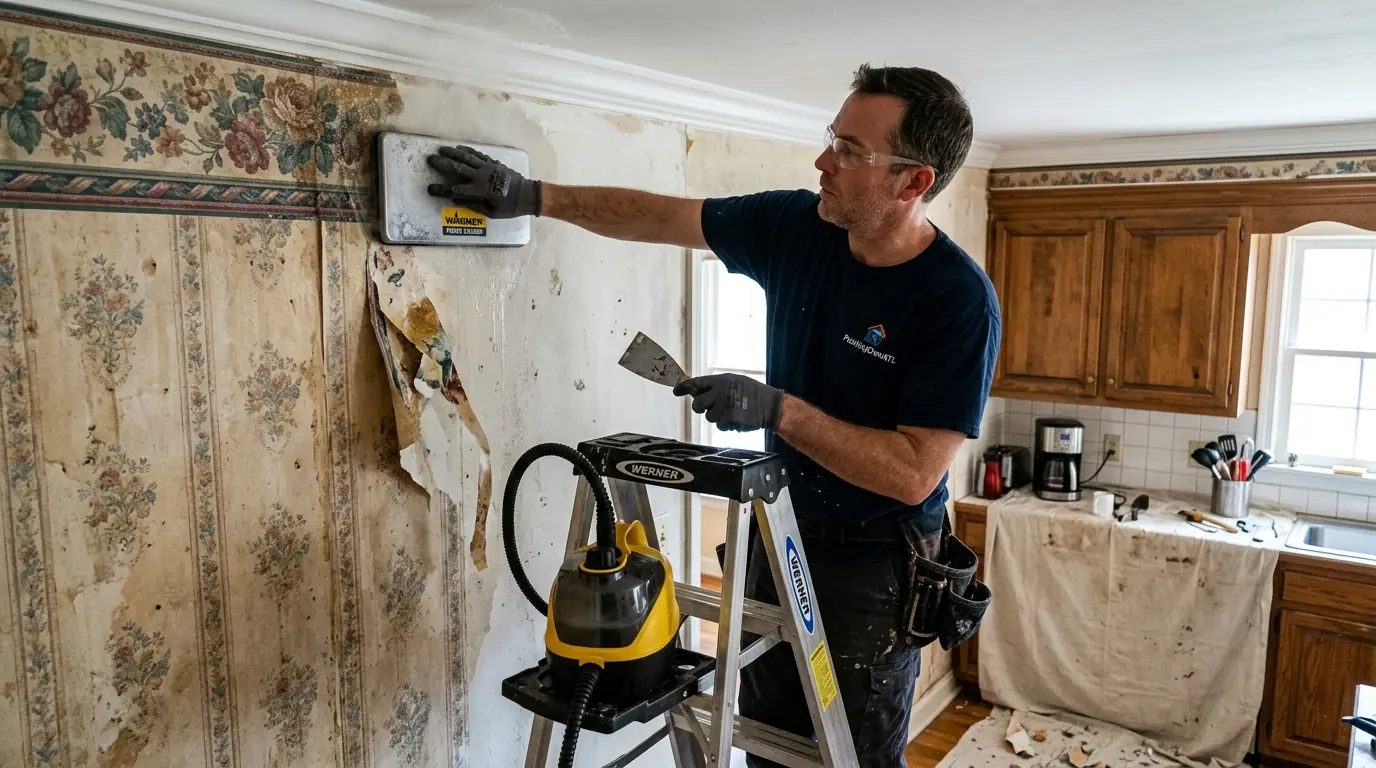
Borders around the top of a bedroom or a kitchen are small in area and stubborn in practice, because they are usually vinyl glued with heavy paste over paint. Scoring, steaming and scraping a border takes an hour or two per room, and the strip of wall under it ends up a slightly different texture from the rest. We remove the border, wash the paste, skim that band so it disappears, then repaint the whole wall rather than just the strip, since a touch-up band across the top of a wall always shows in raking light.
Doing it yourself versus calling us
Worth trying yourself
- One small room of modern strippable paper over primed walls
- A single border in a bedroom, if you are patient with a steamer
- Pulling the vinyl face dry to see what you are dealing with
Worth handing off
- Any paper over unprimed drywall, which tears and needs sealing and skim work
- Stairwells, foyers and rooms over 9 feet
- Multiple layers or old pasted paper from before the 1990s
- Any room where you want the result to look like it never had paper
The honest split: stripping is tedious but learnable, skim coating a whole wall flat is a trade skill. Most DIY wallpaper jobs stall at the skim step.
What we see on Atlanta homes
Atlanta's older interiors are slower work than a new build, with detailed trim and plaster in the intown houses and multiple decorating cycles in the 1960s through 1980s homes, and wallpaper is part of that. Homes from those decades carry the same era's popcorn ceilings, so a wallpaper job in a dining room often turns into a ceiling conversation as well. We price the removal after a test patch rather than by the square foot, because two rooms of the same size can differ by a full day depending on whether the builder primed the drywall.
How long wallpaper removal takes in an Atlanta home
Plan three days per room from first scrape to last coat, with drying time between skim and primer. A dining room and a hallway together usually run four to five days. We overlap rooms so the house is not tied up longer than it needs to be.
How a wallpaper room goes from paper to paint
- 1
Test patch
We pull a small section on the walk-through to see the layers and how the drywall holds up.
- 2
Protect the room
Floors covered, outlets taped, furniture moved to the center under plastic.
- 3
Dry strip the face
Vinyl faces are peeled from a bottom corner in full sheets.
- 4
Soak and scrape the backing
Warm water or enzyme stripper, then a wide scraper held flat to avoid gouging.
- 5
Wash the paste
Clean water, changed often, until the wall no longer feels tacky when dry.
- 6
Seal and skim
Torn paper sealed with stain-blocking primer, then one or two skim coats, sanded.
- 7
Prime and paint
Full prime, then two finish coats in the sheen you chose.
Questions about wallpaper removal in Atlanta
We do not. Seams and paste texture show through paint within a season, and paint locks the paper on so the next removal is worse.
Usually a day to strip and wash, a day to skim and prime, and a day for paint.
On unprimed walls it tears the drywall's paper face in spots. That is expected, and the sealing and skim steps repair it before paint.
Bathroom paper is usually vinyl over unprimed drywall. It strips well, but the walls need a mold-resistant primer before paint.
Yes, though we repaint the full wall afterward so the band under the old border does not show as a different texture.
Stripping is wet work with little dust. Skim sanding is dust, so we use vacuum sanders and seal the doorway.