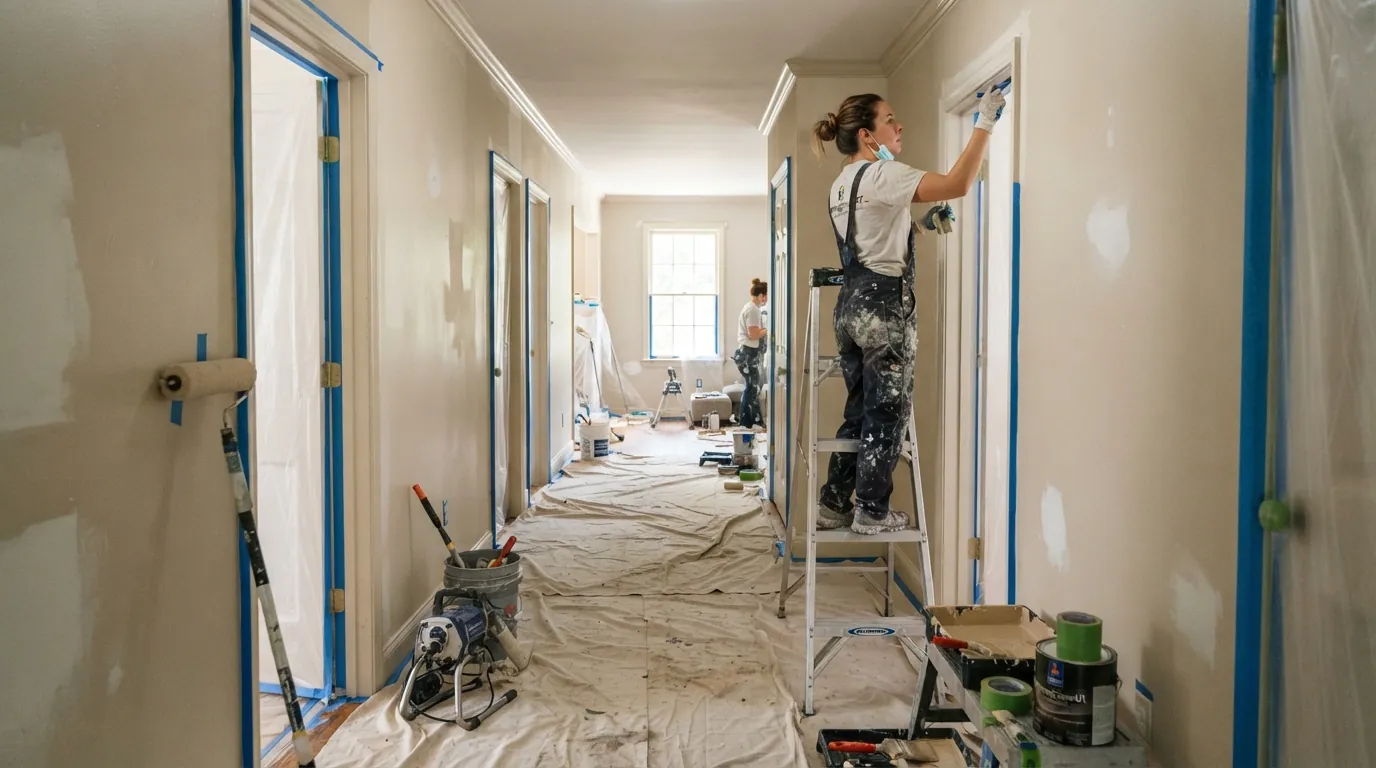
New construction painting in the Atlanta area starts with a drywall primer that seals fresh mud and paper evenly, then walls and ceilings are sprayed and back-rolled, trim and doors are finished in enamel, and touch-ups are done after flooring and fixtures go in. The work is scheduled around the builder's sequence so other trades are never waiting on paint.
Updated September 2026
How new construction differs from a repaint
New drywall and bare trim soak up paint unevenly. Joint compound absorbs differently from the paper face of the board, and without a proper primer the seams flash through the finish coat as dull stripes. Primer is not optional on new work.
The other difference is timing. Painting has to fit between drywall finishing and flooring, fixtures and final trim, and it usually comes back for touch-ups after the other trades have been through. We agree the sequence with the builder or homeowner up front so painting helps the schedule rather than holding it up.
What a new construction scope includes
- Plan review and schedule
- Drywall primer on all new walls
- Defect check under work lights
- Ceiling finish coats
- Wall finish coats
- Trim caulking and nail fill
- Trim and door enamel
- Protection for other trades
- Punch-list touch-up visit
What drives the cost of new construction painting
New construction is priced from plans or a walk-through, by area, surfaces and schedule.
- Square footage. Wall and ceiling area from plans or measurements.
- Number of colors. Builder standard colors are quicker than room-by-room selections.
- Trim and doors. Linear feet of trim and the number of doors.
- Ceiling height. Two-story foyers and vaulted rooms need lifts or scaffolding.
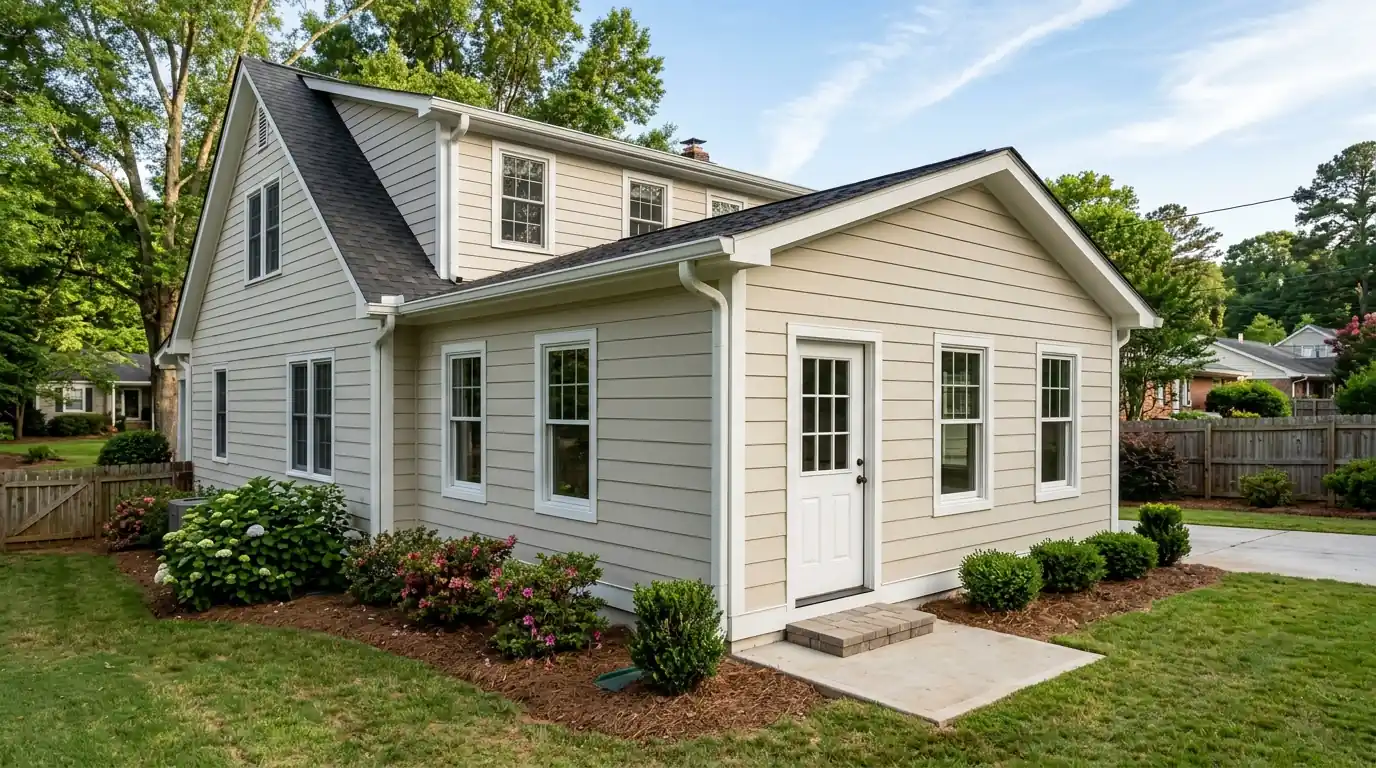
- Exterior scope. Siding, trim and doors painted on new exteriors.
- Schedule. Return trips for touch-ups after other trades.
- Matching existing work. Color matching and blending on additions.
New drywall prime and paint
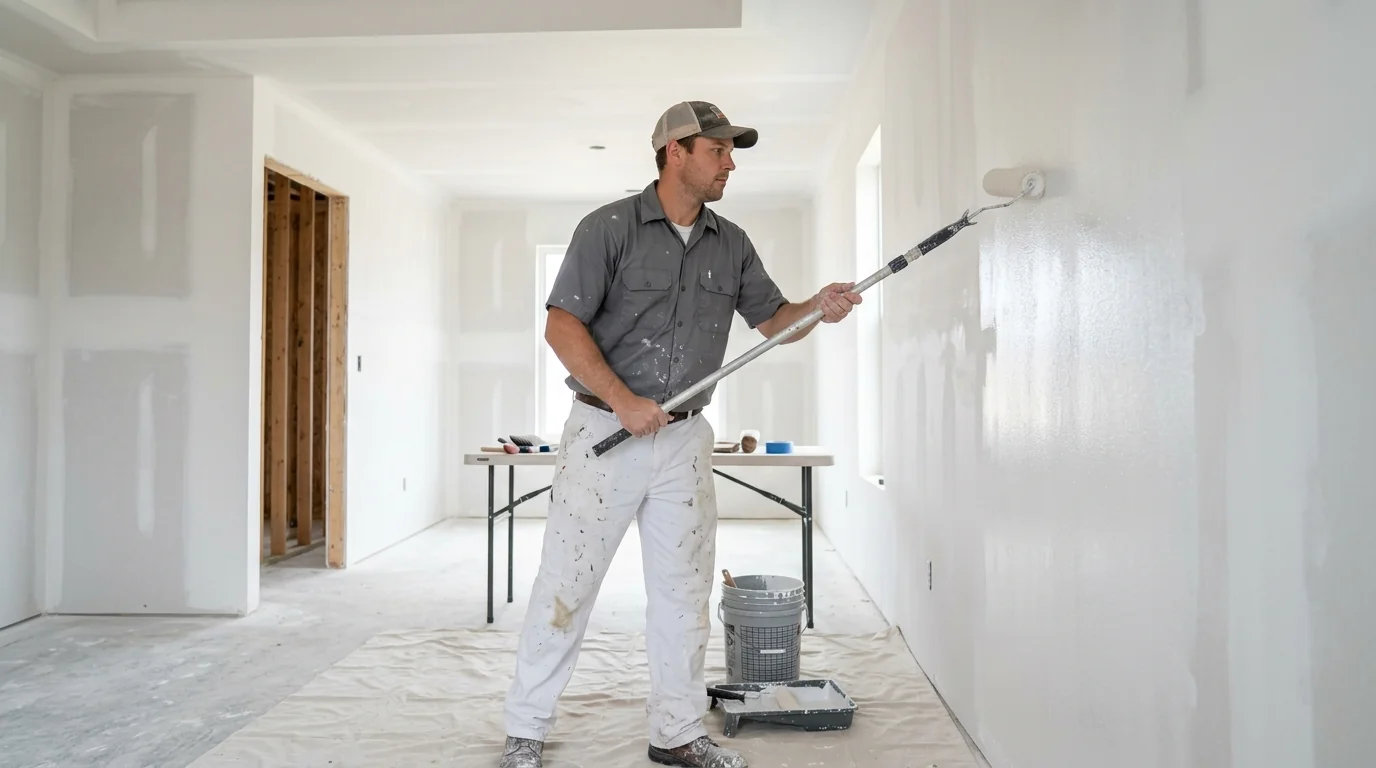
New drywall gets a drywall primer sprayed and back-rolled so seams and paper absorb evenly. After priming, we check the walls under a work light and flag any finishing defects for the drywall crew before color goes on. Ceilings get a flat ceiling finish; walls get the builder's standard or the homeowner's chosen colors, sprayed and back-rolled for even texture. Empty houses are where spraying is fastest and most even, so this stage is scheduled before cabinets and flooring when possible.
Trim and door packages
Baseboards, casings, crown and doors are caulked at every joint, nail holes are filled, and the trim is primed and finished in a semi-gloss or satin enamel. Doors are often sprayed before hanging, which gives a smoother finish in less time. Where trim goes in after flooring, we protect the floors with paper and tape and finish the trim in place. Stained trim packages are sealed and clear coated instead of painted. Closet shelving, stair parts and built-ins are included in the package when they are part of the build, so nothing is left raw at move-in.
Additions and remodels
Additions and remodels mix new work with existing rooms, so colors and sheens have to match what is already there. We sample the existing paint for a color match, prime all new drywall and trim, and paint the new space so it blends with the old. Where a remodel opens into existing rooms, the adjoining walls are usually repainted corner to corner so the line between old and new disappears. We leave labeled leftover paint for each new room so future touch-ups match.
What we see on Atlanta homes
A lot of the new work around the metro is infill and additions in established areas. Along the East Cobb and Marietta corridor, newer infill sits beside 1970s to 1990s subdivisions, so an addition on one of those houses usually means matching a new room to older paint and trim. We sample the existing finishes first and plan the colors so the new space reads as part of the original house.
How we fit paint into a build
- 1
Review plans and schedule
Scope and sequence agreed with the builder or homeowner.
- 2
Prime
Drywall primer sprayed and back-rolled.
- 3
Defect check
Walls checked under light; drywall issues flagged.
- 4
Ceilings and walls
Finish coats sprayed and back-rolled.
- 5
Trim and doors
Caulked, filled, primed and enameled.
- 6
Protect
Finished surfaces protected for other trades.
- 7
Touch-up and final
Punch-list touch-ups after flooring and fixtures.
Questions about new construction painting in Atlanta
Yes, and for homeowners managing their own additions and remodels.
Yes. Without it, seams flash through the finish as dull stripes.
Both: walls and ceilings are sprayed and back-rolled for an even finish.
Yes. We sample the existing paint and match color and sheen.
Yes. A punch-list visit after flooring and fixtures is part of the scope.
Yes. See our exterior house painting page for siding and trim.