Siding rot repair in Atlanta means finding every soft board with a probe, cutting out the rotted trim, fascia, sills or hardboard panels, and replacing them with matching profiles before any paint goes on. New wood is primed on all six sides, joints are sealed, and flashing is corrected where water got in, so the same spot does not rot again under fresh paint.
Updated September 2026
Signs of rot behind the paint
- Bubbled paint Blisters on trim or siding, especially at joints and bottom edges.
- Swollen edges Hardboard bottom edges that have thickened or flared.
- Soft sills A window sill that gives under a thumb or probe.
- Open corner joints Gaps opening where corner boards meet siding.
- Stains below gutters Dark streaks on fascia and trim under overflowing gutters.
Why rot repair comes before painting
Water gets into wood at joints, at the bottom edges of boards and anywhere caulk has cracked. Once inside, it softens the wood from the core outward. From the street the paint may just look a little bubbled, while a screwdriver goes straight through the board behind it.
Painting over rot seals the moisture in and the new coat peels within a year. So every exterior job we quote starts with a probe along every elevation, and the carpentry is written up as its own line. Many calls we get are rot first and paint second: a sill that crumbled, a fascia board that fell, a corner board that opened up.
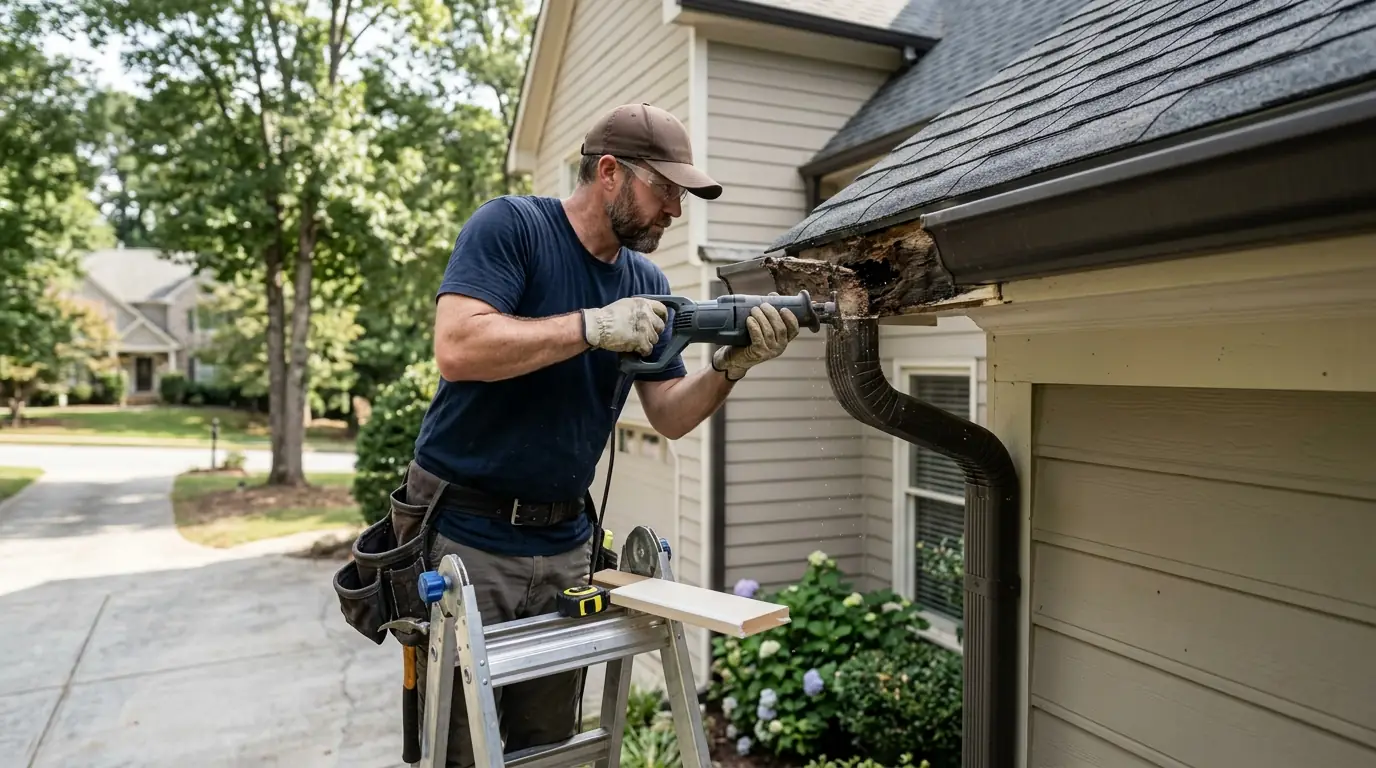
Rotted trim and fascia replacement
Fascia boards behind gutters and the trim at roof edges rot where gutters overflow or roof drip edge is missing. We remove the gutter where needed, cut out the rotted section back to sound wood, and install new boards with the joints scarfed rather than butted, so they shed water. New wood is primed on every face before it goes up. Where the rot came from an overflowing gutter or missing drip edge, we point it out so the cause gets fixed and the new trim does not go the same way.
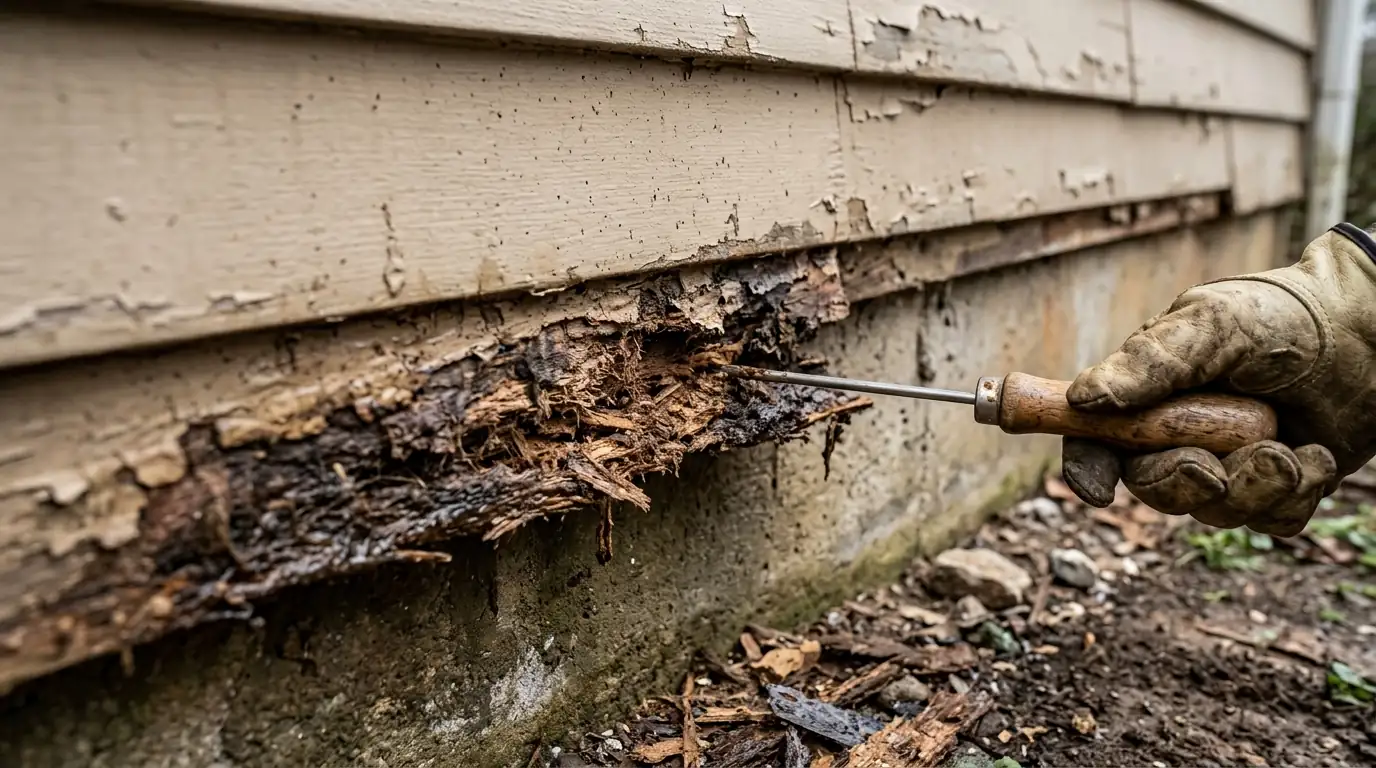
Hardboard panel replacement
Hardboard siding swells, softens and crumbles along the bottom edges once water gets past its surface coating. Damaged panels are removed, the house wrap behind is checked and patched, and new panels or matching fiber cement boards are installed with sealed cut edges and proper spacing above grade and roofs. Where only a few courses are bad, we replace those; where failure is spread across a wall, we will tell you honestly that a larger re-side may cost less than repeated repairs.
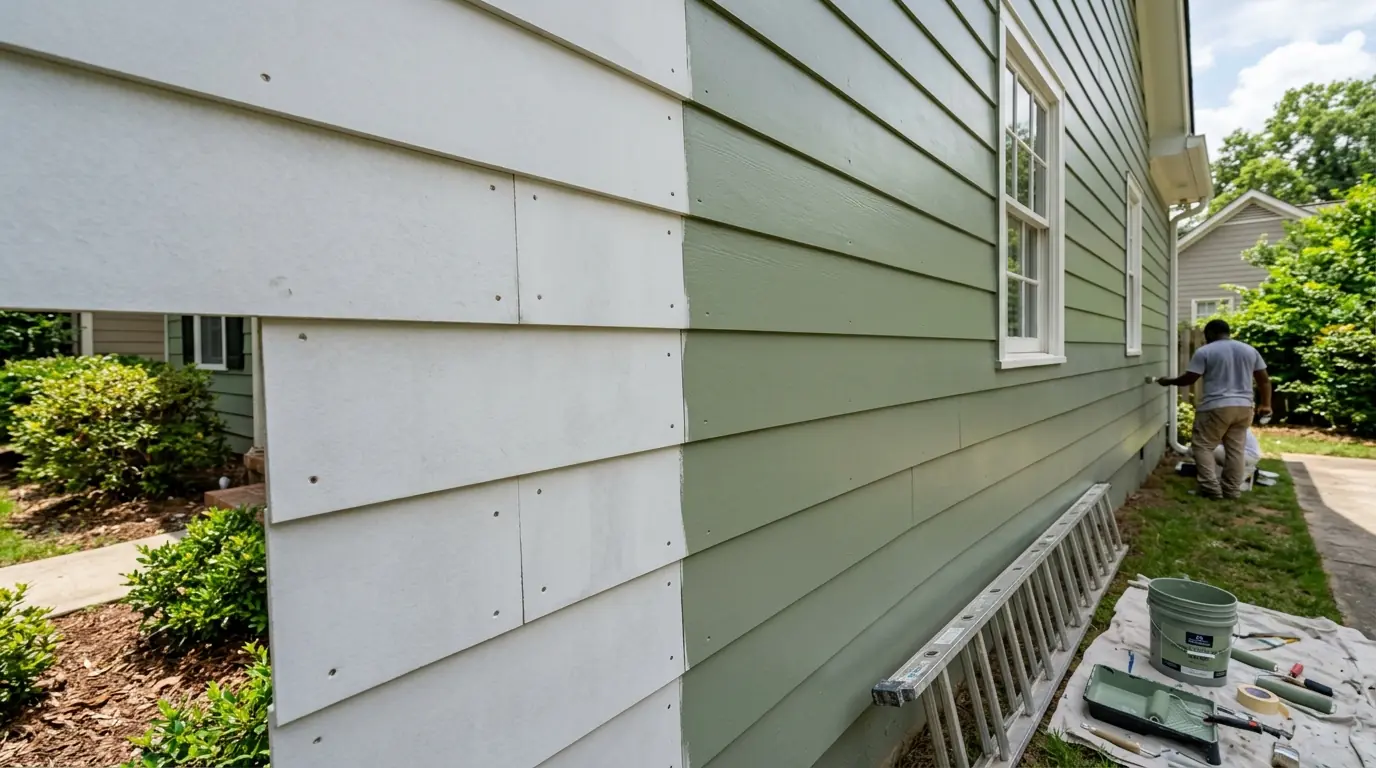
Window sill and corner board repair
Window sills and corner boards trap water at their joints. Soft sill noses are cut out and rebuilt with new wood or a two-part epoxy filler that is shaped and sanded to the original profile. Corner boards that have rotted at the bottom are replaced from the ground up with a gap left above the soil or slab. Every repaired joint is caulked with a paintable sealant and primed. Epoxy suits small, localized rot in decorative trim; replacement suits boards where the rot runs deep.
How we find and fix rot
- 1
Probe every elevation
Each wall, sill and trim board checked with a probe, starting with wet and sunny sides.
- 2
Document
Photos and a list of every board to replace, with the likely cause.
- 3
Cut out
Rotted wood removed back to sound material.
- 4
Check behind
House wrap, sheathing and flashing inspected and patched.
- 5
Replace
New boards or panels installed with sealed edges and correct gaps.
- 6
Prime and seal
Six-side priming, joints caulked.
- 7
Paint
Repairs painted to match, or the whole elevation repainted.
What we see on Atlanta homes
Hardboard is the reason most of our rot calls happen. The 1990s and 2000s subdivisions in Dacula and Suwanee were built with builder-grade hardboard that delaminates from the inside once water gets in, and on older homes in Peachtree Corners, south and west exposures break the paint down faster than the shaded sides. We probe the sunny and wet elevations first on those houses, because that is where panels usually fail before the rest of the wall.
Repair the boards or re-side the wall
| Factor | Targeted repair | Re-side the wall |
|---|---|---|
| Best when | Rot is in scattered boards, sills and trim | Failure is spread across most of a wall |
| Cost | Lower up front | Higher up front, fewer repeat repairs |
| Look | Blends once painted | Uniform new surface |
| Time | Usually a day or two before paint | Several days per wall |
What rot repair costs in Atlanta
Rot repair is priced by the boards and linear feet replaced, and published Atlanta figures put pre-paint carpentry on neglected homes in the thousands.
Planning range from published Atlanta figures: $2,000 to $5,000 or higher for rotting siding and trim replacement. That is a market range, not our quote; the factors below move a real price up or down.
- Extent of rot. Number of boards, panels and linear feet of trim replaced.
- Location. Second-story fascia and gable trim need ladders or lifts.
- Material. Wood, hardboard and fiber cement replacements differ in cost.
- Profiles. Custom or older trim profiles may need milling to match.
- Hidden damage. Sheathing or framing rot found behind the siding.
- Cause correction. Flashing, drip edge or grade issues that caused the rot.
- Paint scope. Priming and painting the repairs alone or the whole wall.
Questions about siding repair and rot replacement in Atlanta
Small rot in decorative trim can be epoxy-filled. Anything deeper has to be cut out, or the paint fails from underneath.
With a probe along joints, bottom edges and sills. Soft spots are marked and photographed.
We match profiles and sizes; unusual older profiles may need custom milling. Paint then blends the repair in.
We stop, show you and bring in a carpenter for structural repairs before closing up.
Only if failure is widespread. Scattered bad panels are usually repaired; a whole failing wall may be cheaper to re-side.
Repairs can be painted to match, but see our exterior house painting page if the rest of the house is due too.