Painting a porch in Atlanta means three different finishes: a porch and floor enamel that stands up to foot traffic and standing water, a flat or satin exterior paint on the ceiling, and a trim enamel on columns and railings. Rotted column bases and soft floor boards are repaired first, and the floor is painted last so it can cure before anyone walks on it.
Updated September 2026
Why porches wear out faster than the rest of the house
The porch floor is horizontal, so rain sits on it, and the boards expand and shrink with every storm and dry spell. Paint on the floor wears through along the path to the door first, then peels where water collects against the house. Columns rot at the bottom where they meet the floor, and railings lose paint on the top cap where sun and rain hit hardest.
A porch repaint starts with finding those weak spots, then works from the top down: ceiling, columns and rails, and the floor last. Each coat goes on dry wood, which is why we watch the forecast more carefully for porches than for walls.
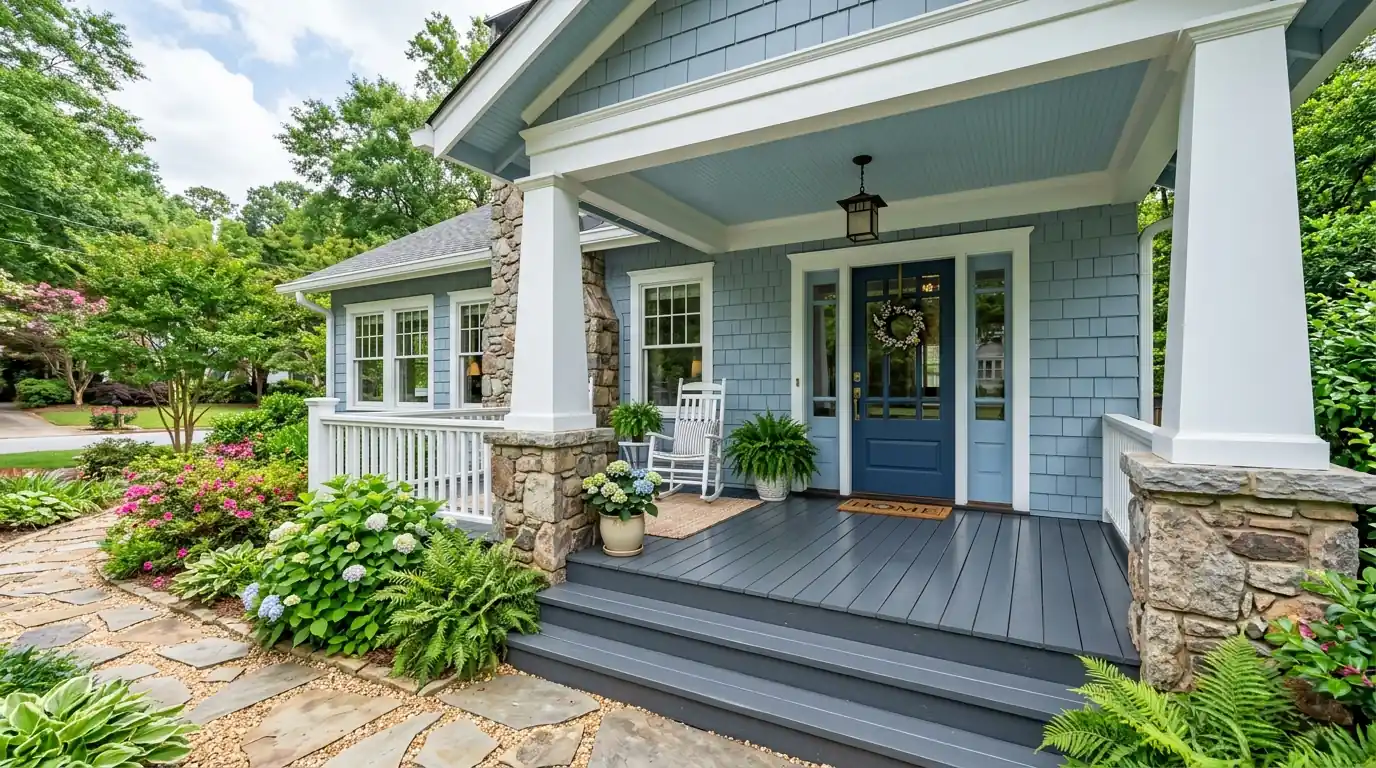
What drives the price of a porch repaint
Porches are priced by the surfaces in scope and the amount of scraping and repair each needs.
- Floor area. Square footage of porch floor and steps.
- Ceiling type. Beadboard takes more brush work than flat plywood.
- Columns and railings. The number of columns, spindles and linear feet of rail.
- Old paint. Heavy peeling and many layers mean more scraping and priming.
- Rot repair. Column bases, floor boards and rail sections replaced or filled.
- Lead-safe work. Pre-1978 homes need containment during scraping.
- Access. Wraparound porches and second-story balconies take more setup.
Floor enamel or solid stain on the porch
| Factor | Porch and floor enamel | Solid color stain |
|---|---|---|
| Look | Smooth painted finish | Flatter, shows a little wood texture |
| Wear | Very hard once cured | Wears gradually rather than peeling |
| Best for | Painted porches and tongue-and-groove floors | Pressure-treated porches and steps |
| Recoat | Scrape and repaint worn areas | Clean and recoat |
Porch floor enamel
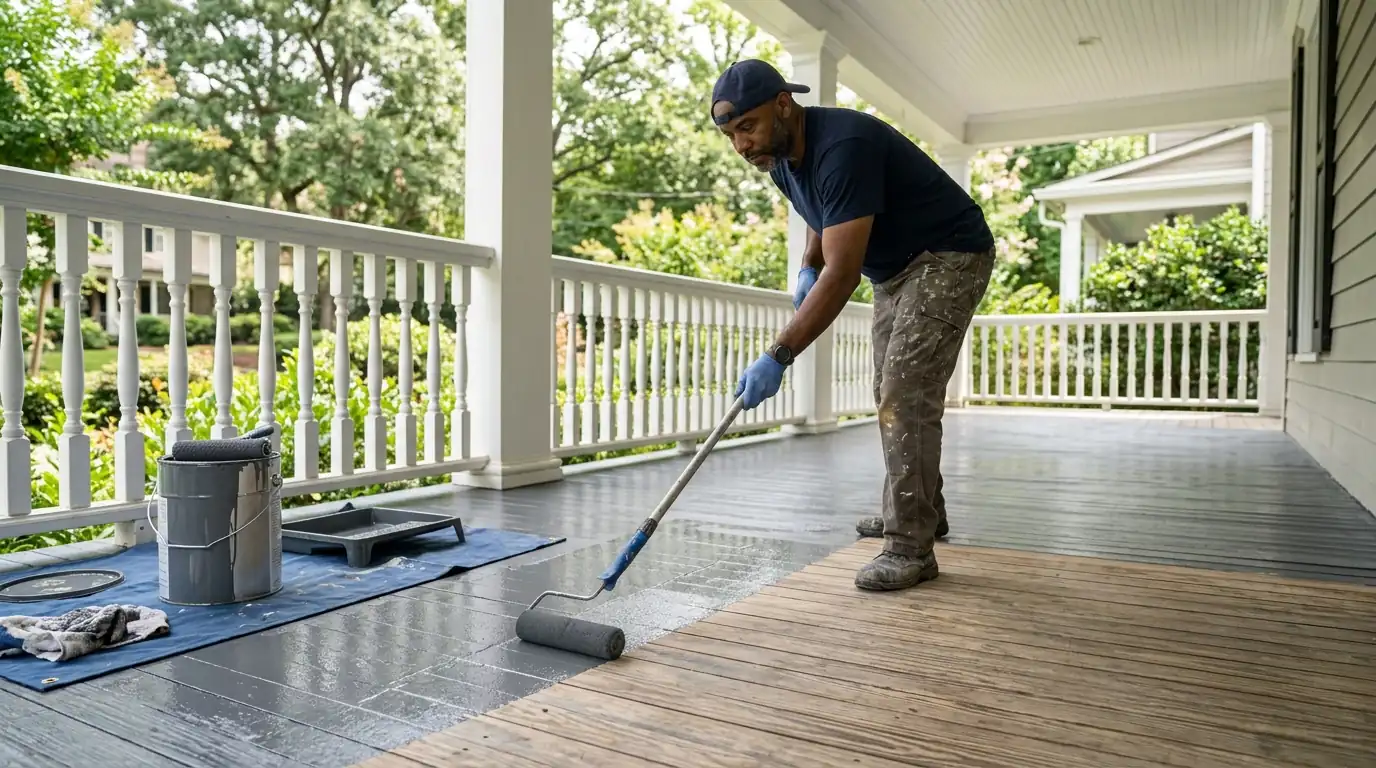
Porch floors get a dedicated porch and floor enamel, not wall paint, because it dries harder and resists scuffing. Loose paint is scraped, the boards are sanded where the old film has worn through, and bare wood is primed. Gaps between boards are left open so water drains. Two coats of floor enamel follow, cut in carefully at the siding and thresholds. A little fine sand can be added to the last coat on steps for grip. The floor needs a day or two before normal foot traffic and several days before furniture goes back, so we plan the order of work around the door you use most.
Porch ceiling painting
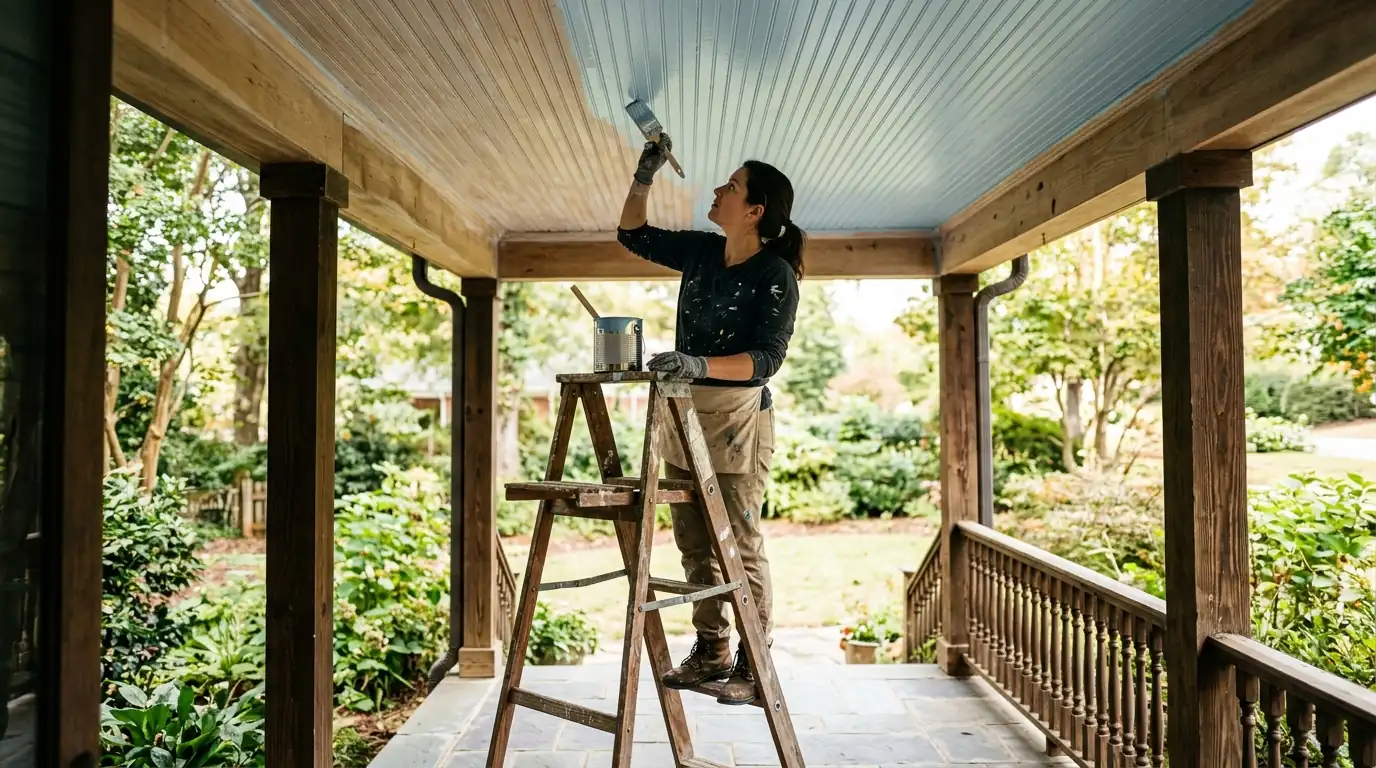
Porch ceilings are usually beadboard or plywood, and they peel when moisture from the porch below and the attic above gets behind the paint. Loose paint is scraped, the boards are sanded smooth enough to take a new coat, and knots or stains are spot primed so they do not bleed through. Many Southern homeowners choose a soft blue for the ceiling, a long tradition, while others match the trim white. Either way, the ceiling gets two coats of exterior paint applied overhead with extension poles and brushes worked into the beadboard grooves.
Exterior railing and column painting
Columns and railings are trim, so they get an exterior enamel that holds up to hands and weather. Before painting, we probe the base of every column and the bottom rail, where water collects. Soft wood is cut out and replaced or repaired with epoxy filler, and hollow columns are checked for rot inside the base. Top caps are sanded and primed, joints are caulked, and spindles are brushed on every face. Iron railings get rust treatment and a metal primer. A column that has rotted through is a carpentry job, and we will say so rather than paint over it.
What we see on Atlanta homes
Porches are a big part of the older intown housing here. Cabbagetown's late Victorian and Craftsman houses, built from the 1880s around the old cotton mill, and the Folk Victorian cottages and Craftsman bungalows in the oldest part of Mozley Park all have front porches that have been painted over and over. On those houses we expect layers of old paint on the floor and rails, column bases that have taken decades of water, and beadboard ceilings that need scraping before they will hold a new coat.
The order we paint a porch in
- 1
Probe and plan
Columns, rails and floor boards checked for rot; scope written up.
- 2
Protect
Siding, windows and plants masked; furniture moved off.
- 3
Scrape and sand
Loose paint removed from ceiling, columns, rails and floor.
- 4
Repair
Rotted wood replaced or filled; joints caulked.
- 5
Prime
Bare wood, stains and metal primed with the right product.
- 6
Paint top down
Ceiling first, then columns and railings, then the floor last.
- 7
Cure and reset
Floor left to cure; furniture back once it is ready.
Questions about porch and railing painting in Atlanta
A porch and floor enamel made for foot traffic and water. Wall paint wears through quickly on a floor.
Usually a day for light foot traffic and several days before furniture and rugs go back.
Moisture from below and above gets behind the paint. Scraping, priming and a breathable exterior paint fix it.
We replace or repair rotted bases and trim. A column that is rotted through needs a carpentry replacement first.
Yes. A fine grit can be mixed into the last coat on the steps for better grip.
Doing both together saves setup time, but the porch can be done on its own too.