Ceiling painting in Atlanta homes uses a dead-flat ceiling paint rolled in one direction with a wet edge, so there are no lap marks or roller lines under window light. Water and smoke stains are sealed first with a stain-blocking primer, cracks along seams are taped and filled, and vaulted or two-story ceilings are painted from a rolling platform or plank rather than stretched ladders.
Updated September 2026
Why ceilings are harder than walls
Most people notice their ceiling only when a stain appears or the walls get repainted and the ceiling suddenly looks gray next to them. Ceilings yellow from cooking, candles and time, and they collect fine cracks along drywall seams.
Getting a ceiling right is mostly technique. Flat paint hides texture and seams, but it has to be rolled continuously while wet or it flashes into visible stripes. Stains have to be sealed, or they bleed through two coats of fresh white within a day. And the room has to be covered well, because ceiling paint spatters.
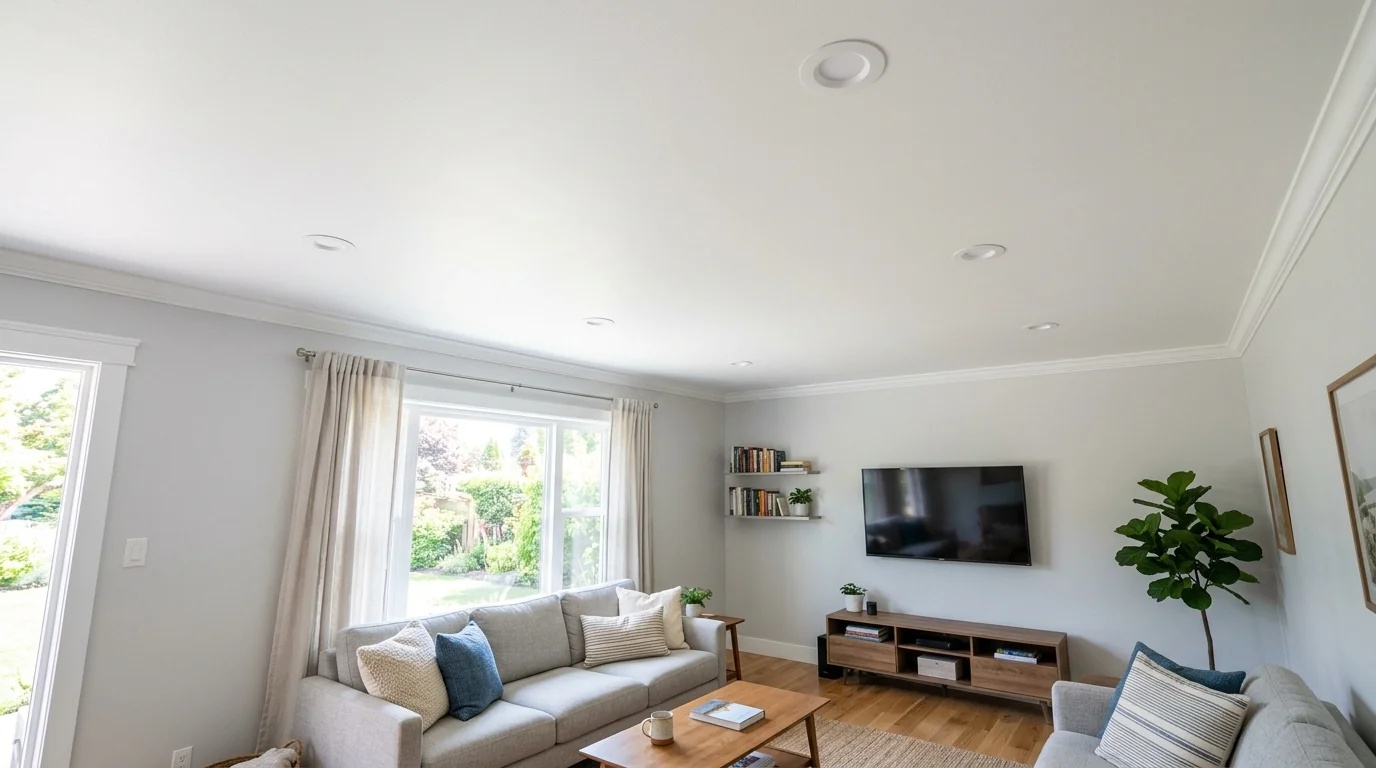
What changes the price of ceiling painting
Ceilings are priced by area and height, and stains or texture change the prep.
- Ceiling area. Square footage of every ceiling in scope.
- Height. Vaulted and two-story ceilings need platforms or planks.
- Stains. Water, smoke or nicotine stains need a stain-blocking primer first.
- Cracks. Taping and filling seam cracks before paint.
- Texture. Heavy or popcorn texture takes more paint and care.
- Furnished rooms. Covering and moving furniture in lived-in rooms.
- Fixtures. Fans and light fixtures dropped or masked.
Flat ceiling repaint
Standard eight- and nine-foot ceilings are the most common job. Furniture is moved and covered, floors are protected, light fixtures and fans are masked or dropped, and the ceiling is cleaned where there is grease or dust. Hairline cracks at seams are taped and filled. Then the ceiling line is cut in along the walls and the field is rolled with a thick-nap roller in one direction, overlapping while wet. Two coats of a flat ceiling paint give even color without roller lines.
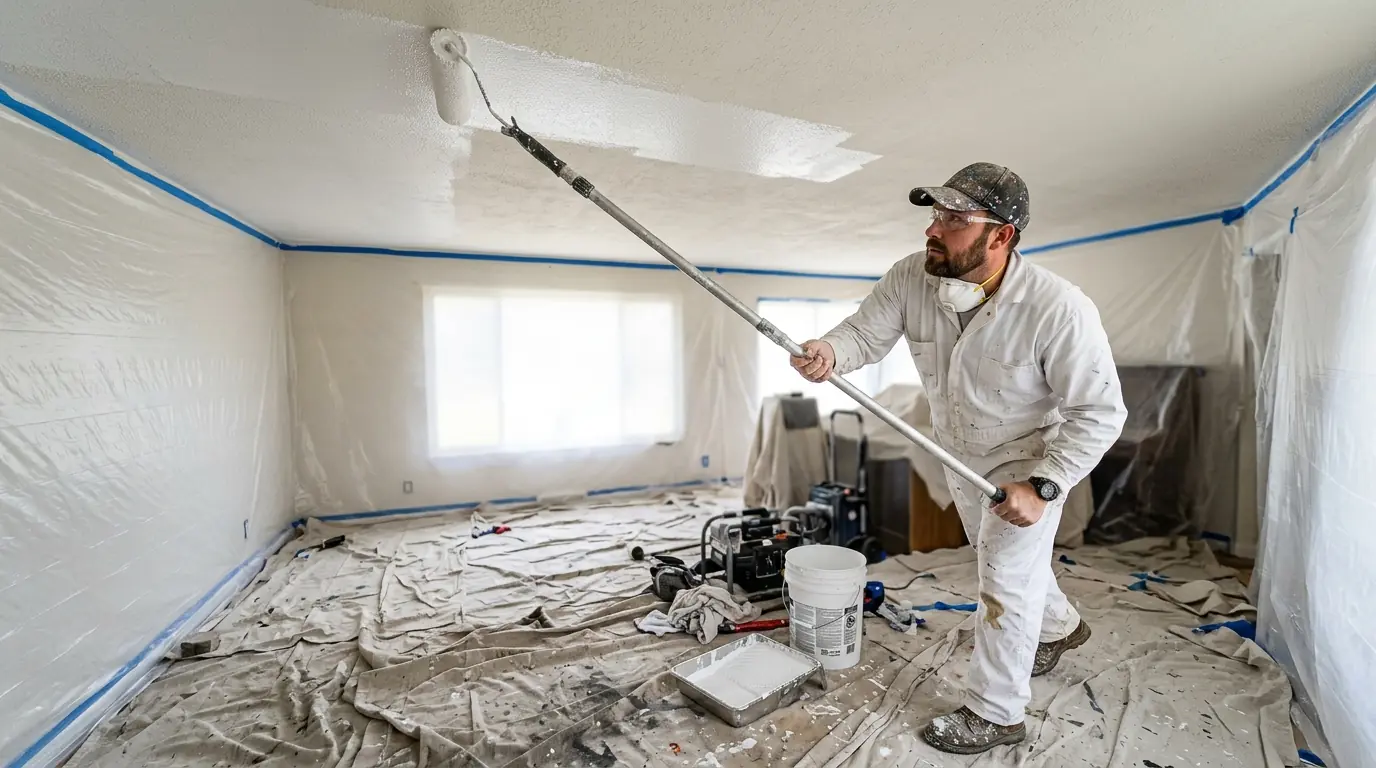
Vaulted and two-story ceilings
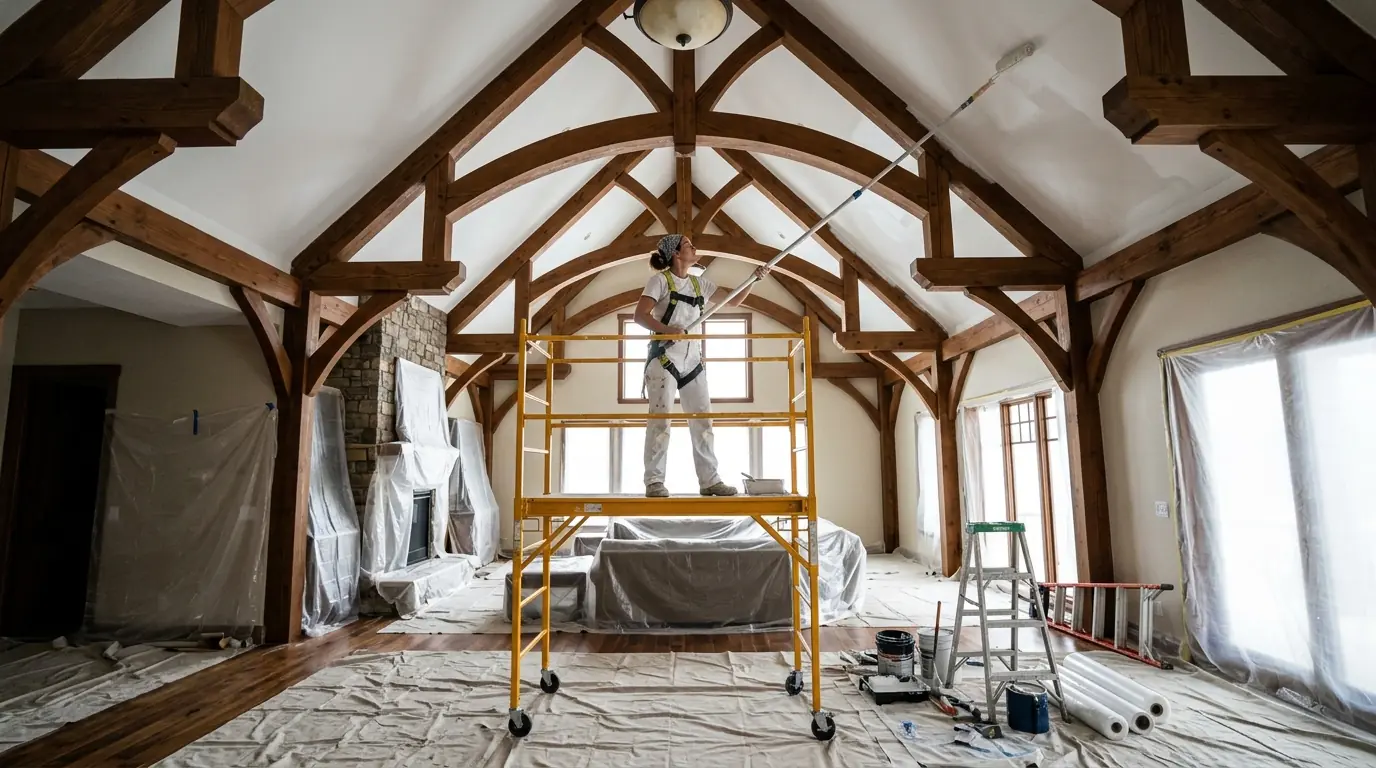
Tall ceilings in foyers, great rooms and stairwells need safe access. We use rolling platforms, planks across stairs and extension poles rather than overreaching from ladders. The paint is still rolled continuously with a wet edge, which is harder at height, so larger rooms are worked by two painters together. Beams, light fixtures and ceiling fans are protected, and the cut line where a vaulted ceiling meets painted walls is kept straight all the way up. Skylight wells and plant shelves, common in these rooms, are painted in the same pass.
Water stain blocking
Water stains, smoke marks and nicotine bleed through ordinary paint no matter how many coats. After the leak is confirmed fixed, stains are sealed with a stain-blocking primer, usually shellac or oil based, and the whole ceiling is then painted so the patch does not show as a brighter spot. Where water has softened the drywall, that section is cut out and replaced first. Kitchens and bathrooms with grease or mildew are cleaned and treated before primer. We confirm the source is dry with a moisture meter before sealing, so a hidden leak is not painted over.
A ceiling yourself or a painter
Worth trying yourself
- A small bedroom ceiling with no stains
- Touching up a small mark with the same ceiling paint
- Cleaning grease or dust before painting
Worth handing off
- Vaulted and two-story ceilings
- Water-stained or smoke-stained ceilings
- Large open rooms that need a wet edge
- Ceilings with cracks along every seam
Ceilings are tiring and messy, and the most common DIY result is visible roller stripes from paint drying between passes.
What we see on Atlanta homes
Two Atlanta patterns account for most of our ceiling calls. Humid summers grow mildew on bathroom and laundry ceilings that lack good ventilation, so those get a mildew treatment and a moisture-rated flat paint. And homes built from the 1960s through the 1980s often still carry popcorn texture, which clumps and flakes when rolled; on those ceilings we test the texture first and talk through removal before any paint goes on.
How a ceiling gets painted
- 1
Check the ceiling
Stains, cracks, texture and height assessed.
- 2
Cover the room
Furniture covered, floors protected, fixtures masked.
- 3
Repair
Cracks taped and filled, soft spots replaced.
- 4
Block stains
Stain-blocking primer on every mark.
- 5
Cut in
Ceiling line brushed along the walls.
- 6
Roll two coats
Continuous rolling with a wet edge, one direction.
- 7
Check in raking light
Every ceiling checked from the window side before cleanup.
Questions about ceiling painting in Atlanta
The paint dried between passes. Rolling continuously with a wet edge and using flat paint prevents it.
No. Stains need a stain-blocking primer, or they bleed through several coats of paint.
No. Soft tints and colors work, especially in dining rooms and bedrooms, but they show flaws more.
It can be done carefully, but it often clumps; many homeowners remove it instead.
Most rooms take a few hours; tall ceilings and stain repairs take longer.
Usually. Ceilings are done first, then walls, so drips never land on fresh wall paint.