Pressure washing in Atlanta is two different jobs: siding is soft washed with low pressure and a cleaner that kills mildew and algae, while driveways and walks are cleaned with a rotary surface cleaner at higher pressure. High pressure on siding forces water behind the boards and strips paint, so it is only used on concrete, brick pavers and similar hard surfaces.
Updated September 2026
Soft washing versus pressure washing
Most exterior grime here is organic. Green algae on north walls, black mildew under the eaves and yellow pollen film in spring all come back quickly if they are only blasted off, because the spores stay behind in the texture of the siding. A cleaning solution applied at low pressure kills the growth, and a gentle rinse carries it away without harming paint, caulk or window seals.
Hard surfaces are different. Concrete driveways, walkways and pool decks hold ground-in dirt, clay and tire marks that need real pressure, applied evenly with a spinning surface cleaner so the concrete does not end up striped. Wood decks and fences sit in between: enough pressure to lift dirt and old stain, not so much that the grain furs and splinters.
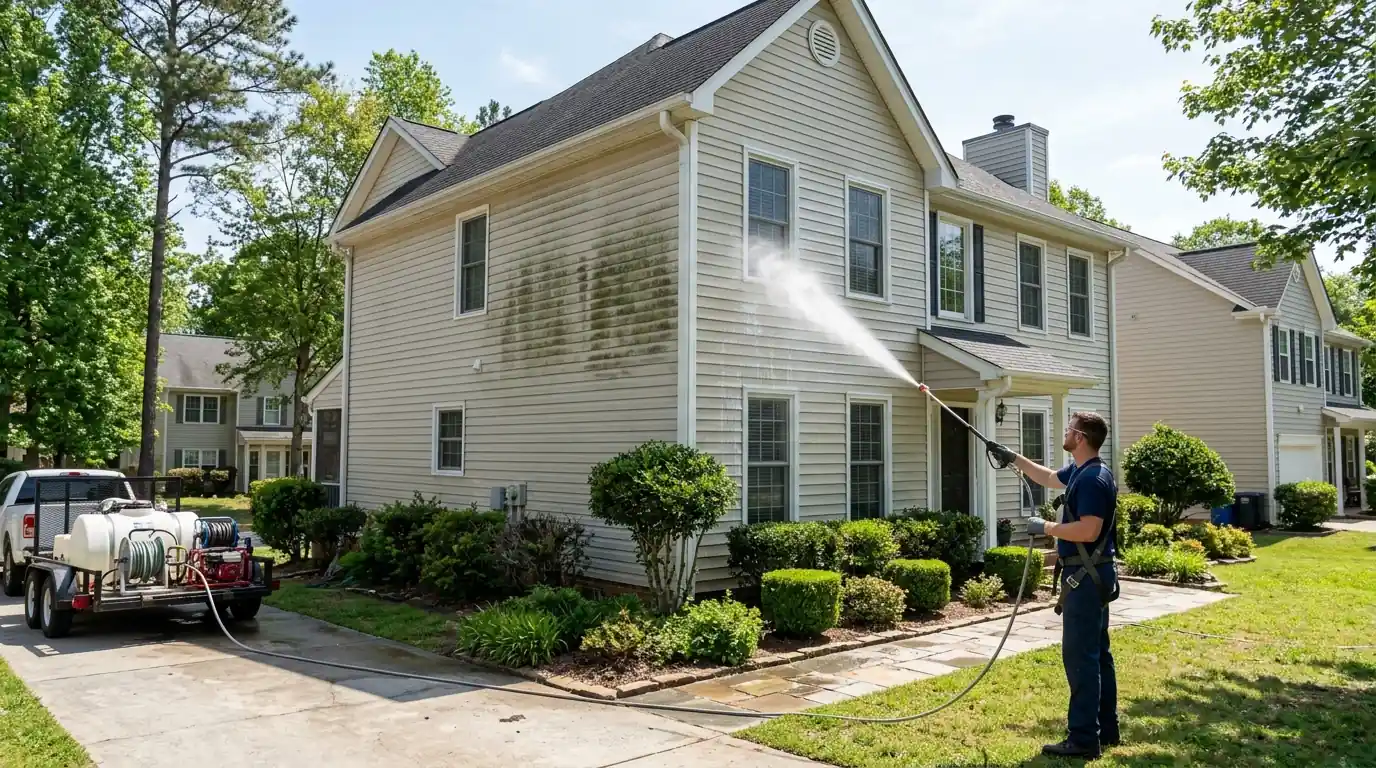
House washing before paint
Before any exterior repaint, the whole house is washed. Paint applied over pollen, chalk or mildew does not bond, and it peels in patches that show exactly where the wash was skipped. We apply a mildew cleaner to siding, trim and soffits, let it work, then rinse top down at low pressure. Windows, light fixtures and outlets are covered, and plants are wetted before and after. The house then dries for about two days before any primer goes on. As a stand-alone service, the same wash brightens a house that does not need paint yet and slows mildew returning.
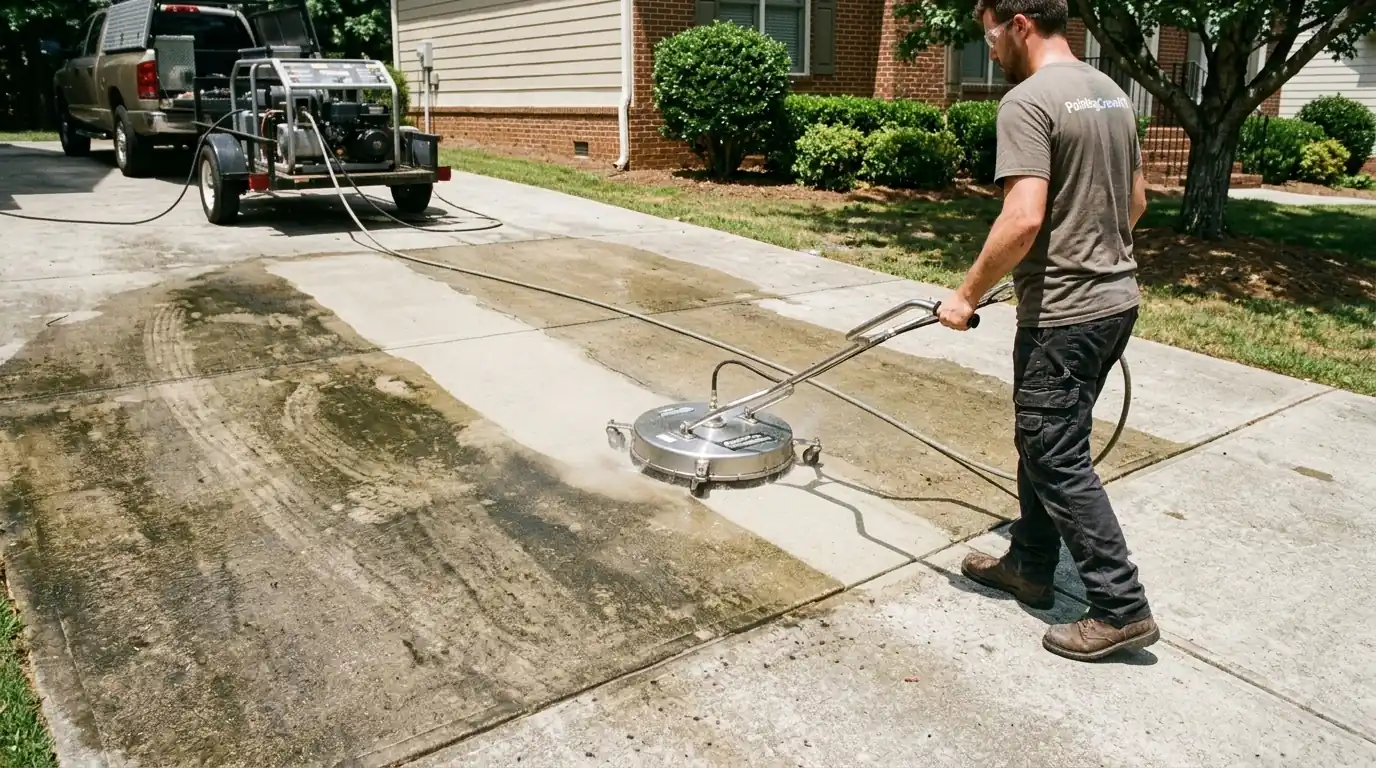
Driveway and walkway cleaning
Concrete is where real pressure belongs. A rotary surface cleaner covers the slab in even passes, lifting dirt, algae and most red clay staining without the zebra stripes a wand leaves. Oil spots are pretreated with a degreaser, and rust stains from sprinklers or fertilizer are treated separately because pressure alone does not remove them. Joints and edges are finished with a wand and the loosened debris is rinsed off the lawn side. A clean driveway also shows whether the concrete needs sealing, which is a separate job we can quote if it does.
Deck and fence washing
Wood is washed with a cleaner and moderate pressure through a wide fan tip, kept moving along the grain. Too much pressure raises fibers and leaves the wood fuzzy, which looks worse after stain than before. On decks, the wash is usually followed by a brightener and then staining once the wood is dry. Fences are washed from both sides where access allows, and pickets are checked for rot while they are wet and easy to probe. If you only want the wash now and stain later, the wood should still be restained within the season, because clean bare wood grays again quickly.
Signs the outside needs a wash
- Green on the north wall Algae growing on the shaded side of the house.
- Black under the eaves Mildew spotting soffits and the top of the siding.
- Yellow film in spring Pollen that has settled into the siding texture.
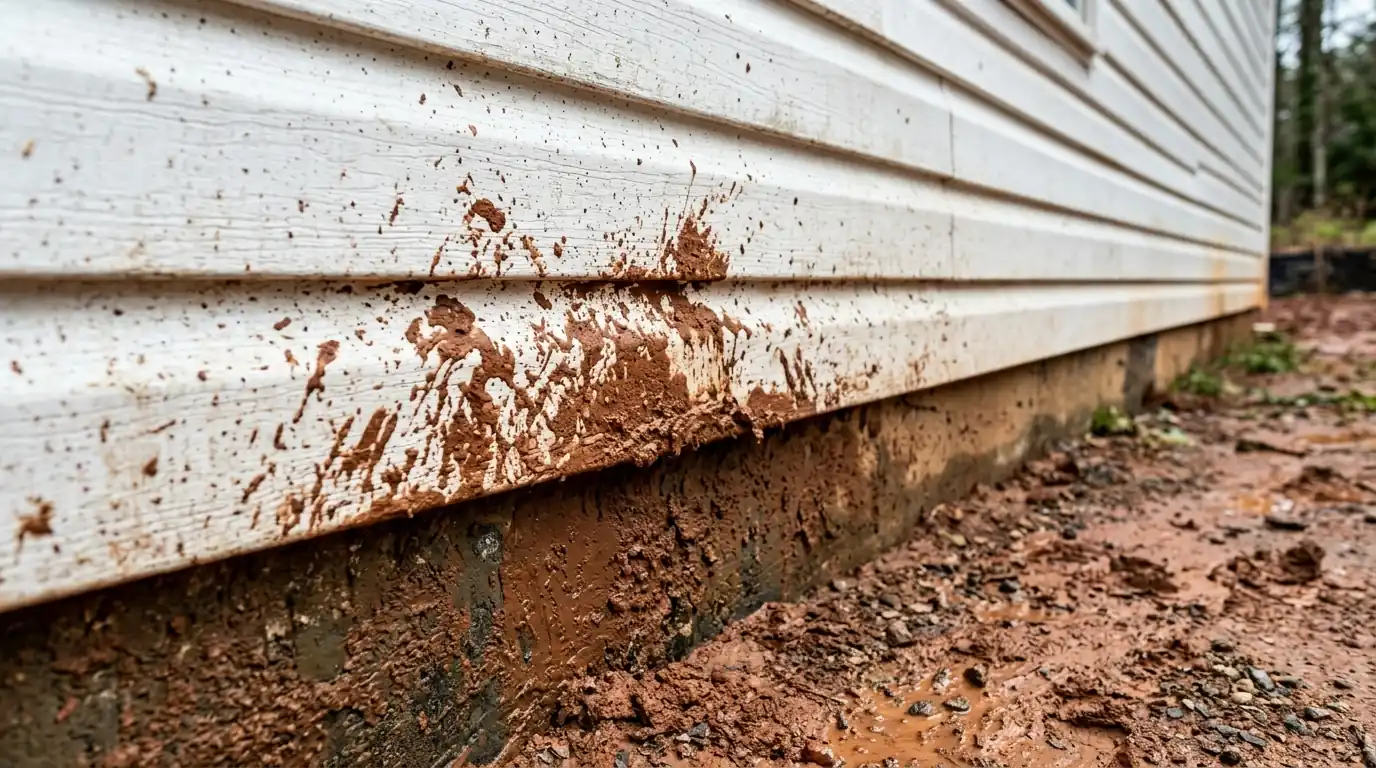
- Orange splash line Red clay staining along the bottom course and steps.
- Dark driveway patches Algae and dirt ground into the concrete, often where water drains.
What we see on Atlanta homes
Atlanta gives exteriors two cleaning problems at once. Summer humidity grows mildew on paint, especially on shaded walls, and red clay splashes up onto the bottom courses of siding, porch steps and driveways every time it storms. Mildew needs a cleaner that kills it, not just water, or it is back within a season. Clay is mineral and stains concrete orange, so it needs pressure on hard surfaces and a gentler cleaner on siding, where blasting it would take the paint with it.
What changes the cost of a wash
Washing is priced by the surfaces in scope and how much growth or staining is on them.
- House size and stories. Two-story walls and high gables take longer to treat and rinse safely.
- Siding type. Painted wood, hardboard, vinyl and stucco each need a different cleaner and pressure.
- Growth level. Heavy mildew and algae need longer dwell time and sometimes a second treatment.
- Concrete area. Driveway, walkway and patio square footage for the surface cleaner.
- Stains. Oil, rust and clay stains need their own treatments beyond pressure.
- Decks and fences. Wood surfaces add cleaner, brightener and careful pressure work.
- Water access. A working outside spigot is needed; distant or low-flow supplies slow the job.
How a wash goes, surface by surface
- 1
Walk the property
We note siding type, growth, stains and anything fragile nearby.
- 2
Protect
Outlets, fixtures and doors covered; plants and lawn wetted.
- 3
Apply cleaner
Mildew and algae treatment on siding and trim, left to work.
- 4
Soft rinse
Low-pressure rinse from the top down so water does not get behind boards.
- 5
Surface clean concrete
Rotary cleaner on driveways and walks, wand on edges and joints.
- 6
Treat stains
Degreaser, rust and clay treatments where needed.
- 7
Final rinse and check
Plants rinsed again, windows checked, walk-around with you.
Renting a washer or calling us
Reasonable to do yourself
- Washing a small patio or walkway with a rented surface cleaner
- Rinsing pollen off a deck or car port
- Spot-cleaning a mildewed corner with a garden sprayer
Worth handing off
- Two-story siding and gables
- Any painted siding you plan to repaint
- Heavy clay or oil staining
- Decks that will be stained right after
The most common DIY damage is using a wand at high pressure on siding or wood: it strips paint, gouges boards and pushes water into wall cavities.
Questions about pressure washing in Atlanta
High pressure can. That is why siding is soft washed with a cleaner at low pressure, and pressure is saved for concrete.
About two dry days, so the siding and any bare wood are dry when primer goes on.
Most of it. Deep clay staining in porous concrete may need a separate stain treatment to fully lift.
Plants are wetted before and rinsed after, which dilutes any overspray; we avoid spraying directly onto beds.
Once a year keeps mildew and pollen from building up, and helps paint last longer between repaints.
Roof cleaning is a specialty with its own chemicals and safety needs, and we do not offer it.