Kitchen cabinet painting in Atlanta runs about $3,500 to $5,500 for up to 15 doors in published local figures, more for larger kitchens. Doors and drawer fronts come off and are sprayed in a controlled space, while the boxes are degreased, sanded, primed with a bonding primer and painted in place. The finish is a hard cabinet enamel, and the kitchen is usable during the job.
Updated September 2026
What separates a painted cabinet that lasts from one that chips
Kitchen cabinets carry grease, hand oils and cleaning residue that ordinary paint will not stick to. The finish also takes more wear than any wall: hands at the pulls, feet at the toe kick, water at the sink base. Cabinets painted with wall paint over a quick scuff chip and peel within months.
A lasting job has four parts: thorough degreasing, sanding to dull the old finish, a bonding primer, and a cabinet-grade enamel that cures hard. Doors and drawer fronts are sprayed flat for an even finish with no brush marks, and hinges are adjusted when everything goes back so doors close square.
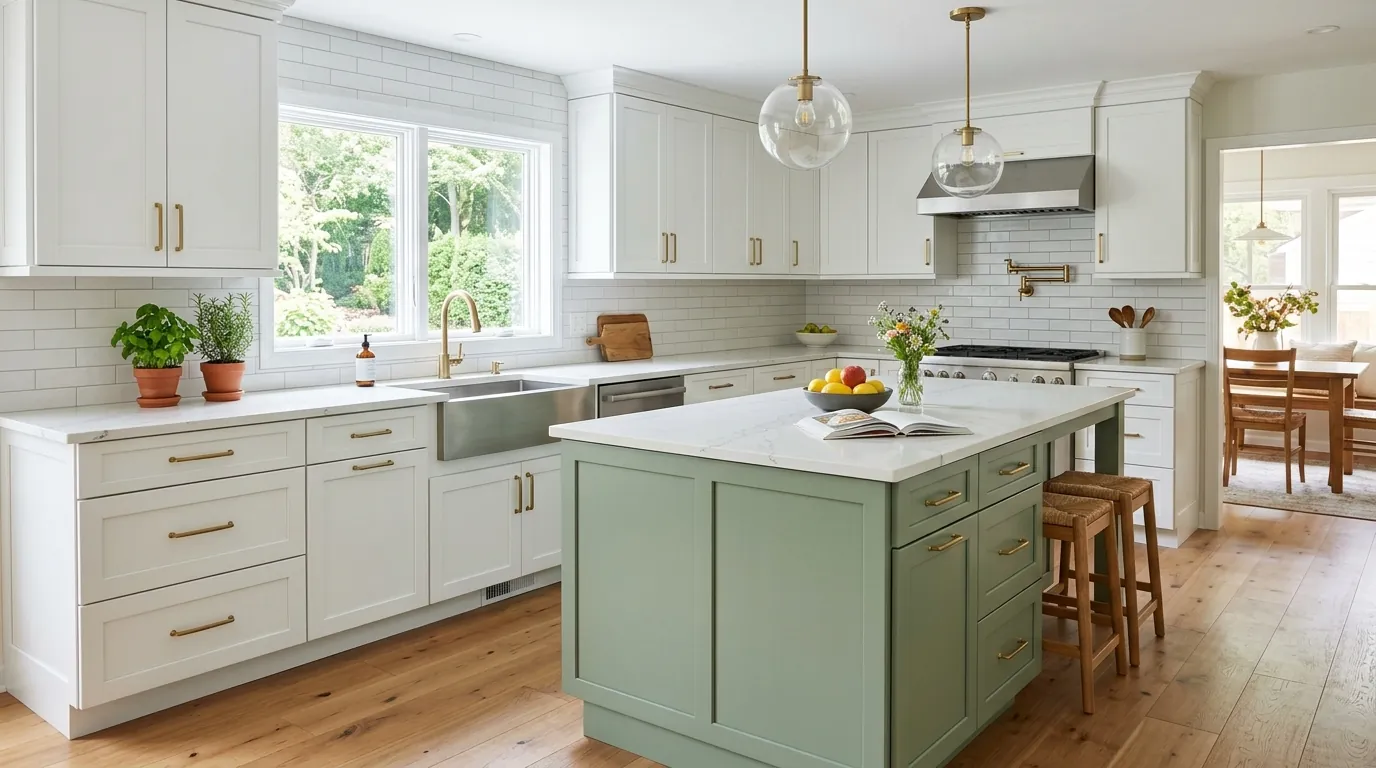
What cabinet painting costs in Atlanta
Planning range from published Atlanta figures: $3,500 to $5,500 for up to 15 doors; $5,500 to $8,000 for 15 to 30 doors; $8,000 to $12,000 for large kitchens. That is a market range, not our quote; the factors below move a real price up or down.
- Door and drawer count. Every piece is removed, sprayed on both faces and rehung.
- Cabinet material. Oak needs grain decisions; thermofoil may need door replacement.
- Grain fill. Filling oak grain for a smooth finish adds a day of labor.
- Condition. Grease, water damage and peeling old paint add prep.
- Island and vanities. Extra cabinet runs painted in the same job.
- Color scheme. Two-tone kitchens need separate spray setups for each color.
- Hardware. Reusing hardware or installing new pulls and hinges.
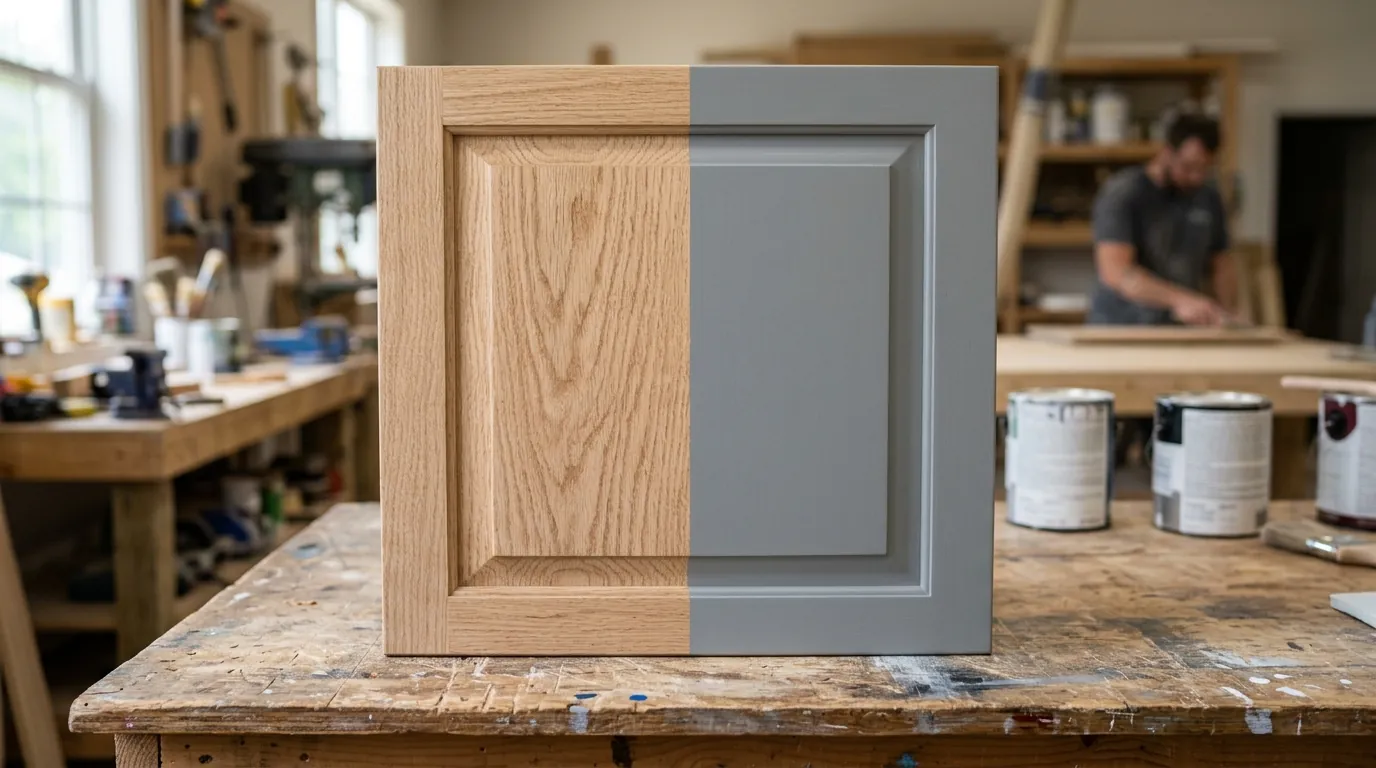
Oak cabinets with grain fill
Oak has deep, open grain that shows through paint as texture. Some homeowners like that; others want the smooth look of a new painted cabinet. For a smooth finish, the grain is filled with a grain filler or a high-build primer, sanded flat and primed again before the color coats. It adds a day of labor but changes the result completely. We show a sample door both ways so you can choose. Oak also bleeds tannins, so a stain-blocking primer is used under light colors.
MDF and thermofoil cabinets
Many builder-grade kitchens use MDF doors, sometimes wrapped in thermofoil, a vinyl skin. Plain MDF paints very well after sealing the edges, which absorb primer quickly. Thermofoil is different: if the skin is peeling or bubbling near the oven or dishwasher, paint will not hold, and the doors are better replaced with new paint-grade doors that we finish to match the boxes. We check every door before quoting so the plan fits what is actually in the kitchen. Shaker-style MDF doors are the easiest of all to paint well, because their flat panels spray evenly and hide nothing.
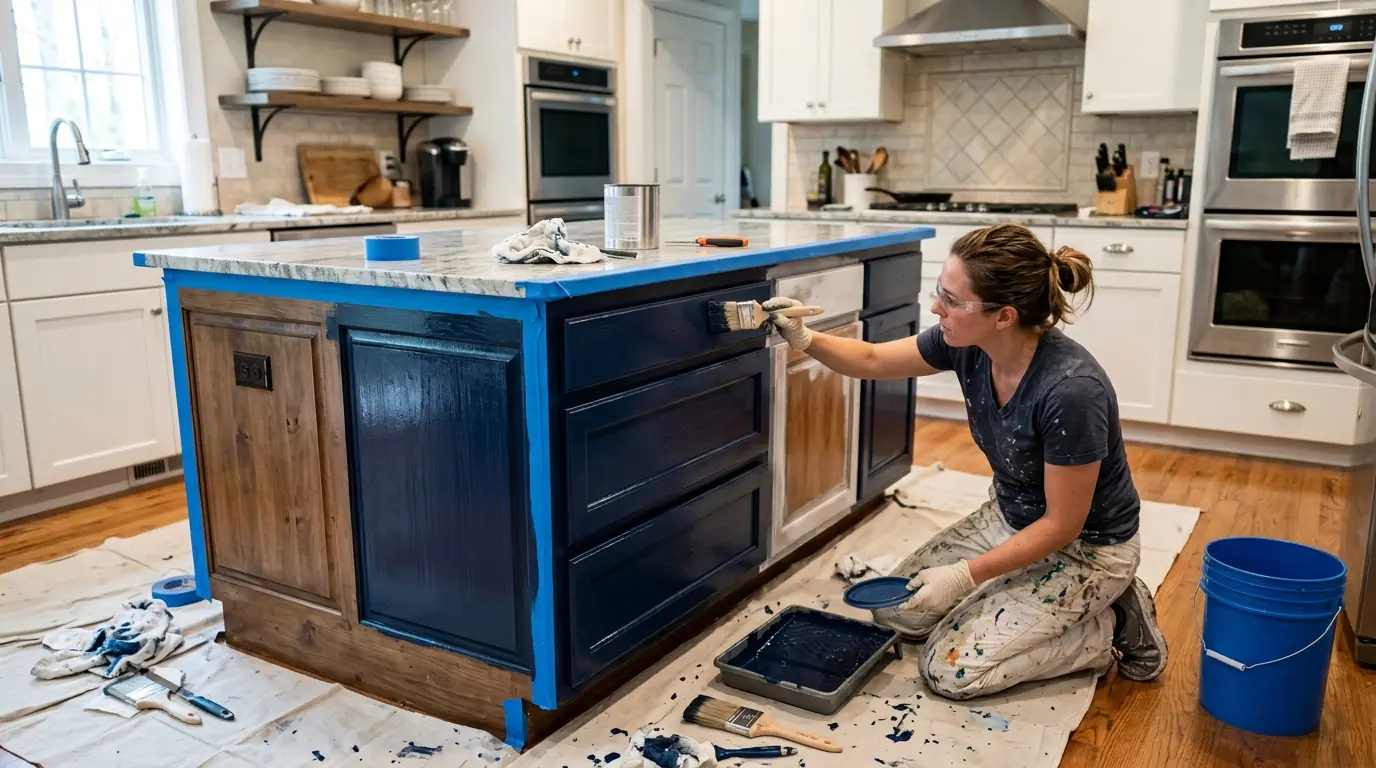
Kitchen island painting
A painted island in a contrasting color, such as navy, green or charcoal against white perimeter cabinets, is one of the most requested cabinet jobs. Islands take more knocks from stools and feet, so the toe kick and lower edges get an extra coat. Seating overhang corbels and end panels are painted with the island. We tape the countertop edge carefully and protect flooring around the base, since islands are painted in place. Dark island colors get a tinted primer so two finish coats cover evenly without a patchy look under pendant lights.
Bathroom vanity painting
Vanities follow the same process on a smaller scale, and they are often painted at the same time as the kitchen so one setup covers both. Bathrooms are humid, so the primer and enamel are chosen for moisture resistance and the fan is run while the finish cures. Vanity doors are sprayed with the kitchen doors; the base is painted in place with the sink and plumbing protected. Water damage along the bottom of a vanity base is dried, sealed and filled before primer, since that is where vanities usually fail first.
Painting cabinets yourself or hiring it out
A reasonable DIY
- A small bathroom vanity in a neutral color
- Painting a laundry room cabinet run
- Swapping hardware after a professional repaint
Worth handing off
- Full kitchens with 20 or more doors
- Oak with grain fill for a smooth finish
- Two-tone kitchens and islands
- Cabinets with grease buildup near the range
Most DIY cabinet jobs fail at the degreasing and primer steps. Paint looks fine for a few weeks, then peels at the handles.
What we see on Atlanta homes
Two kinds of kitchen make up most of our cabinet work. In Loganville, the homes from the late-1990s and 2000s subdivision boom are 15 to 25 years old and getting their first major update, and painted cabinets are usually part of it. In older intown houses like those in Druid Hills, built before 1940, any cabinets or built-ins painted decades ago are sanded under lead-safe containment, so the prep plan is set before the first door comes off.
How long the kitchen is out of order
Most kitchens take four to six working days. The doors are gone for most of that time while they are sprayed and cured, but the counters, sink and appliances stay usable. The enamel keeps hardening for a couple of weeks after the doors go back, so we leave care tips for the first days.
How cabinets get painted
- 1
Test door
We check material and old finish, and show grain fill options.
- 2
Remove and label
Doors, drawer fronts and hardware removed and labeled.
- 3
Mask the kitchen
Counters, appliances, floors and walls covered.
- 4
Degrease and sand
Every surface cleaned and scuffed.
- 5
Prime
Bonding or stain-blocking primer, grain fill where chosen.
- 6
Spray and paint
Doors sprayed flat; boxes painted in place.
- 7
Rehang and adjust
Doors back on, hinges adjusted, hardware installed.
Questions about kitchen cabinet painting in Atlanta
Not if they are degreased, primed with a bonding primer and finished in a cabinet enamel. Wall paint is what chips.
Yes, with care. Doors are off for several days, but counters and appliances stay usable.
Yes, with grain filler or a high-build primer. It adds a day and changes the look to smooth.
Whites and warm off-whites on perimeter cabinets, with navy, green or charcoal on islands.
Usually only the exterior faces and door backs. Interiors can be added on request.
Yes. See our cabinet refinishing page for keeping the wood grain.