Drywall repair in Atlanta homes covers nail pops, cracks, holes and water-damaged sections: the damaged area is cut back to sound material, patched or replaced, taped, finished in thin coats, textured to match, primed and painted. Small repairs are usually done in two short visits because compound needs drying time between coats, or in one longer day with quick-setting compound.
Updated September 2026
Why patches show, and how to stop that
Most visible patches fail in one of three ways. The surface is not flat, so raking light from a window shows a bump. The texture does not match, so a smooth patch sits in an orange-peel wall. Or the paint is a touch-up that flashes because it went on bare compound without primer. Any of the three gives away the repair from across the room.
A good repair deals with all three. The compound is feathered out wide so the patch blends, the texture is matched by spraying or rolling on a sample first, and the patch is primed before paint. Often the right answer is repainting the whole wall corner to corner, which we will price as an option when a touch-up would not match.
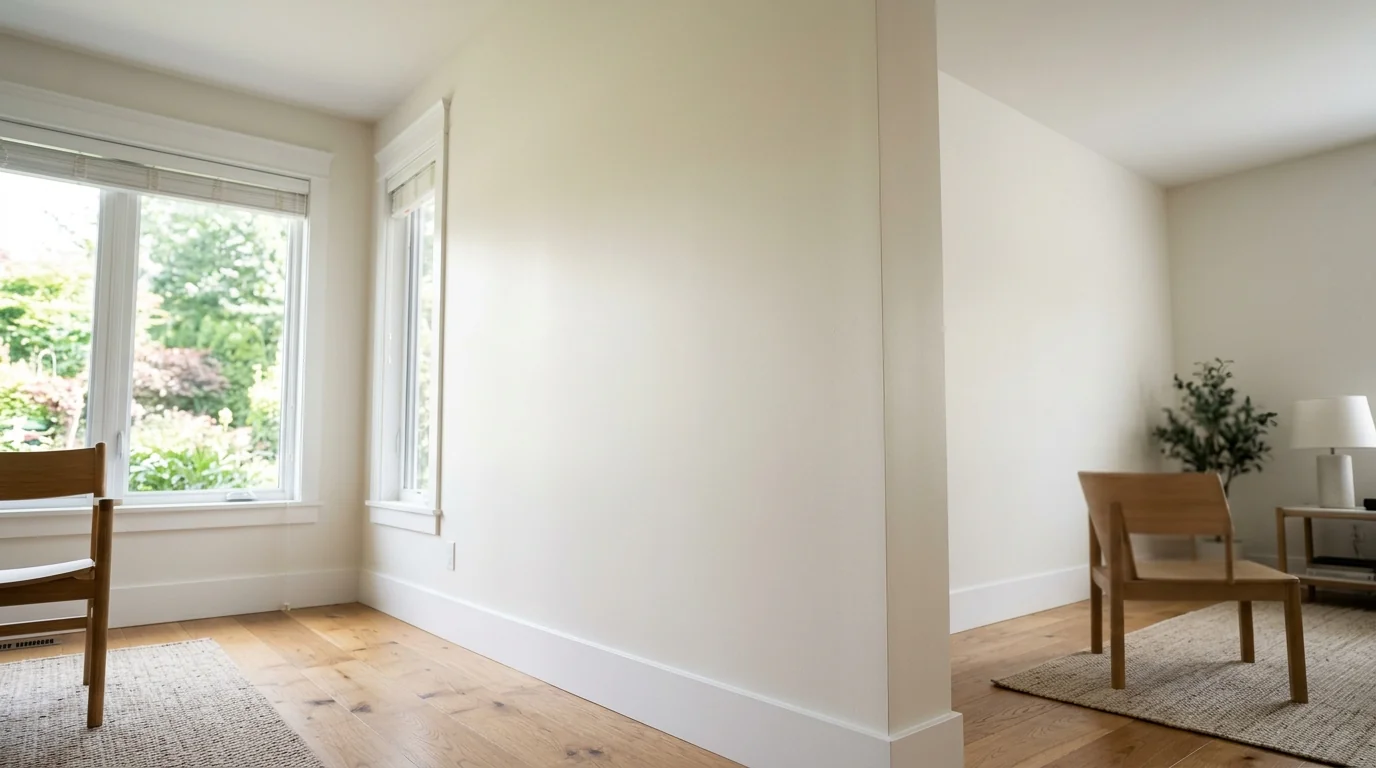
What drives the cost of drywall repair
Drywall repair is usually quoted as part of painting prep, and the published Atlanta range below includes what prep like drywall repair adds.
Planning range from published Atlanta figures: $2 to $6 per square foot; average $2,021, most projects $964 to $3,079; prep such as drywall repair, sanding or wallpaper removal adds $0.50 to $3 per square foot. That is a market range, not our quote; the factors below move a real price up or down.
- Number of repairs. Several small patches in one visit cost less each than separate trips.
- Size and type. Nail pops and cracks are quick; cut-out sections need new drywall and more coats.
- Water damage. Stain blocking, drying and replacing soft drywall add time and material.
- Texture. Matching orange peel or knockdown takes more steps than a smooth wall.
- Plaster. Older plaster walls need setting compound and skim work rather than drywall patches.
- Ceiling or wall. Ceiling repairs take longer and need platforms or ladders.
- Paint scope. Touching up the patch or repainting the full wall so the color matches.
Patch it or replace the section
| Factor | Patch and finish | Cut out and replace |
|---|---|---|
| Best for | Nail pops, cracks, small holes, stained but solid drywall | Soft, crumbling or mold-stained drywall, large holes |
| Time | Short visits with drying time | Longer, with new drywall and more coats |
| Hides the repair | Yes, with feathering, texture and paint | Yes, with full taping and finishing |
| Checks inside the wall | No | Yes, framing and cavity are exposed |
Nail pops and hairline cracks
Nail pops are round bumps where a drywall nail has backed out as framing dries and shifts. We drive a screw beside the nail, set the old nail, and cover both with compound. Hairline cracks usually run from the corners of doors and windows, where framing moves most. Filling them with compound alone brings the crack back within a season, so we open the crack slightly, apply mesh or paper tape, and finish over it. Cracks that return repeatedly or grow wider point to movement in the structure, and we will tell you if one looks like more than a finishing problem.
Published Atlanta planning range for interior painting: $2 to $6 per square foot; average $2,021, most projects $964 to $3,079; prep such as drywall repair, sanding or wallpaper removal adds $0.50 to $3 per square foot. A market figure, not our quote.
Water-damaged drywall
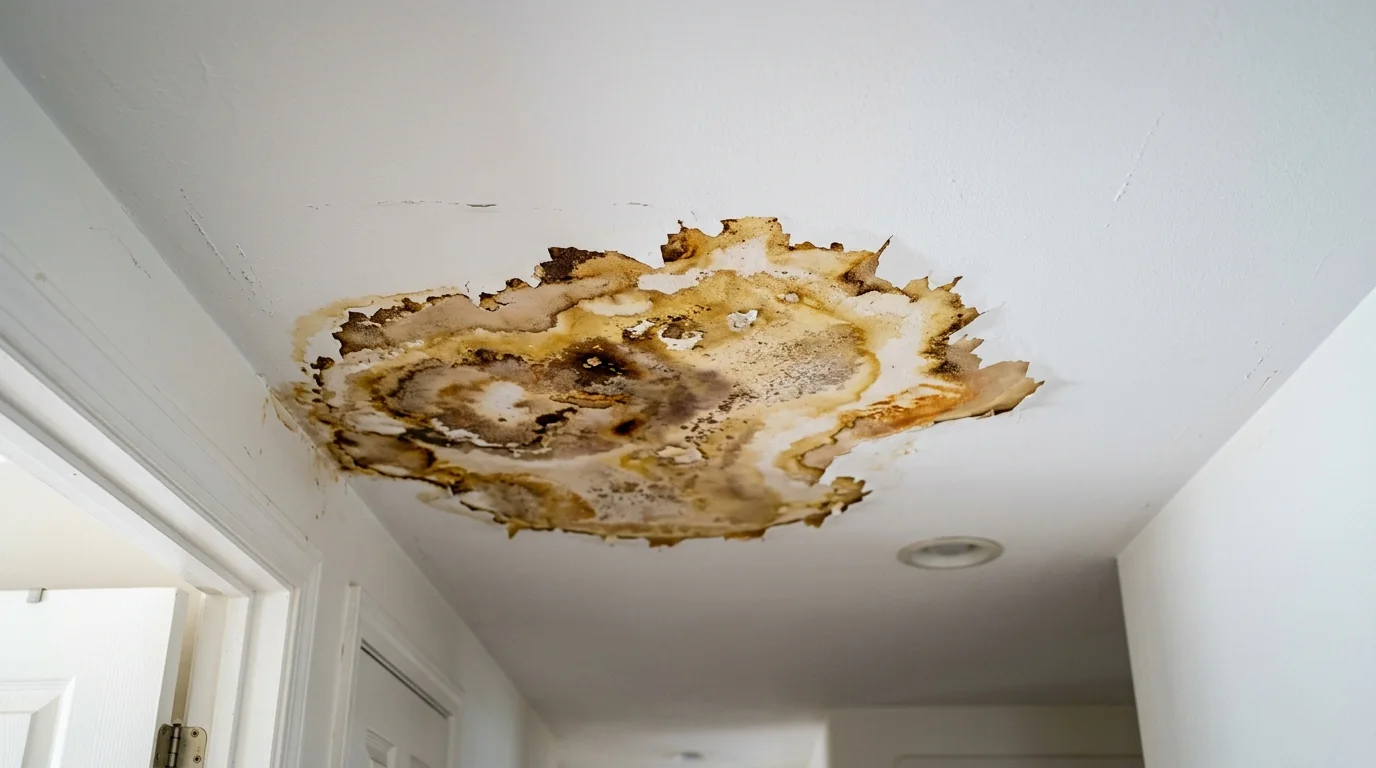
A ceiling stain or bubbling wall means water got in. The first job is making sure the leak is fixed; patching over an active leak just hides it. Stained but solid drywall can be dried, sealed with a stain-blocking primer and repainted. Drywall that is soft, sagging or crumbling is cut out back to the framing, the cavity is checked for moisture, and a new piece is installed, taped and finished. Stains that are painted without a stain blocker bleed through in days, which is why the primer step matters even when the drywall itself is fine.
Large hole patching
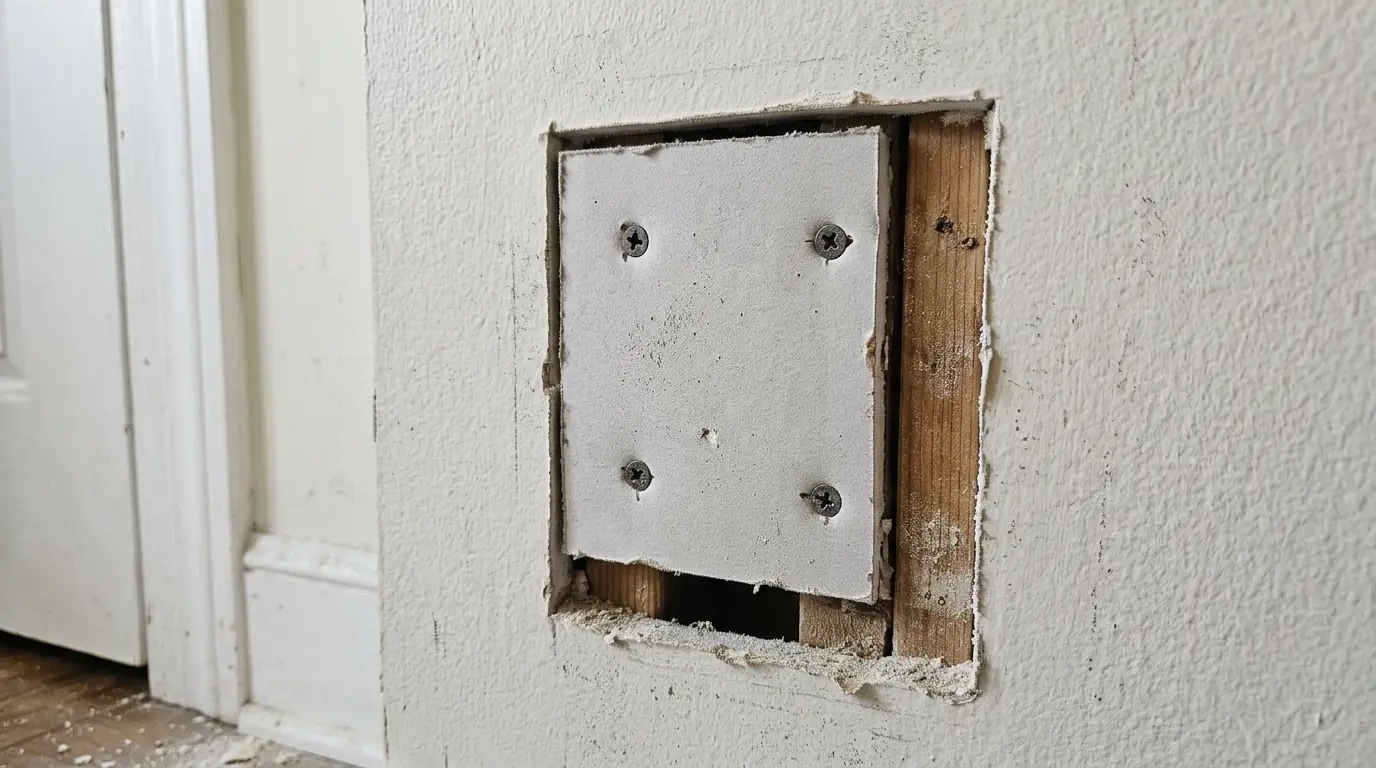
Doorknob holes, moving damage and old fixture openings are patched with a new piece of drywall rather than filled. We cut the hole to a clean square, add backing strips inside the wall, screw in a matched piece, then tape and finish the seams in three thin coats, each sanded. Large holes near outlets or switches get the box checked before closing. The finished area is wide, often three or four times the size of the hole, because a feathered patch is what makes it flat under light.
Texture matching
Most Atlanta walls are either smooth or carry a light orange-peel or knockdown texture. Matching it is the step that separates a patch you can see from one you cannot. We test the texture on a scrap board first, adjust the spray or roller until it matches, then apply it to the patch and blend the edges. Ceilings with popcorn or heavy texture need a different approach, and in older homes with plaster walls, the patch is finished with a skim coat that matches the plaster surface rather than drywall texture.
What we see on Atlanta homes
Many older Atlanta interiors are plaster, not drywall, and that changes the repair. The houses in Grant Park and Inman Park went up from the 1880s through the first decades of the 1900s, before drywall was common, and plaster over wood lath cracks differently and takes slower, more careful work than a modern wall. We reattach loose plaster with washers, fill with a setting compound and skim to match the old surface instead of cutting in a drywall patch that would show.
How a drywall repair gets finished
- 1
Find the cause
We check for leaks, loose fasteners or movement before patching.
- 2
Cut back
Damaged material removed to sound drywall or plaster.
- 3
Patch or replace
Screws, tape, backing and new drywall pieces where needed.
- 4
Finish in thin coats
Compound applied in two or three coats, feathered wide.
- 5
Sand flat
Vacuum sanding and a check with a work light for any ridges.
- 6
Texture and prime
Texture matched on a test board, then primer over the patch.
- 7
Paint
Touch-up or full-wall repaint so the color and sheen match.
Questions about drywall repair and patching in Atlanta
The nail backed out because the framing moved. Adding a screw beside it holds the drywall so it does not pop again.
Yes. We test the texture on a scrap piece first, then apply it to the patch and blend the edges.
Sometimes. Older paint fades, so repainting the full wall is the reliable way to hide a patch.
Yes. Plaster is reattached and skimmed rather than patched with drywall, so the surface still looks like plaster.
Usually two short visits, because compound needs to dry between coats.
Once the leak is fixed, yes. Stained areas are sealed; soft sections are cut out and replaced.