Painting a staircase in an Atlanta home usually takes two to four days: spindles and balusters are sanded and primed, handrails are either enameled or stripped and clear coated, and risers are painted in alternating stages so the stairs stay usable. We use a hard-curing enamel that resists hand oils, and on pre-1978 homes we set up lead-safe prep before sanding.
Updated September 2026
Why staircases need their own approach
A staircase is a lot of small surfaces close together. A typical run has dozens of spindles, each with four faces and turned details, plus a handrail that is handled every day, a newel post that gets bumped, and risers that catch shoe scuffs. Painting it quickly with wall paint looks fine for a month and then chips and yellows where hands touch it.
The right finish is a urethane-modified enamel that dries hard and cleans easily, applied over sanded and primed wood. Handrails in stained wood are often better left as wood and recoated in clear. Work is staged so the stairs are never all wet at once, and the house stays usable while each part cures.
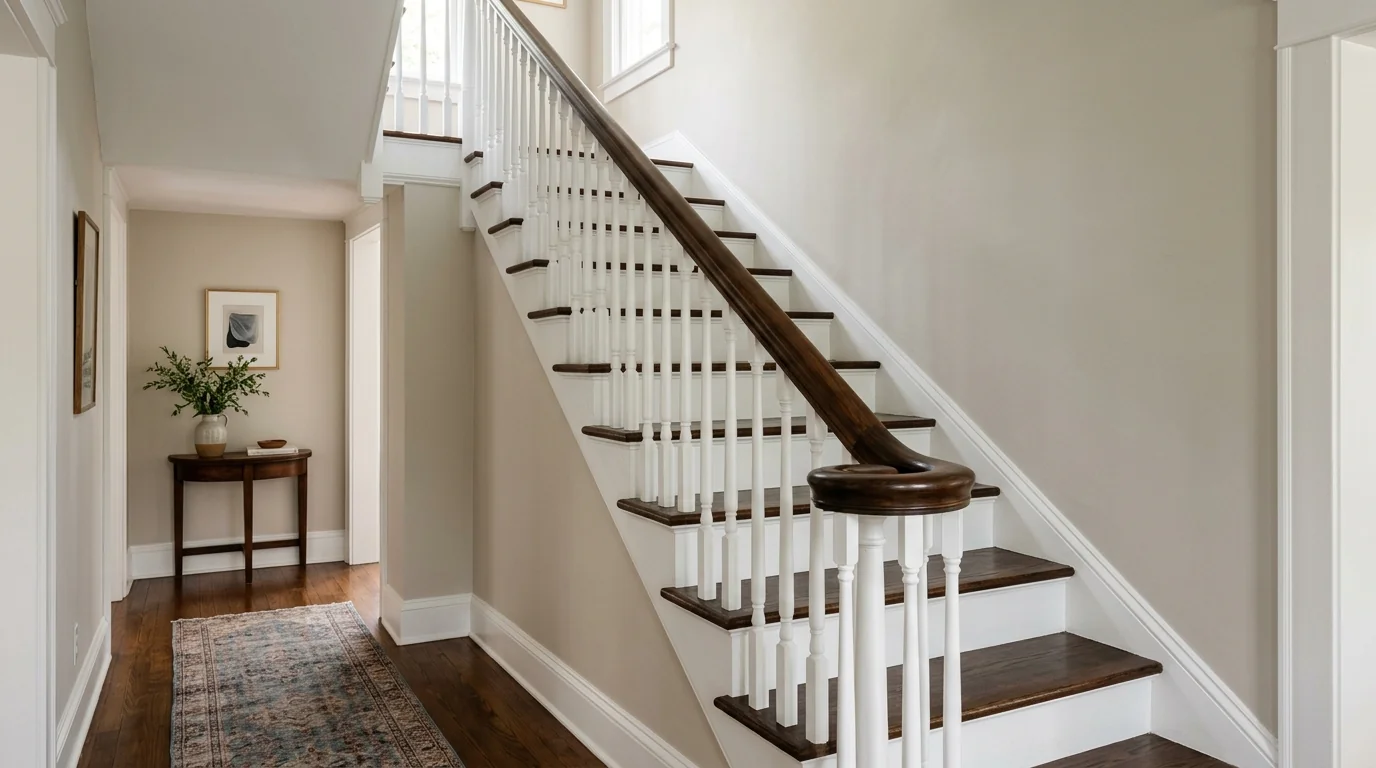
What goes into the price of a staircase
Stair work is mostly labor, so the count of spindles and the condition of the old finish matter more than paint.
Planning range from published Atlanta figures: $25 to $110 per hour per painter; labor is the bulk of the bill. That is a market range, not our quote; the factors below move a real price up or down.
- Number of balusters. Each spindle is hand-sanded and brushed; a long run with turned spindles takes the most time.
- Old finish condition. Chipped, alligatored or thick old paint needs scraping and feathering first.
- Paint or clear coat. Stripping and clear coating a stained rail takes longer than enameling it.
- Lead-safe setup. Pre-1978 homes need containment and cleanup that add time.
- Risers and stringers. Adding risers, skirt boards and a landing extends the job by a day or more.
- Loose parts. Tightening or regluing loose spindles and newel posts before paint.
- Surrounding walls. Painting the stairwell walls at the same time needs taller ladders or a stair platform.
Spindles and balusters
Balusters are the slowest part of any stair job because every one is hand-sanded, primed and brushed on all faces. Turned spindles in older homes have deep details where old paint has built up, and those are scraped and feathered so the new finish does not look lumpy. Square modern balusters go faster but show every brush mark, so they get a leveling enamel. Where spindles are loose, we tighten or glue them before painting, since a rattling baluster cracks fresh paint at the joint within weeks. On many stairs, the spindles are simply sprayed after the rest of the hall is masked, which gives a smoother result than brushing alone.
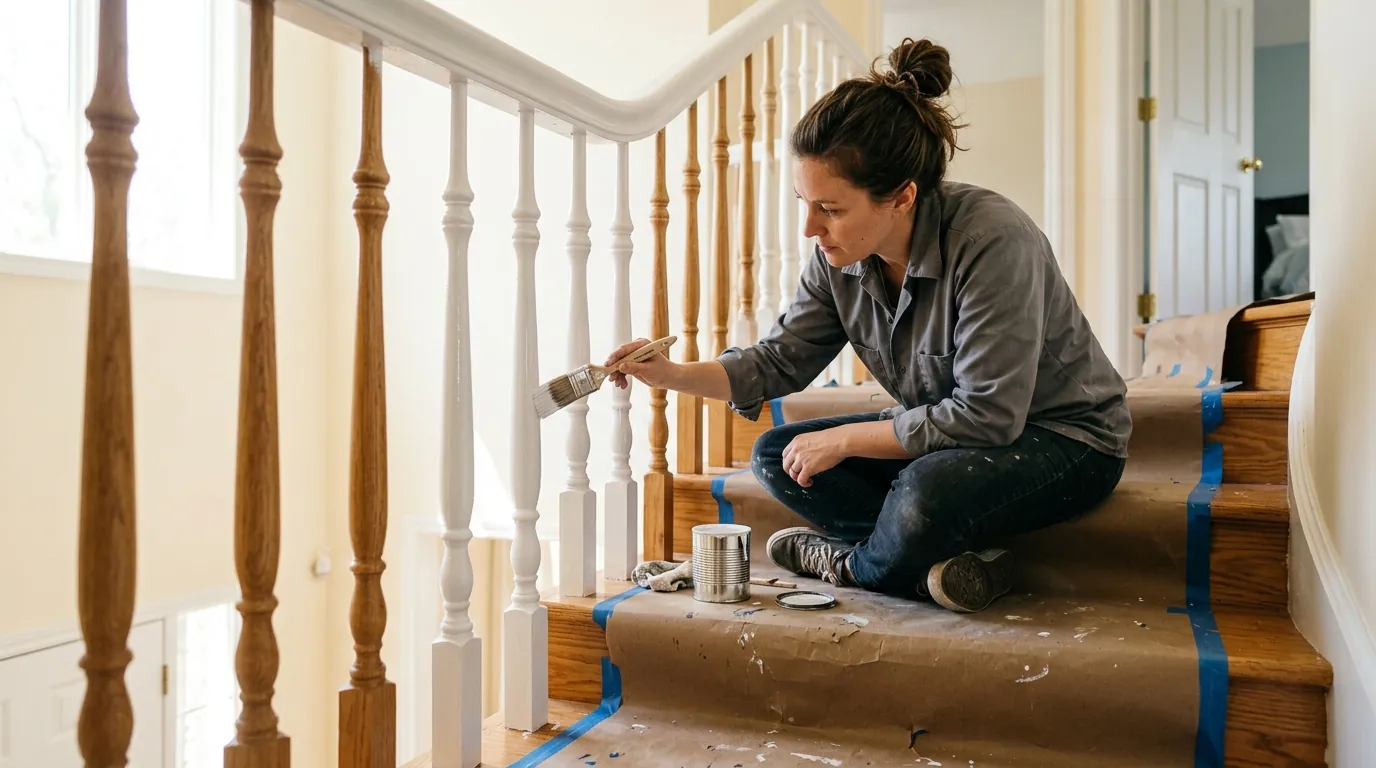
Handrail refinishing
Handrails take the most wear, and hand oils soften cheap paint. A painted handrail is sanded, cleaned with a degreaser, primed with a bonding primer and finished in enamel that is left to cure before heavy use. A stained wood rail is usually stripped or sanded back, restained if the color has worn unevenly, and sealed with a clear finish, which keeps the look many homeowners want against white spindles. We tape and paper the stair walls so rail work does not mark the paint beside it, and we tell you when a rail can be used again.
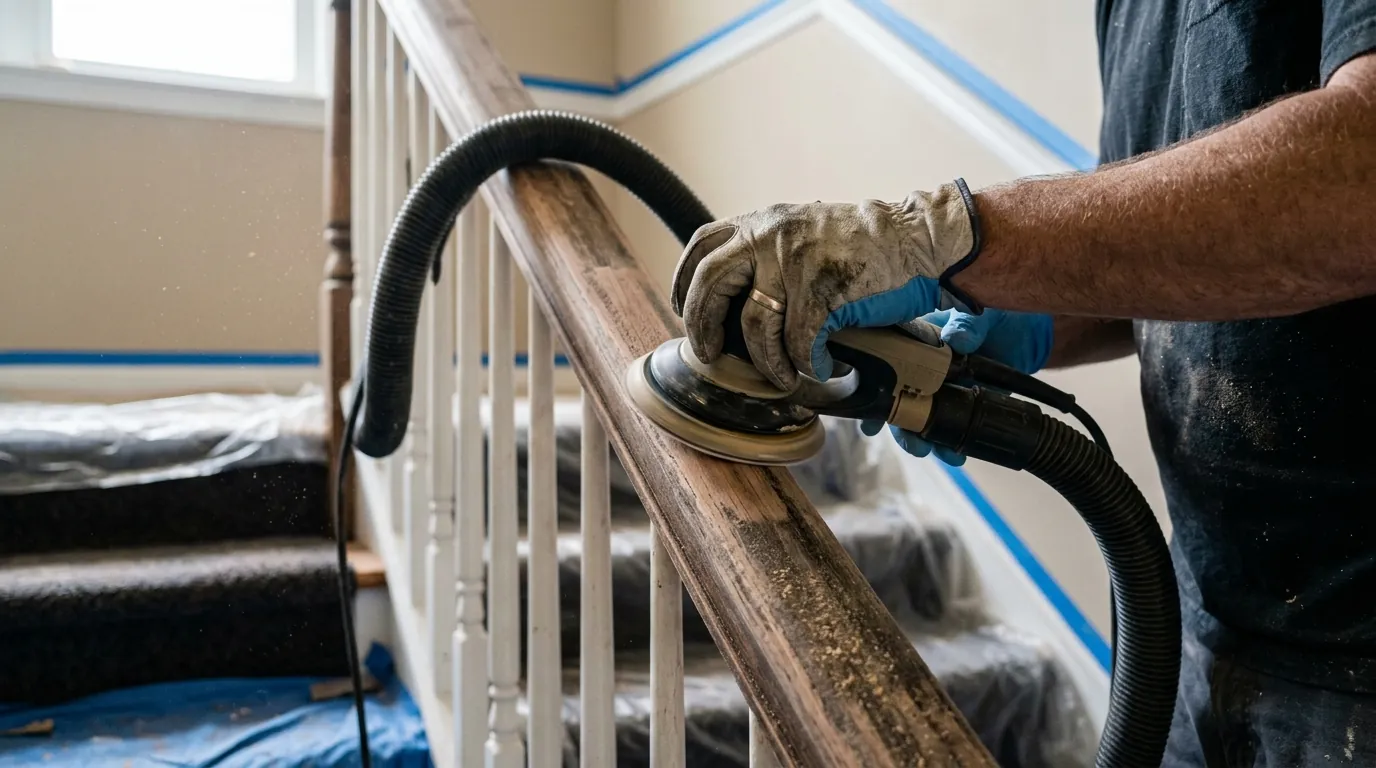
Stair riser painting
Risers are the vertical faces between treads, and they take every scuff from shoes. Painting them in a durable semi-gloss enamel, usually white against stained treads, is one of the most requested stair updates. We paint alternate risers first, so every other step can be used, then finish the rest the next day. Treads that are carpeted are protected; treads that are wood are masked or, when you want them refinished, handled as a separate job. Stringers and skirt boards along the wall are painted with the risers so the whole staircase reads as one finished piece.
Is this a weekend project or ours
Doable yourself
- Touching up scuffed risers in the same color
- Recoating a sound handrail in the same enamel
- A short, straight run with a few square spindles
Worth handing off
- Turned spindles with heavy old paint
- Any sanding on a pre-1978 stair
- Converting a stained rail to paint or back
- Two-story stairwells that need a stair platform
The part that catches most DIY stair jobs is the cure time. Enamel feels dry quickly but stays soft for days, and early use leaves prints and scuffs.
What we see on Atlanta homes
Staircases in Grant Park and Inman Park often belong to the two-story Queen Anne houses built between the 1880s and the first decades of the 1900s, with turned balusters under many layers of old paint. Because those houses predate 1978, sanding or scraping more than 6 square feet of painted surface in a room triggers federal lead-safe work practices, so we contain the hall, use HEPA vacuums and clean to a verified standard before the first coat of primer.
How long the stairs are out of use
They are not fully out of use at any point. A typical staircase takes two to four working days, and because work is staged, you always have a dry path. Full cure on enamel takes longer, so we leave protection on the treads and tell you when normal traffic is fine.
How a staircase gets painted in stages
- 1
Check the stair
We look at the finish, count balusters and check for loose parts and lead-era paint.
- 2
Mask and contain
Walls, floors and treads protected; lead-safe containment set on older homes.
- 3
Repair
Loose spindles tightened, gaps filled, dents and chips patched.
- 4
Sand and clean
Old finish scuffed or feathered, dust vacuumed and wiped.
- 5
Prime
Bonding primer on painted parts, stain blocker where knots bleed.
- 6
Enamel in stages
Alternate risers and one side of the rail first, so the stairs stay usable.
- 7
Cure and walk
We tell you when each part can take traffic and walk the finished stair with you.
Questions about staircase and railing painting in Atlanta
Yes. We paint alternate steps and sections in stages so there is always a dry path up and down.
Most enamels are dry to the touch in hours but take a day or more before regular hand use; we tell you on the day.
Painted rails match white spindles; stained rails show wear less and suit wood treads. Both are common.
Usually a wall paint was used instead of an enamel, or it was applied too thick and never fully cured.
Painted treads, yes. Sanding and refinishing hardwood treads is a separate flooring job we can point you to.
White spindles with a dark rail is a popular update that makes a stair look lighter without replacing parts.