Painting stucco in Atlanta starts with washing the walls and sealing cracks, then choosing the coating: elastomeric paint bridges hairline cracks and sheds water, while a breathable acrylic masonry paint suits walls that need to release moisture. EIFS, the foam-backed synthetic stucco, needs its own inspection first, because a paint job cannot fix water that is already behind it.
Updated September 2026
Why stucco needs a different approach from siding
Traditional cement stucco is porous and rigid. It absorbs water, dries out, and develops fine cracks as the house settles and temperatures swing. Paint on stucco has to stick to a rough, alkaline surface, flex over those small cracks, and still let moisture out of the wall so it does not blister.
The prep is washing off dirt and mildew, cutting out loose patches, filling cracks with a flexible stucco patch or sealant, and priming new patch material. Coats are sprayed and back-rolled so the paint gets into the texture instead of sitting on the high points. EIFS gets a closer look first, since its problems are usually about water getting behind the system rather than the finish itself.

What every stucco quote includes
- Tap test for hollow areas
- Crack survey on every wall
- Low-pressure wash with mildew cleaner
- Two-day dry time
- Crack filling and texture matching
- Sealant renewal at openings
- Masonry primer on patches
- Sprayed and back-rolled finish coats
- Coating type and coat count in writing
What changes the price of stucco painting
Stucco is priced like other exteriors by wall area, with crack repair and coating choice as the main differences.
Planning range from published Atlanta figures: $1.55 to $4.25 per square foot; average project $3,373, most Atlanta projects $2,104 to $4,689, oversized homes up to $7,500. That is a market range, not our quote; the factors below move a real price up or down.
- Wall area and height. Paintable square footage and the number of stories.
- Crack count. Many hairline cracks mean more sealing and patching time.
- Coating type. Elastomeric uses more material per square foot than masonry paint.
- Texture depth. Heavy textures take more paint and more back-rolling to cover.
- Patches and repairs. Loose or hollow patches cut out and re-stuccoed before paint.
- EIFS joints. Replacing failed sealant around windows and doors on EIFS homes.
- Trim and accents. Painted trim, bands and foam shapes in a second color add detail work.
Elastomeric or masonry paint for your stucco
| Factor | Elastomeric coating | Acrylic masonry paint |
|---|---|---|
| Crack bridging | Very good on hairline cracks | Limited |
| Breathability | Low | Higher |
| Film thickness | Thick, high build | Standard |
| Best for | Sound walls with fine cracking | Walls that need to release moisture |
| Cure time | Slower | Faster |
Elastomeric coatings
Elastomeric coatings go on much thicker than normal paint and stretch as the wall moves, so hairline cracks do not reopen through the finish. They shed rain well and hold color. The trade-off is breathability: a thick elastomeric film can trap moisture in walls that take on water from behind, which shows up as blisters. We use elastomeric on sound stucco walls with cracking, and a breathable masonry paint where moisture needs to escape. Elastomeric also needs the right primer and dry weather, because it cures slowly compared with standard acrylic.
Published Atlanta planning range for exterior house painting: $1.55 to $4.25 per square foot; average project $3,373, most Atlanta projects $2,104 to $4,689, oversized homes up to $7,500. A market figure, not our quote.
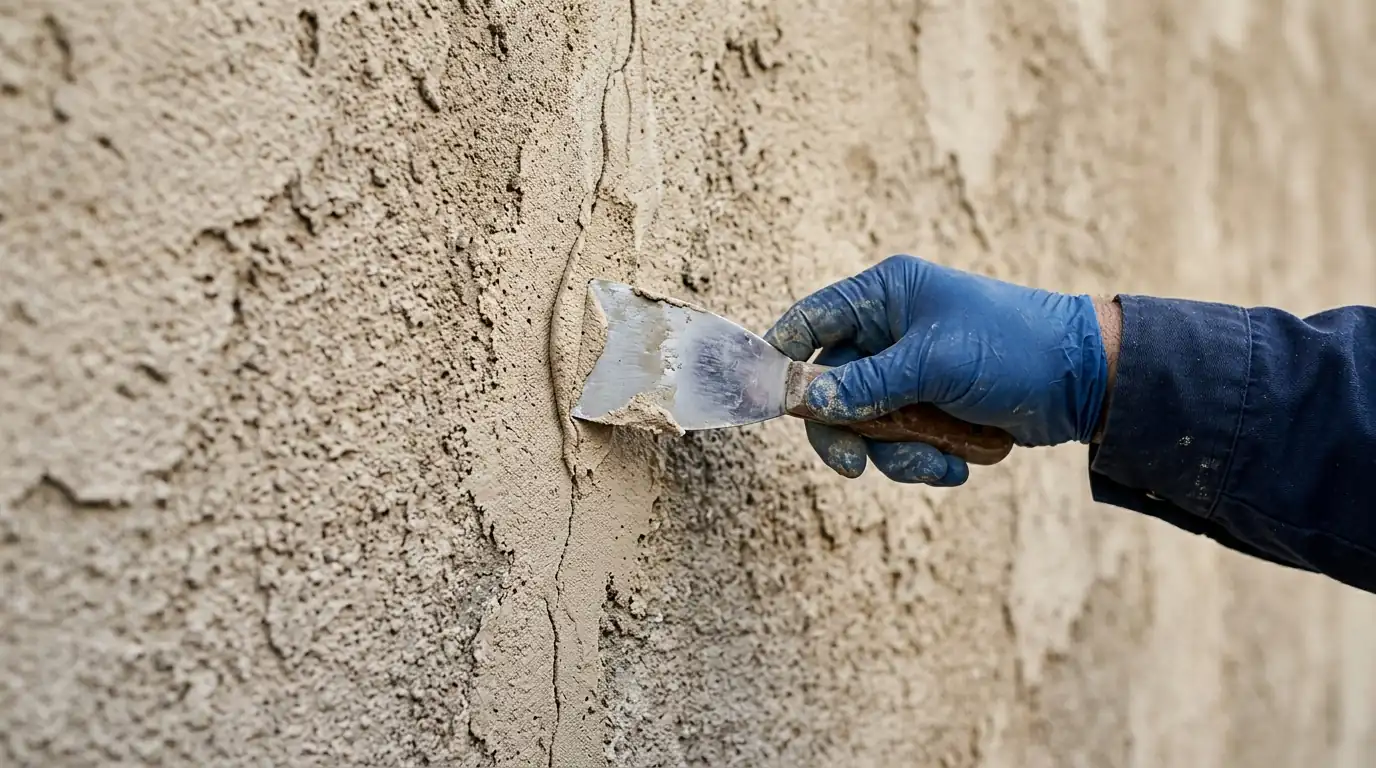
Hairline crack repair
Most stucco cracks are cosmetic, thinner than a credit card, and they come from normal shrinkage and settling. They still let water in, so each one is cleaned and filled with a flexible patching compound or a paintable sealant tooled into the texture. Wider cracks are routed out and filled with a stucco patch, then textured to match the wall so the repair does not show as a smooth line. Cracks that are wider at one end, run diagonally from corners or keep growing can signal structural movement, and we will flag those rather than paint over them.
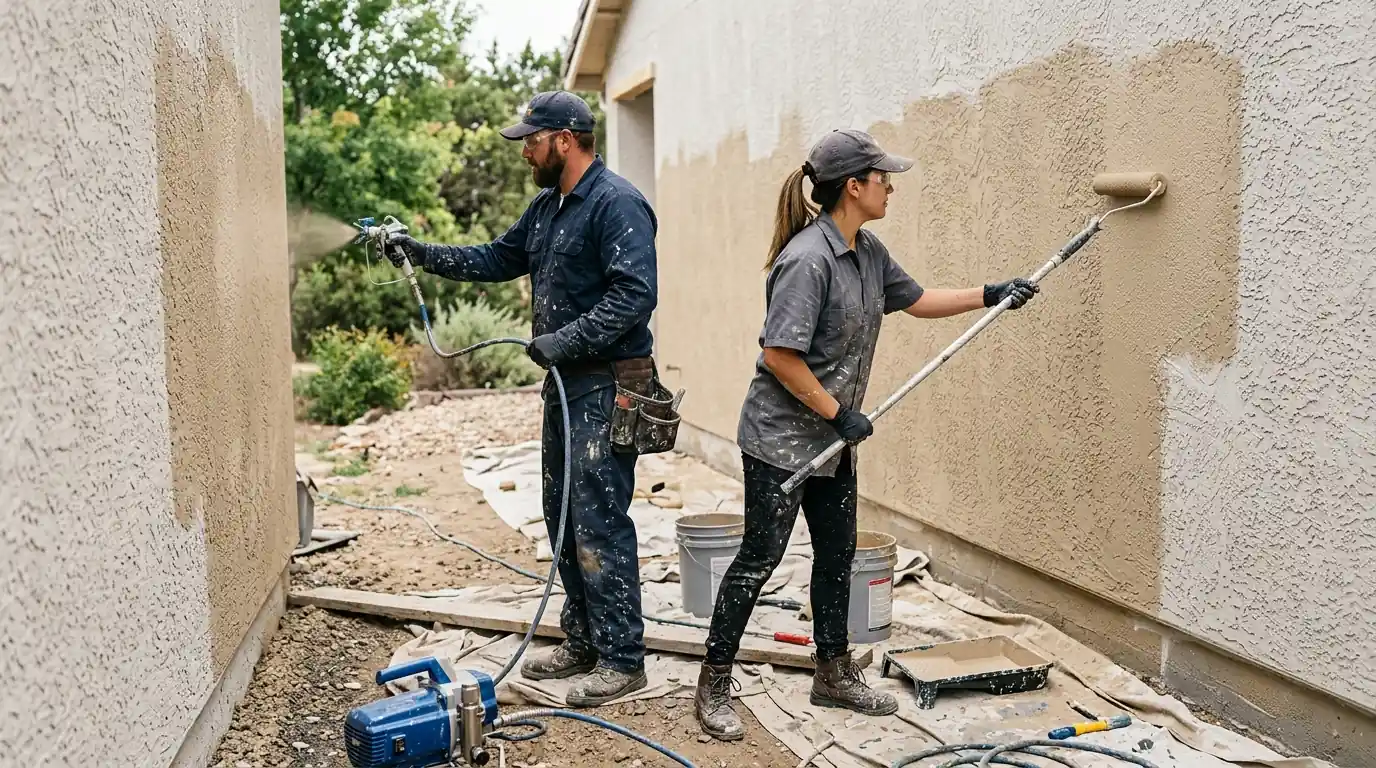
EIFS recoat
EIFS, or exterior insulation and finish system, looks like stucco but is a foam board with a thin synthetic finish. It is softer, sounds hollow when tapped, and depends on sealed joints around windows and doors to keep water out. Before recoating, we check the sealant joints, look for soft or stained areas below windows, and recommend a moisture inspection where there are signs of water behind the system. Sound EIFS takes an acrylic finish coat well. Recoating replaces worn color and restores the surface, but the sealant joints are what actually protect the wall.
What we see on Atlanta homes
Stucco is a smaller share of Atlanta houses than brick or siding, but it shows up in the Mediterranean Revival homes of Ansley Park and in contemporary builds around Midtown. It needs dry weather more than most surfaces. Elastomeric coatings cure slowly, so we schedule stucco for the April to June and September to November windows, wash the walls after pollen season, and give them two dry days before the first coat, rather than risk a summer thunderstorm on uncured film.
The stucco paint sequence
- 1
Inspect
Tap for hollow spots, check cracks and look for staining below windows.
- 2
Wash
Low-pressure wash with a mildew cleaner, then two dry days.
- 3
Repair
Cracks filled, loose patches replaced, texture matched.
- 4
Seal joints
Sealant renewed around windows, doors and penetrations.
- 5
Prime
Masonry primer on new patches and chalky areas.
- 6
Coat
Sprayed and back-rolled so paint fills the texture.
- 7
Final walk
Every wall checked in daylight with you before the job closes.
Questions about stucco and eifs painting in Atlanta
Painting protects it and seals fine cracks. Once painted, it needs repainting on a regular cycle like any painted exterior.
Not always. It bridges cracks well but can trap moisture on walls that need to breathe.
Filled and textured cracks blend well under a new coat, though very wide cracks may still be faintly visible.
EIFS sounds hollow when tapped and feels softer than cement stucco. We can check on the walk-through.
Most homes take four to six working days, plus drying time between washing, repairs and coats.
Yes. See our brick painting and limewash page for masonry options.