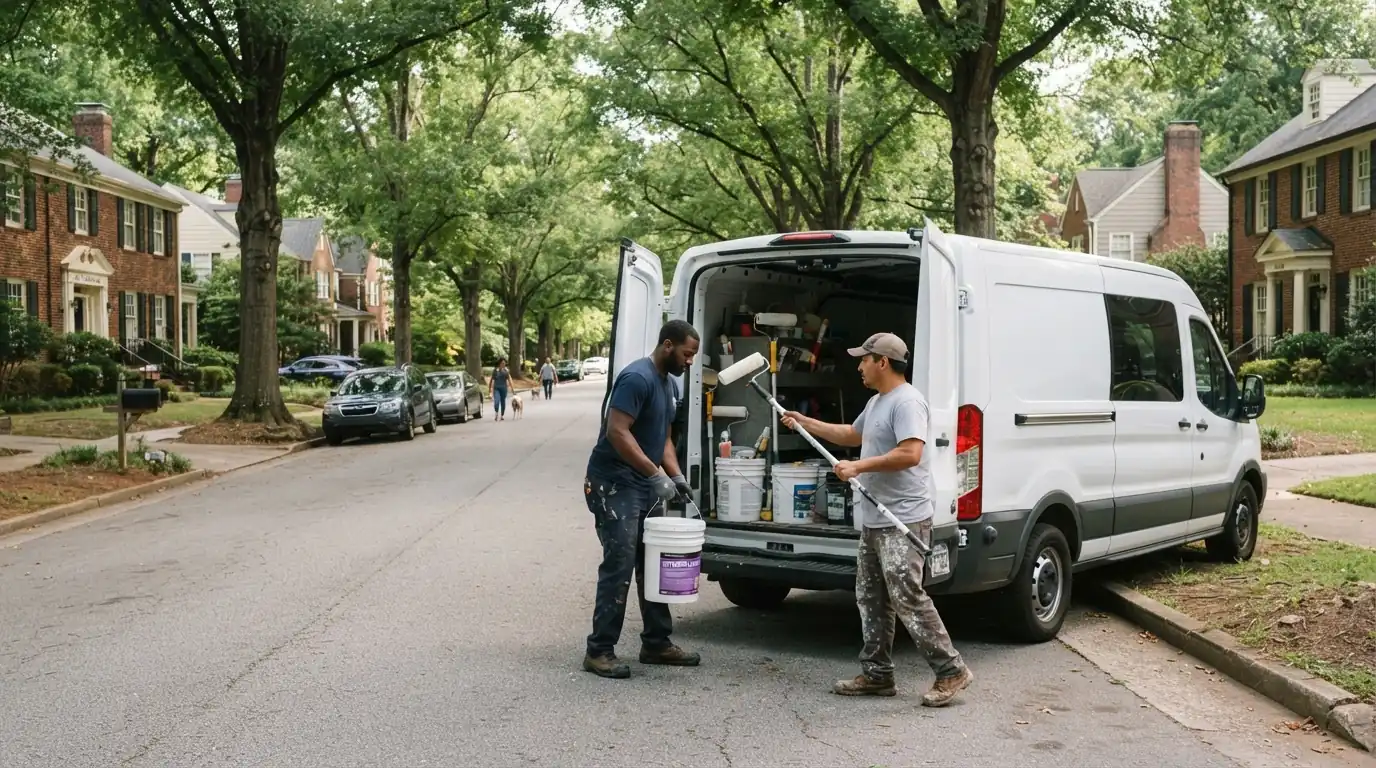
Interior painting in Atlanta usually costs $2 to $6 per square foot, depending on prep, ceilings and trim. A typical job moves furniture to the middle of each room, covers floors, fills holes and cracks, spot primes, cuts in the edges by brush and rolls two finish coats, with rooms handed back each evening. Most homes stay lived in throughout.
Updated September 2026
What goes into a clean interior repaint
The finish coat is quick. Everything before it is where the time goes: moving and covering furniture, papering floors, taking off outlet covers, filling nail holes and cracks, sanding patches, caulking gaps at trim and spot priming stains. Skip any of it and the new paint shows the old problems more clearly than before.
Sheen is chosen by room. Flat on ceilings hides flaws, matte or eggshell on living spaces looks soft and washes reasonably, and satin or semi-gloss on trim and doors stands up to hands. In kitchens and bathrooms, a washable finish matters more than the color. We confirm sheen and color on the wall with sample patches before the full job.
What every interior quote includes
- Colors and sheens confirmed with samples
- Furniture moved and covered
- Floors papered and protected
- Outlet and switch plates removed
- Nail holes and cracks filled
- Caulk at trim gaps
- Stain and patch priming
- Two finish coats on walls
- Daily cleanup and room reset
What an interior repaint costs in Atlanta
Planning range from published Atlanta figures: $2 to $6 per square foot; average $2,021, most projects $964 to $3,079; prep such as drywall repair, sanding or wallpaper removal adds $0.50 to $3 per square foot. That is a market range, not our quote; the factors below move a real price up or down.
- Room size and height. Wall area and ceiling height set how much paint and time each room takes.
- Ceilings and trim. Adding ceilings, baseboards, casings and doors adds brush work.
- Prep needs. Patching, sanding, stain blocking and caulking before any finish coat.
- Color change. Big light-to-dark or dark-to-light changes can need a primer or third coat.
- Occupied or empty. Furniture moving and daily reset add time in a lived-in home.
- Older finishes. Plaster, detailed trim and old oil-based paint need extra care.
- Paint line. Premium lines cost more per gallon but cover and wash better.
Living room and bedroom painting
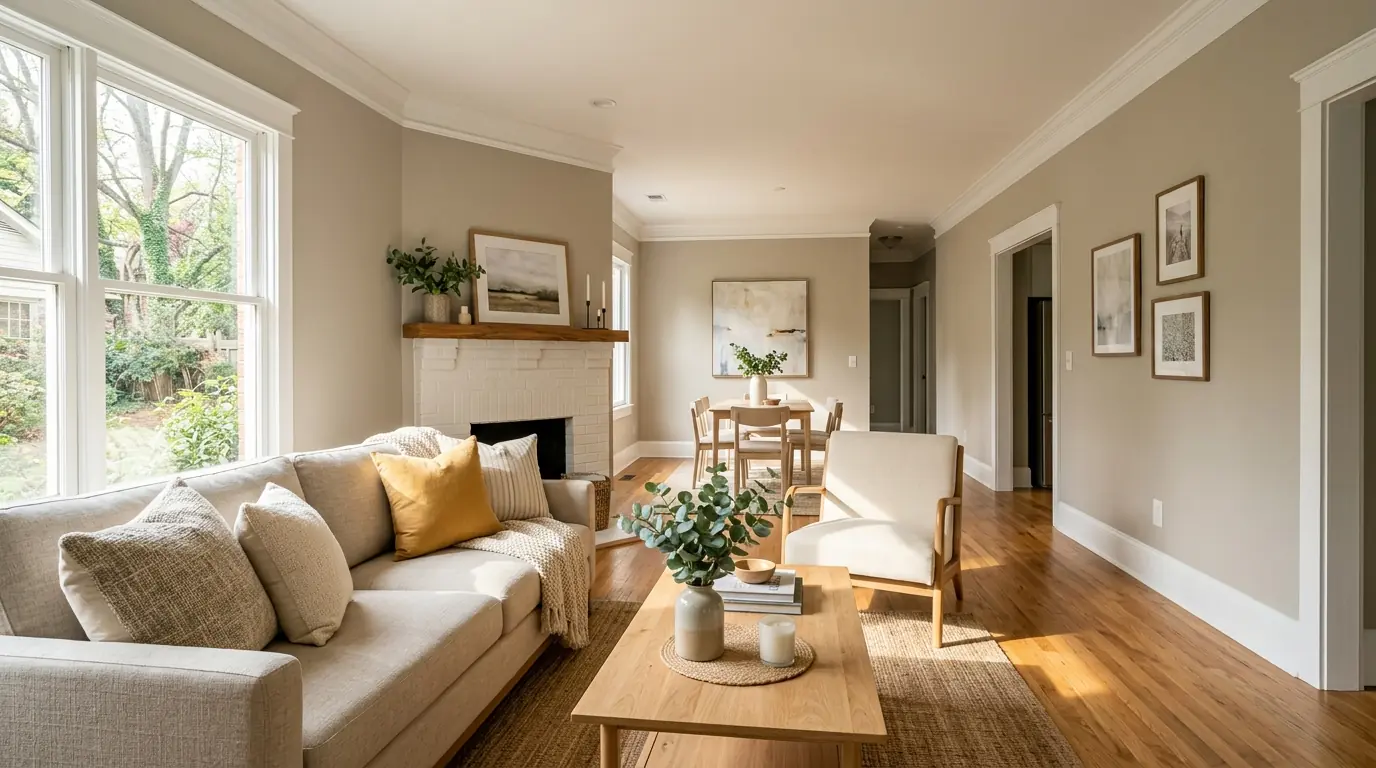
Single rooms are the most common interior call. Furniture moves to the center under plastic, floors are covered, and wall plates come off. After patching and sanding, the edges along the ceiling and trim are cut in by hand, then walls get two rolled coats. A bedroom usually takes a day, a large living room with high walls a little more. If the ceiling and trim are dingy next to fresh walls, painting them the same day avoids the new color making them look worse.
Published Atlanta planning range for interior painting per room: $700 to $1,800 for a 12 x 14 ft room (average $1,300). A market figure, not our quote.

Whole-house interior repaint
Whole-house jobs are planned as a sequence. We work through the home in an order that keeps a bedroom and the kitchen usable, move room by room with the same prep standard, and do ceilings and trim in each room before walls. Colors are confirmed with samples at the start, so the crew is not waiting on decisions mid-job. Empty homes before a move-in go fastest because nothing needs moving, and this is the best time to paint ceilings, closets and trim together.
Published Atlanta planning range for whole-home interior repaint: $6,800 to $12,200 for a 2,000 sq ft interior. A market figure, not our quote.
Accent walls
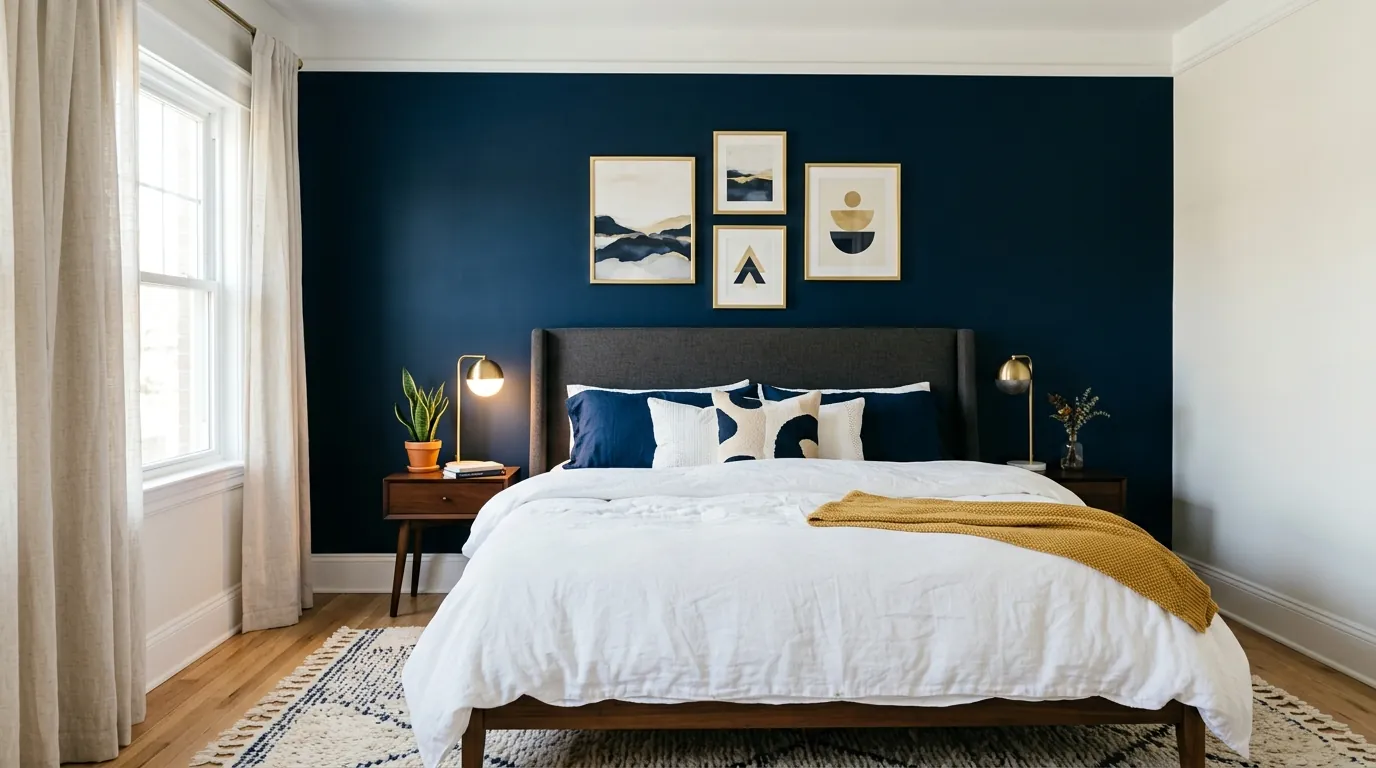
An accent wall is small in area and big in effect, and deep colors are where application matters most. Dark and saturated paints need a tinted primer and often a third coat to look even, and the cut line at the ceiling and corners has to be perfectly straight because it draws the eye. We tape and seal the edges on the adjoining walls so the line is crisp. Accent walls behind a bed, a sofa or in a stairwell take a few hours and are an easy way to try a bolder color.
Bathroom and laundry room painting
Bathrooms and laundry rooms are small but demanding. Humidity and cleaning products break down ordinary paint, and mildew grows on ceilings above the shower. We clean mildew with a treatment, prime stained areas, and use a paint made for high-moisture rooms in a satin finish that wipes clean. Toilets, vanities and fixtures are masked or removed where needed, and we recommend running the exhaust fan for a day or two while the finish cures. Laundry rooms get the same moisture-rated paint, with the wall behind the washer and dryer painted before the machines slide back.
What we see on Atlanta homes
The older Atlanta interiors are slower work, with detailed trim and plaster that take more careful prep than a newer drywall house. The Tudors built from about 1930 to 1945 in Morningside, Lenox Park and Virginia-Highland are a good example. Their many-paned windows mean a lot of brush work on muntins and sashes, so on those houses the trim and windows take as long as the walls, and we quote the trim as its own line so the price reflects it.
How an interior room gets painted
- 1
Walk-through
Rooms, colors, sheens and any repairs agreed and written down.
- 2
Protect
Furniture moved and covered, floors papered, plates removed.
- 3
Prep
Holes and cracks filled, patches sanded, gaps caulked.
- 4
Prime
Stains, patches and bare areas spot primed.
- 5
Cut and roll
Edges cut in by brush, then walls rolled in two coats.
- 6
Trim and doors
Enamel brushed on trim, casings and doors.
- 7
Reset
Plates back on, furniture returned and a room walk with you.
Questions about interior painting in Atlanta
No. We work room by room, reset each room in the evening and keep a bedroom and the kitchen usable.
Most homes take three to six working days, depending on size, ceilings and trim.
Flat for ceilings, matte or eggshell for most walls, satin for kitchens and baths, semi-gloss on trim and doors.
We move and cover furniture within each room. Very heavy items like pianos should be moved by specialists.
Yes. Low-odor lines are used in bedrooms and nurseries and in any home where smell is a concern.
Yes. See our ceiling painting and trim, door and baseboard pages for details on each.