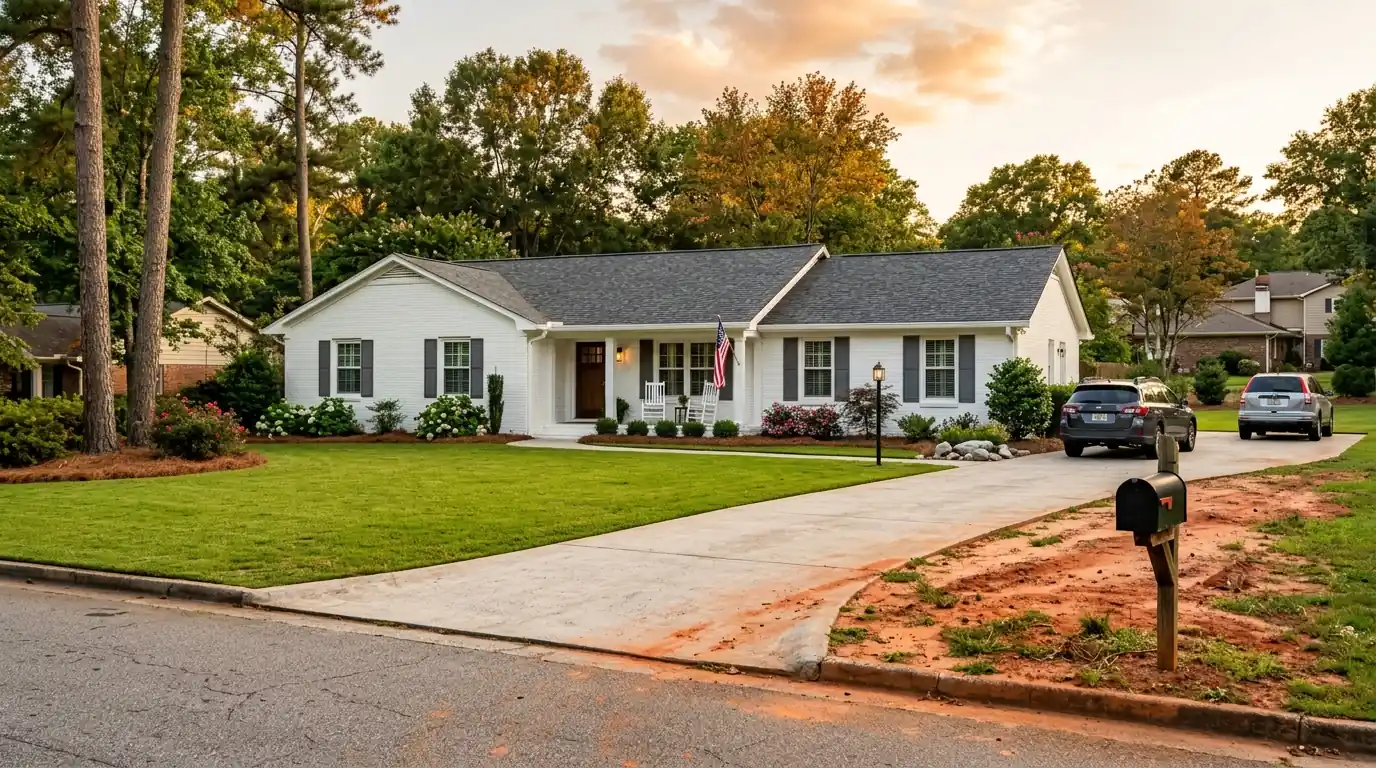
Exterior house painting in Atlanta runs best from April to June and September to November, when acrylic paint cures instead of sitting wet through afternoon thunderstorms. We pressure wash the siding, let it dry two days, scrape and sand failing paint, replace rotted boards, caulk, prime bare wood and spray two finish coats with a brush behind the gun so the paint is worked into the grain.
Updated September 2026
What a full exterior repaint involves on a Georgia house
The visible part of the job is two coats of color. The part that decides how long it lasts happens before the first gallon opens: a full wash to strip pollen and mildew, drying time, scraping and feathering every failing edge, sanding glossy trim, replacing soft wood instead of caulking over it, and priming bare or chalky surfaces so the finish has something to grip.
Product matters less than people think, as long as it is a quality 100 percent acrylic exterior line. Application matters more: siding is sprayed and immediately back-brushed so paint is pushed into laps and grain instead of lying on top. Trim is brushed. Doors get enamel.
A two-story home usually takes four to six working days, weather permitting. The quote lists every surface, the prep on each, the products, and the carpentry as its own line.
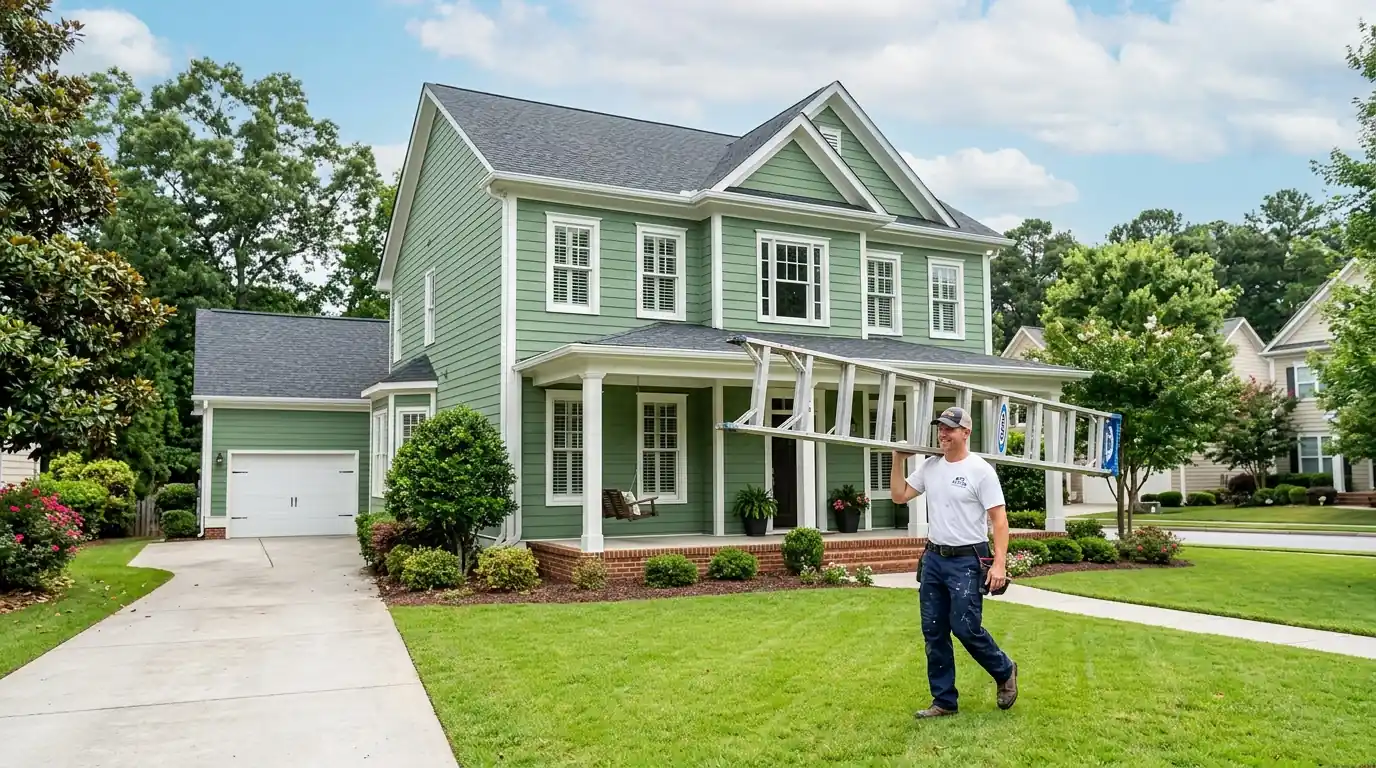
What every exterior quote from us includes
- Full wash with mildew treatment
- Two-day dry time before primer
- Scraping and feather sanding of failing paint
- Rot replacement quoted as its own line
- Caulk at trim, joints and penetrations
- Primer on bare, chalky and repaired areas
- Two sprayed and back-brushed finish coats
- Brushed trim and enamel on doors
- Product names and coat counts on the quote
What an exterior repaint costs in Atlanta, and what changes it
Planning range from published Atlanta figures: $5,500 to $9,500 for a typical 2,000-2,500 sq ft home including washing, scraping, caulking, primer and two coats. That is a market range, not our quote; the factors below move a real price up or down.
- Square footage of wall. Price is driven by paintable wall area and the number of colors, not the home's floor plan.
- Stories and access. Second-story walls, steep lots and walkout basements add ladder and lift time.
- Siding condition. Peeling paint that needs full scraping and priming can double the prep hours.
- Rot and carpentry. Replacing soft trim, fascia and hardboard panels is quoted as a separate line.
- Siding material. Wood needs the most prep, hardboard needs repair, fiber cement needs the least.
- Trim and detail. Shutters, porch rails, lattice and multiple colors add brush time.
- Season. Jobs squeezed into wet months need more weather days, which stretches the schedule.
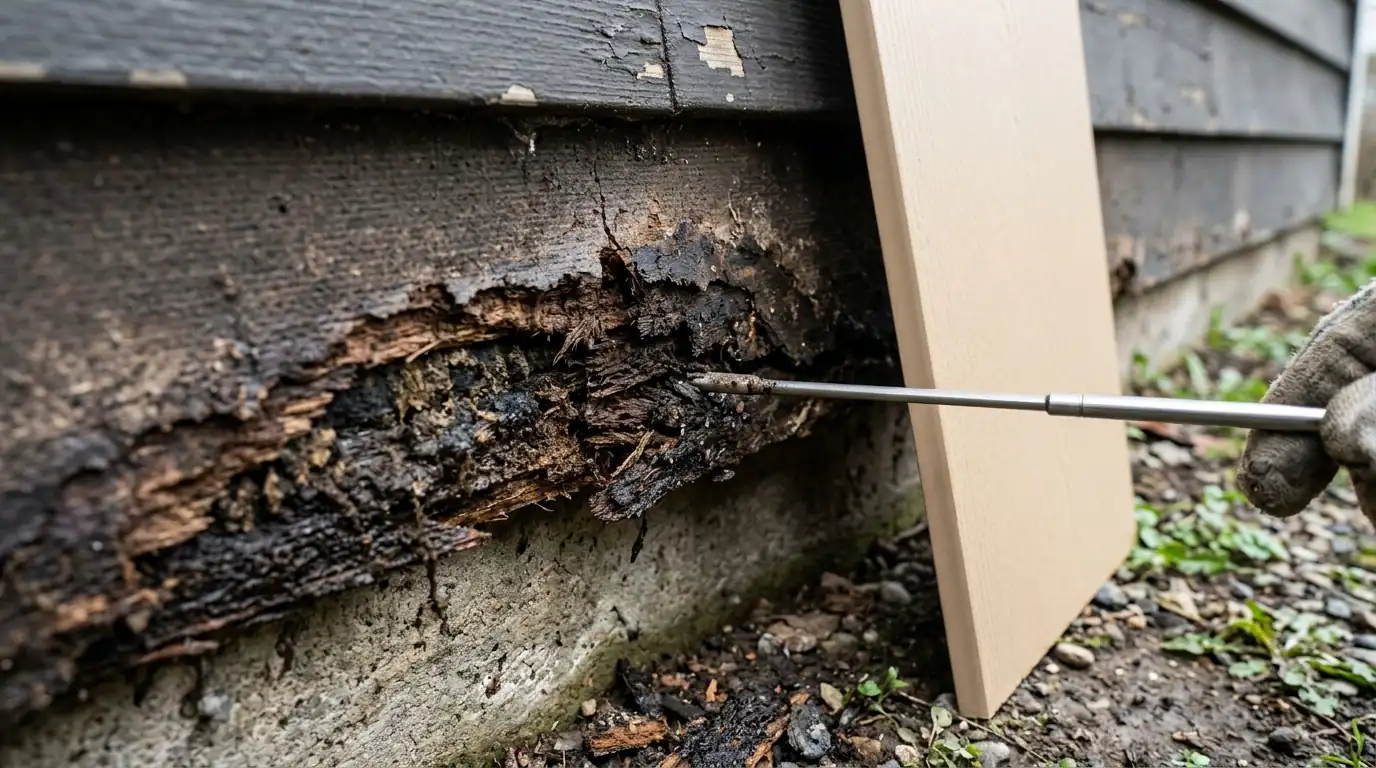
Hardboard and Masonite siding
Hardboard was the standard siding on the 1990s and 2000s subdivisions across the east metro, and it fails from the inside. Once water gets behind a hairline crack or an unsealed butt joint the panel swells, the paint lifts and the bottom edges crumble. Painting it well means finding those soft spots with a probe, replacing the panels that have gone, sealing every cut edge and joint, and priming with a product made for weathered hardboard before two acrylic coats. Done that way it keeps going for years. Painted over without the repair, the swelling continues under the new paint and fails again within a season.
Published Atlanta planning range for exterior house painting: $1.55 to $4.25 per square foot; average project $3,373, most Atlanta projects $2,104 to $4,689, oversized homes up to $7,500. A market figure, not our quote.
Wood lap siding
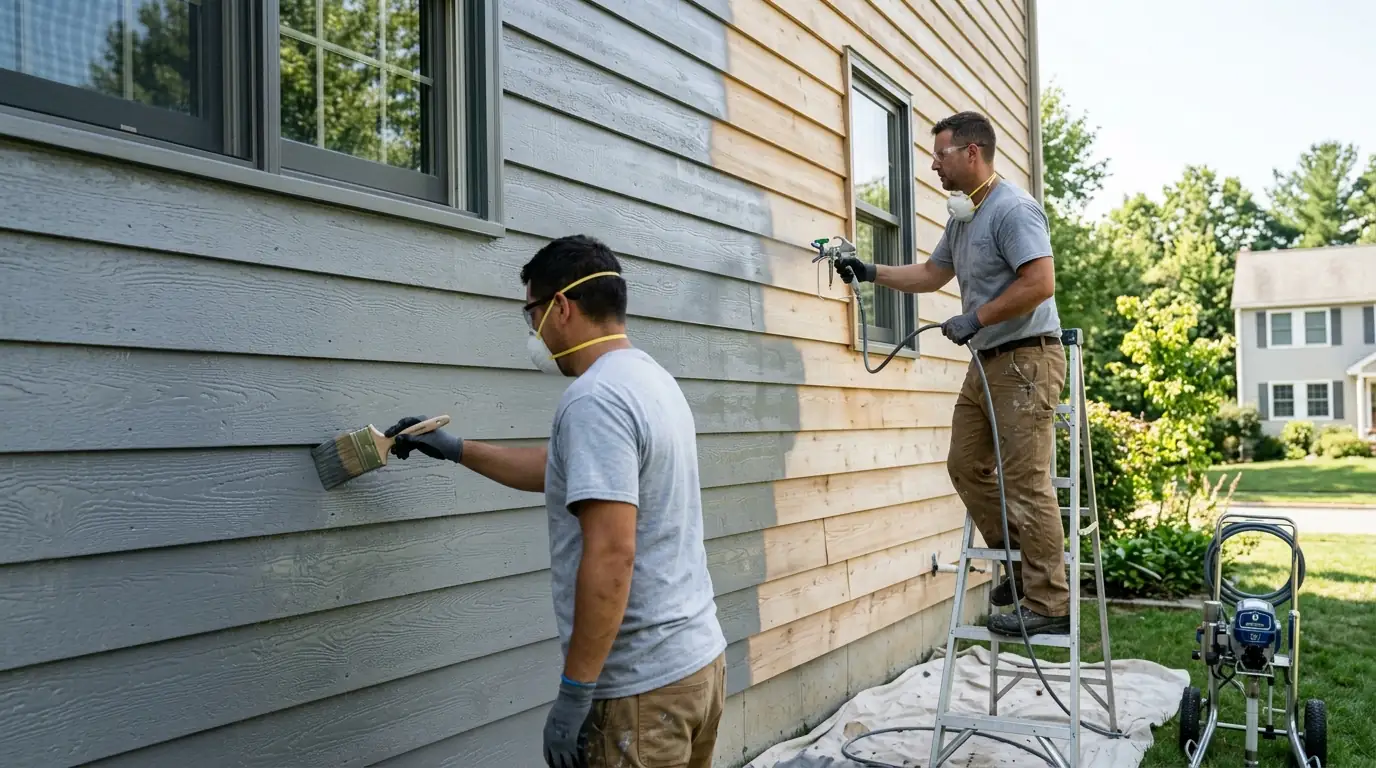
Real wood siding on the intown bungalows and Victorians has been painted many times, and the layers are the challenge. Failing paint is scraped back to a sound edge, feathered with sanders, spot primed with an oil or bonding primer, and caulked at joints and trim lines. On a pre-1978 house the scraping is set up as lead-safe work with containment under the drop line, as federal rules require. Wood takes paint well once the surface is stable, and back-brushing is not optional on lap siding, because the gun alone leaves the underside of each lap thin.
Fiber cement siding
Fiber cement holds paint longer than wood or hardboard, and a factory finish often runs fifteen years before it fades and chalks. When it does, the prep is mostly washing, a bonding primer on chalky areas, and caulk at butt joints and trim. Because the boards are stable, two sprayed and back-brushed coats give a very even finish. Watch the joints and the bottom course near the ground, where clay splash and sprinkler spray stain and where joint flashing sometimes needs attention before paint.
Two-story exteriors
Height changes the job more than square footage does. Second-story siding, gables and fascia need extension ladders, standoffs and sometimes a lift over a walkout basement, and every surface up there is washed, scraped and primed as carefully as the ground floor, because the sun hits it harder. Gable ends and south-facing walls are where paint fails first in Atlanta. We sequence the high work into the morning shade and check the finished elevations from the ground with binoculars before calling the job done.
What we see on Atlanta homes
Two different houses call about exterior paint here. Across Gwinnett County and Walton County the 1990s and 2000s subdivisions were built with hardboard that delaminates once water gets behind a hairline crack, so the quote on those homes starts with a probe for soft panels. Intown, Ormewood Park carries Victorian cottages and 1920s Craftsman bungalows with real wood lap siding under many layers of paint, where the work is careful scraping and priming. Both get the same calendar rule: April to June or September to November, with two dry days after the wash before primer.
The exterior sequence we follow on every house
- 1
Walk-through and probe
Every elevation checked for soft wood, failing caulk and chalking, then written up.
- 2
Wash
Low-pressure wash with a mildew cleaner, then two dry days before any primer.
- 3
Scrape and sand
Failing edges feathered, glossy trim scuffed, bare spots identified for primer.
- 4
Carpentry
Rotted trim, sills and panels cut out and replaced with matching profiles.
- 5
Caulk and prime
Joints sealed, bare and chalky areas primed with the product the surface needs.
- 6
Two finish coats
Sprayed and back-brushed siding, brushed trim, enamel on doors.
- 7
Daylight walk
Every elevation checked with you before the ladders leave.
Questions about exterior house painting in Atlanta
April through June and September through November. Summer storms and humidity slow cure; winter cold snaps push nights below the paint's minimum.
We replace it. Painting rot seals moisture in and the paint fails within a year, so carpentry is its own line on every exterior quote.
Both. Siding is sprayed and back-brushed so paint reaches into laps and grain; trim is brushed. Spraying alone leaves a thin film.
Four to six working days for a typical two-story home; heavy scraping, carpentry and weather add days.
Only for the color decision and the final walk. We need exterior water and power, and vehicles moved off the work zone.
Scraping is set up as lead-safe work with containment and cleanup, which federal rules require on pre-1978 homes.