Painting a front door or a garage door in Atlanta is usually a one-day job: the door is cleaned, sanded, spot primed and given two coats of exterior enamel, with hardware removed or masked. Front doors stay on their hinges and are propped open while they dry; metal garage doors get a bonding primer first so the new color does not peel.
Updated September 2026
Why doors wear out before the rest of the house
A south- or west-facing front door sits in full afternoon sun, and dark colors fade and chalk within a few summers. Hands, keys and packages wear the paint around the lockset. Garage doors take rain and sprinkler spray at the bottom panel, and factory-finished steel doors turn chalky and pale as the finish breaks down.
Door painting is small in square footage and big in detail. Panels, moldings and edges all need even coverage without runs, the weatherstripping and threshold have to stay clean, and the door has to close properly afterwards. Enamel is the right finish for both doors because it levels out brush marks, resists fingerprints and washes clean.
What changes the price of door painting
Door work is priced per door, and the surface, condition and color choice make the difference.
- Door type. Paneled wood, flush steel, fiberglass and carriage-style doors take different prep and primer.
- Condition. Peeling, chalking or rusted finishes need more cleaning, sanding and spot priming.
- Color change. Going from light to dark or dark to light can need a third coat.
- Glass and sidelights. Doors with glass panes and sidelights need careful masking and more brush time.
- Garage door size. A two-car door has twice the panel area of a single door.
- Hardware. Removing and reinstalling locksets, knockers and kick plates adds a little time.
- Trim and frame. Painting the casing and frame with the door completes the look and adds labor.
Front door painting
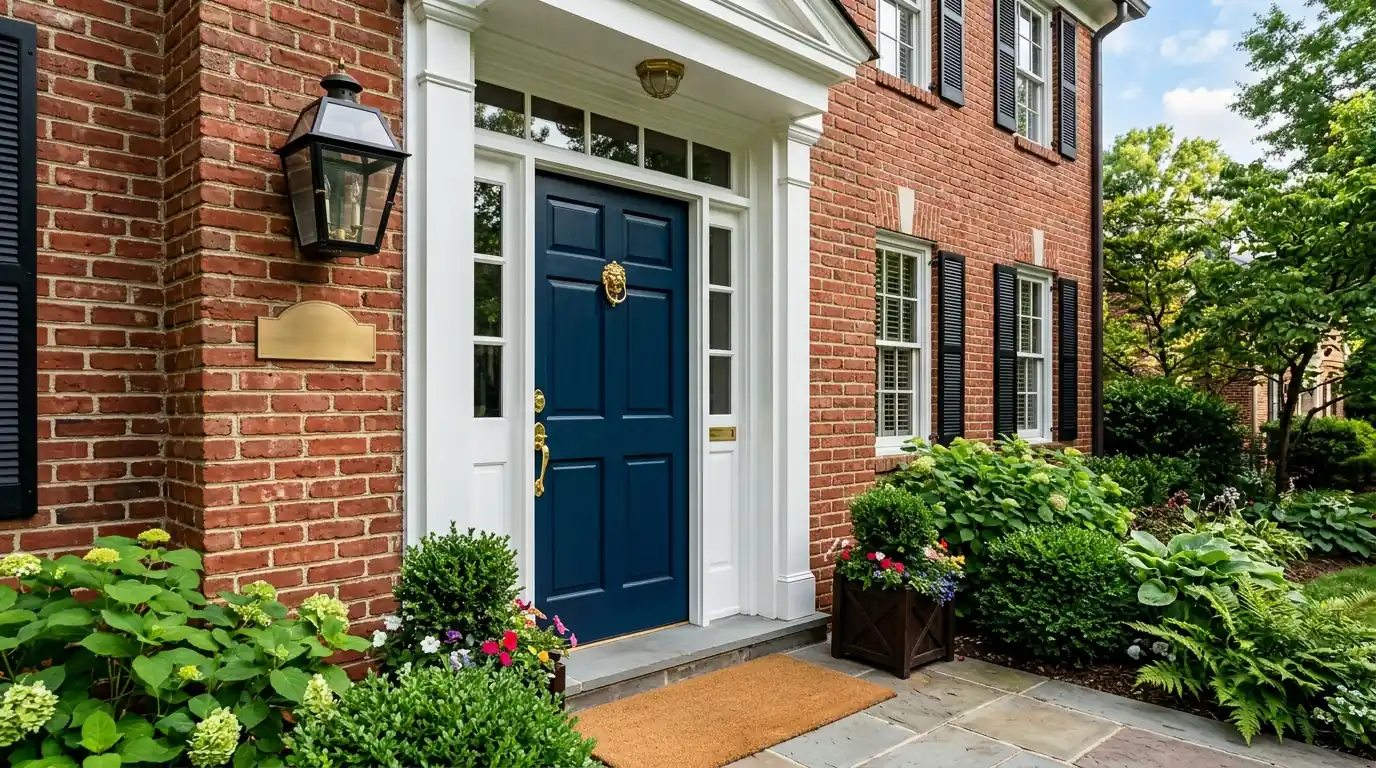
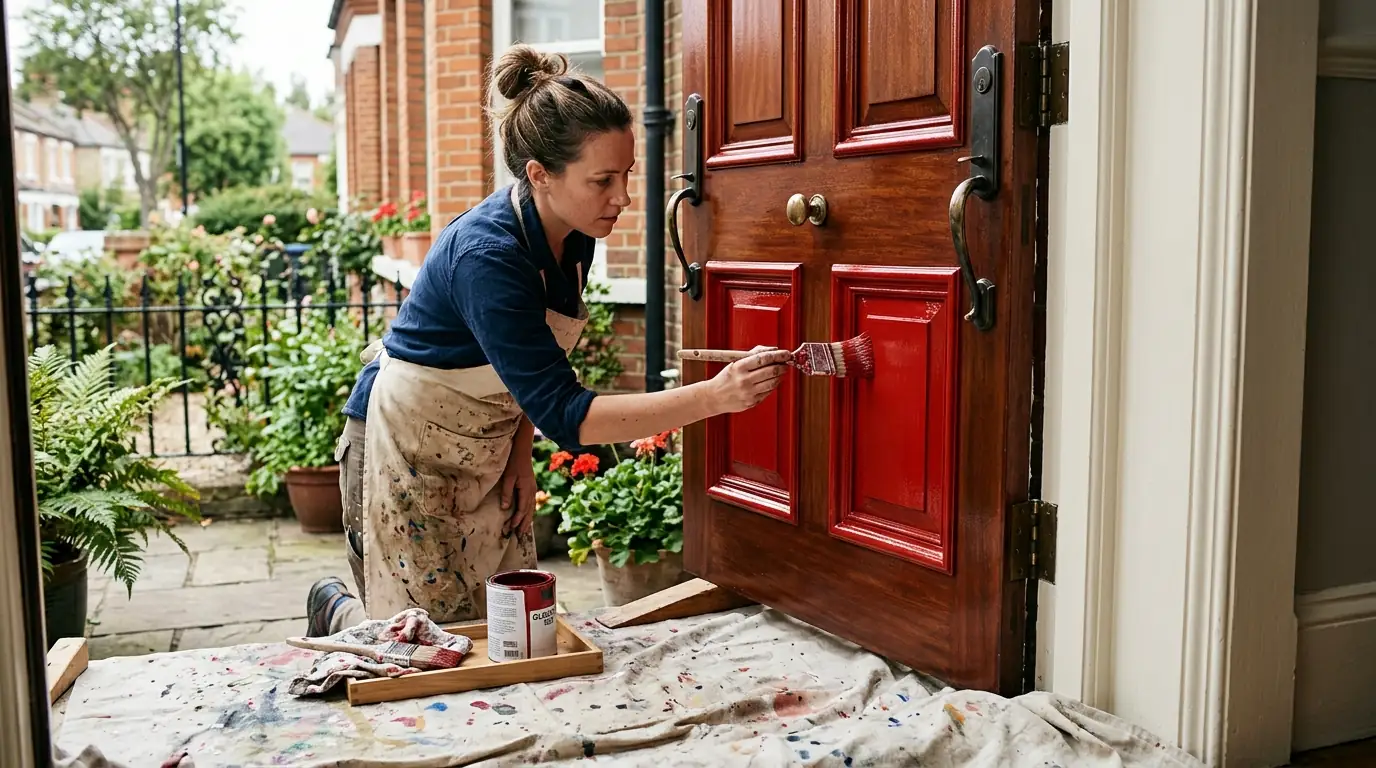
Front doors are painted in place. We remove or mask the lockset, knocker and kick plate, clean the door with a degreaser, sand the old finish, fill dents and prime any bare wood or metal. Two coats of exterior enamel follow, brushed in the order the panels are built so the grain lines stay straight. The door stays propped open while it dries, so we schedule it for a day you are home. Fiberglass doors get a bonding primer; steel doors are checked for rust at the bottom edge and treated before paint. Bold colors like deep red, navy or black need an extra coat to cover evenly.
Metal garage door painting
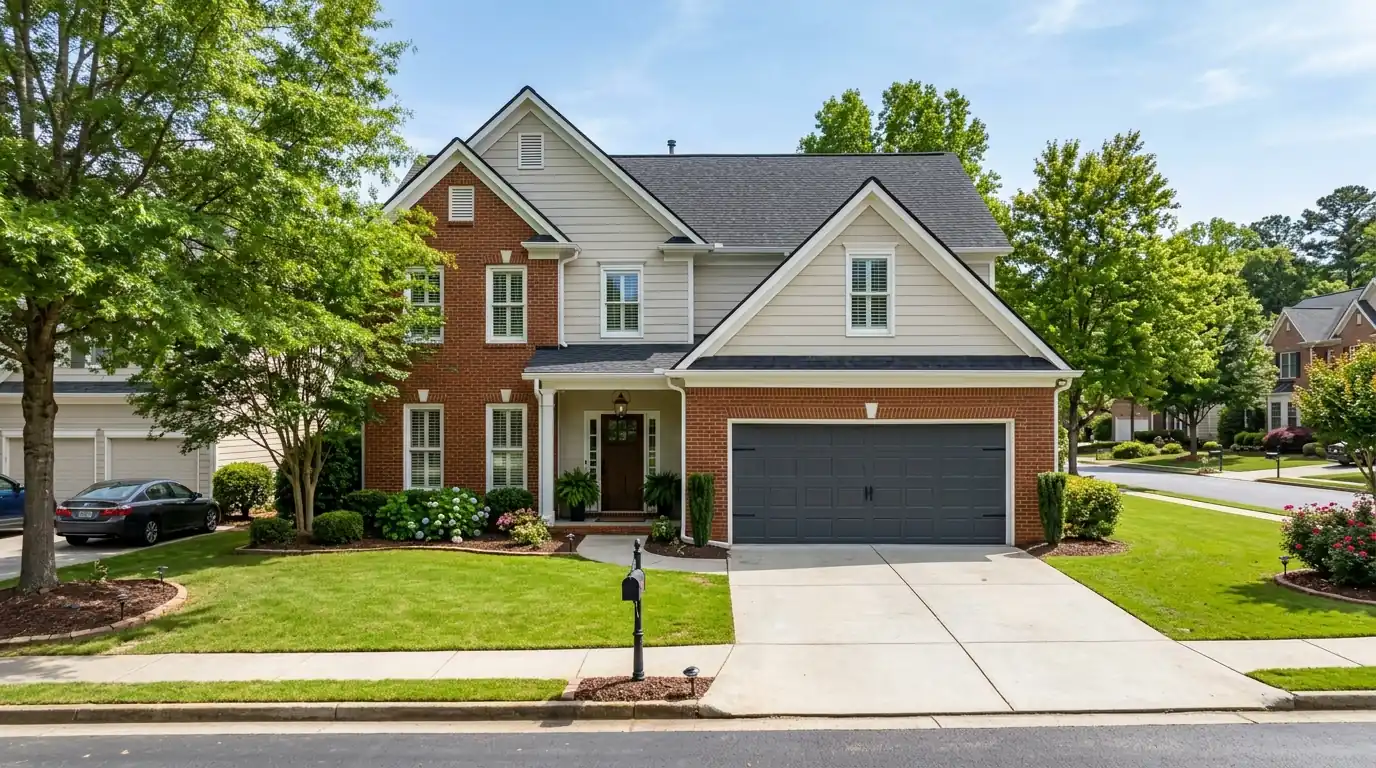
Steel garage doors come with a baked factory finish that chalks after years of sun. Painting over that chalk without cleaning is why many repainted garage doors peel. We wash the door with a cleaner that removes the chalk, rinse, let it dry, then apply a bonding primer before two coats of exterior acrylic. Rusted spots along the bottom are sanded to bare metal and primed with a rust-inhibiting product. The door is painted in the closed position, then run up and down after drying so the panel joints do not stick together. Weatherstripping and the opener hardware are masked.
Wood garage door staining
Wood and wood-look carriage doors are usually stained rather than painted, to keep the grain showing. Stain on a garage door faces the same problems as a deck: sun breaks it down and water sits at the bottom rail. We clean and lightly sand the door, restain with a penetrating product matched to the existing color, and seal the bottom edge, which is where wood doors rot first. If the old finish is a film that has peeled, it is stripped first so the new stain can soak in. Wood doors are also a good time to check that the trim around the opening is solid and caulked.
What we see on Atlanta homes
People in the historic districts often ask whether a new door color needs approval first. The rules are narrower than they expect. Inman Park's district regulations say painting or repainting does not require a Certificate of Appropriateness, and in Cabbagetown, exterior work under $2,500 does not need Urban Design Commission approval, which covers most door jobs. We still suggest checking with your neighborhood association before a dramatic color change, because the rules differ by district and a review takes time.
How long you are without the door
A front door is painted and dry enough to close the same day, as long as we start in the morning. Garage doors are painted closed and opened once the finish is dry, usually by late afternoon. Wood doors that are stained need the day plus a night before the bottom edge is sealed.
How a door gets painted in a day
- 1
Check the door
We look at the material, the old finish and any rust, rot or dents.
- 2
Protect
Hardware removed or masked, floors and porch covered, weatherstripping taped.
- 3
Clean
Degreaser on front doors, chalk remover on factory steel.
- 4
Sand and repair
Old finish scuffed, dents filled, rust sanded back to sound metal.
- 5
Prime
Bonding primer on steel and fiberglass, spot primer on bare wood.
- 6
Two coats
Brushed or rolled in the order the panels are built, with no runs at the moldings.
- 7
Dry and reset
Hardware back on and the door tested once the finish is dry to touch.
Questions about front door and garage door painting in Atlanta
Usually not. It is painted in place and propped open while it dries, which is faster and keeps the house secure by evening.
Most exterior enamels are dry enough to close carefully the same evening, with weatherstripping left clear.
Almost always because the factory finish was chalky and was not cleaned or primed with a bonding primer first.
Yes, with a cleaner and a bonding primer. Painting it without either leads to peeling.
Mid-tone colors fade less visibly than very dark ones. Deep colors still work with a quality exterior enamel.
Yes. Shutters and exterior trim are covered on our trim and shutter painting page.