A garage floor coating in Atlanta starts with diamond grinding the slab, not acid etching, because Georgia slabs sweat moisture in summer and coatings on an etched floor let go within a year. We fill cracks and pits, roll a moisture-tolerant primer, then apply either a two-coat epoxy or a polyaspartic flake system that cures in a day.
Updated September 2026
What a coated garage floor fixes
Most calls about garage floors come after a car has been parked on wet clay for one winter. The slab is stained orange, the surface dusts when swept, and any old coating from the builder is lifting in sheets around the tires. Concrete looks hard but it is porous, and water vapor moving up from the soil is what pushes paint off from underneath.
A proper coating has three parts: mechanical prep that opens the surface, a primer that tolerates the slab's moisture, and a topcoat matched to how the garage is used. A storage garage can take a plain epoxy. A garage where hot tires roll in every afternoon needs polyaspartic, which does not soften and lift the way epoxy can when a tire sits on it at 150 degrees.
The job takes one to two days for a two-car garage. Everything comes out of the space, the floor is ground and vacuumed, and you park back on it after the cure window we give you on the quote.
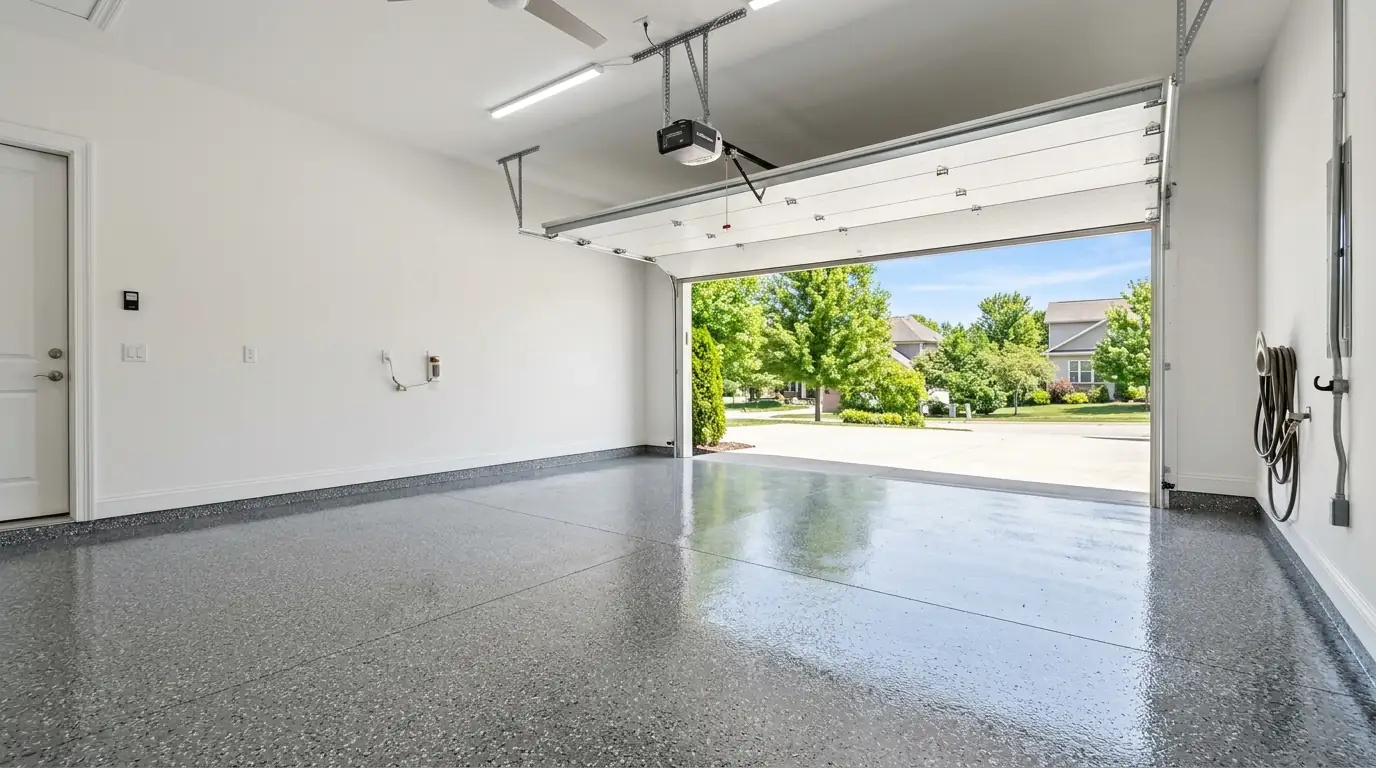
What the coating quote includes
- Slab moisture and hardness test
- Diamond grinding with dust collection
- Crack chasing and polyurea fill
- Spall and pit patching
- Moisture-tolerant primer
- Pigmented body coat
- Flake broadcast where specified
- Clear topcoat
- Written cure schedule and care sheet
What moves the price of a garage floor coating
Coatings are priced by the square foot and the system; slab condition is the biggest swing.
- Square footage. A one-car bay costs less than half of a three-car garage; setup and grinding time are the fixed part.
- System chosen. Polyaspartic flake runs higher per foot than epoxy; penetrating sealer is the lowest tier.
- Slab condition. Cracks, spalling, pitting and old failed coatings all add grinding and patching hours.
- Moisture reading. A slab that tests wet needs a moisture-mitigation primer, which adds a coat and a day.
- Flake coverage. Full-broadcast flake uses more material than a light sprinkle but hides more.
- Steps and stem walls. Coating the step into the house or a short stem wall adds detail labor.
- Contents and access. A packed garage that we have to clear and stage adds time before grinding starts.
Epoxy or polyaspartic: which one fits your garage
| Factor | Epoxy system | Polyaspartic flake |
|---|---|---|
| Cure to drive | 2 to 3 days | Usually next day |
| Hot-tire resistance | Good with urethane top | Very good |
| UV yellowing near the door | Possible over time | Minimal |
| Cost per square foot | Lower | Higher |
| Best fit | Storage, workshops, lightly used bays | Daily-driven attached garages |
Epoxy floor coating
Epoxy is the standard two-part coating: a moisture-tolerant primer, a pigmented body coat and a clear top with or without a light flake. It is the more economical system and it holds up well in garages used for storage, workshops and cars that are not driven hard every day. The trade-off is cure time. Epoxy wants two to three days before a vehicle rolls in, it can amber in direct sun near the door, and hot-tire pickup is a real risk on thin builds. We spec a full-flake or clear urethane topcoat over epoxy when the garage gets daily driving, which closes most of that gap.
Polyaspartic flake floors
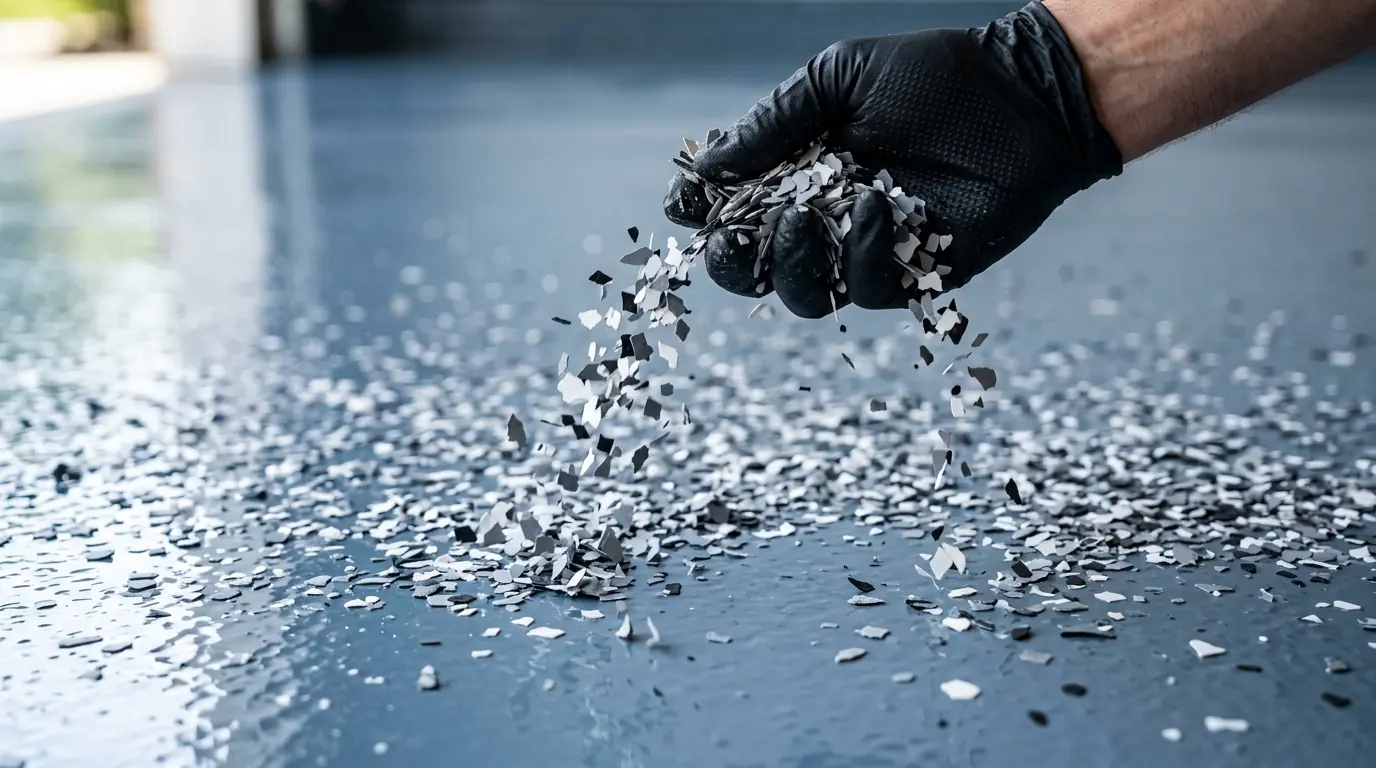
Polyaspartic is the coating you see with the full color-flake look. It cures fast, usually walkable in a few hours and drivable the next day, it resists hot-tire pickup and UV yellowing, and the flake hides the small imperfections a ground slab always has. It costs more per square foot than epoxy and it has to be applied quickly because the working time is short, which is why the grinding, patching and layout happen before the first drop is mixed. For an attached garage on a busy Loganville or Snellville subdivision home, this is the system we usually recommend.
Concrete sealing
Not every slab needs a full coating. A carport pad, a basement floor or a workshop that mostly sees foot traffic often just needs the dust and clay staining controlled. A penetrating sealer soaks into the concrete and stops it dusting without leaving a film that can peel, and a clear acrylic sealer adds a light sheen and easier cleanup. Sealing is a half-day job on most floors and it is the honest recommendation when the slab is sound and the budget does not justify a flake system. It can be upgraded to a coating later once the sealer wears.
What we see on Atlanta homes
Red clay is the Atlanta garage problem. It rides in on tires and shoes, stains bare concrete orange and grinds into a porous slab where sweeping never gets it out. Out toward Loganville the late-1990s and 2000s subdivisions were poured with builder-grade slabs and no sealer, so the floors dust and stain within a few years of the first owner moving in. Humid summers add moisture pushing up through the concrete, which is why we test the slab and grind rather than etch before any coating goes down.
How long a garage floor takes in Atlanta
A two-car garage is a two-day job: grinding and repairs the first day, coats the second. Polyaspartic can compress that into one long day when the weather cooperates. Summer humidity slows epoxy cure, so from June through August we schedule a day of margin before you park.
How the coating goes down, start to finish
- 1
Moisture and hardness test
We test the slab so the primer matches what the concrete is doing, not what it looks like.
- 2
Clear and mask
Contents out, walls and door tracks masked, drains and expansion joints protected.
- 3
Diamond grind
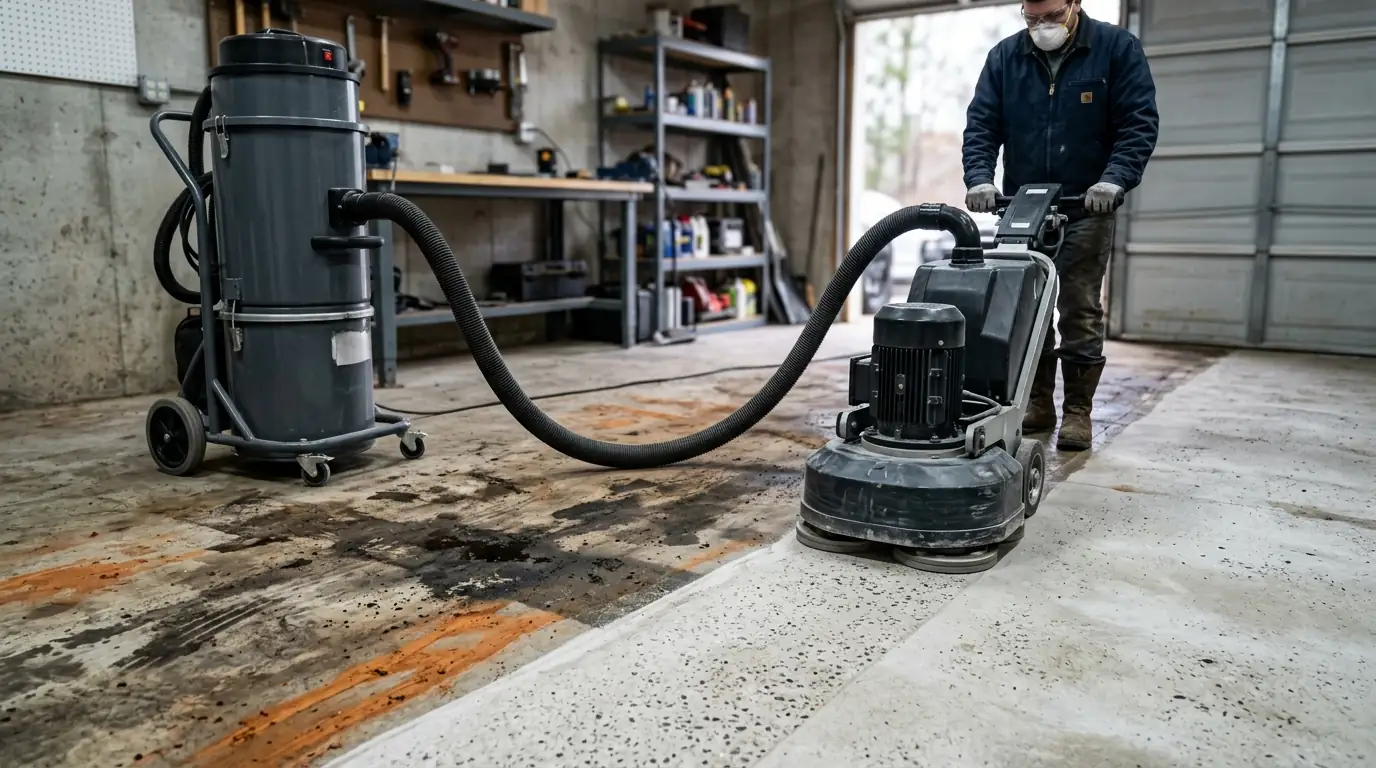
A planetary grinder with dust collection opens the surface and removes old coatings and clay staining.
- 4
Crack and pit repair
Cracks are chased and filled with a rigid polyurea; spalls are patched flush.
- 5
Primer
A moisture-tolerant primer is rolled thin and allowed to tack up.
- 6
Body coat and flake
Color coat rolled, flake broadcast to rejection where specified, then scraped smooth after cure.
- 7
Topcoat and cure
Clear polyaspartic or urethane top, then a written cure schedule for foot and vehicle traffic.
Questions about garage floor coating in Atlanta
Polyaspartic floors take vehicles the next day in most weather. Epoxy wants two to three days, and the quote states the cure window for your system.
Etching leaves a weak, uneven profile and does nothing for old coatings or clay staining. Grinding gives the primer a clean surface to bond to.
Yes, if the old coating is ground off completely. Coating over a failing paint layer just moves the failure to the new coat.
Not with a polyaspartic topcoat or a urethane clear over epoxy. Thin single-coat epoxy is where hot-tire pickup shows up, so we do not sell it for daily-driven garages.
Filled cracks become nearly invisible under full flake. Unfilled cracks telegraph through any coating, which is why the repair step is not optional.
Yes. Basement slabs in older Atlanta homes often test wet, so those usually get a moisture-mitigation primer or a penetrating sealer.