Deck staining in Atlanta takes two visits: one day to wash off pollen, mildew and loose stain and brighten the wood, then a second day after the boards dry, usually 48 hours, to apply the stain. Transparent stains need recoating every year or two, semi-transparent every two to three, and solid stains last longer but can peel if the prep is rushed.
Updated September 2026
What happens to a deck between stain coats
Unprotected wood grays within a season. Sun breaks down the surface fibers, rain lifts the grain, and in Atlanta a spring layer of pollen feeds mildew in the shaded corners. By the time most people call, the boards are gray, the railings feel rough, and water soaks in instead of beading.
Restaining starts with cleaning, not painting. The deck is washed with a wood cleaner, loose and failed stain is removed, and a brightener resets the wood's color so the new stain soaks in evenly. After the boards dry, stain goes on with brushes and pads worked along the grain, and railings and spindles are hand-brushed so the product reaches every face.
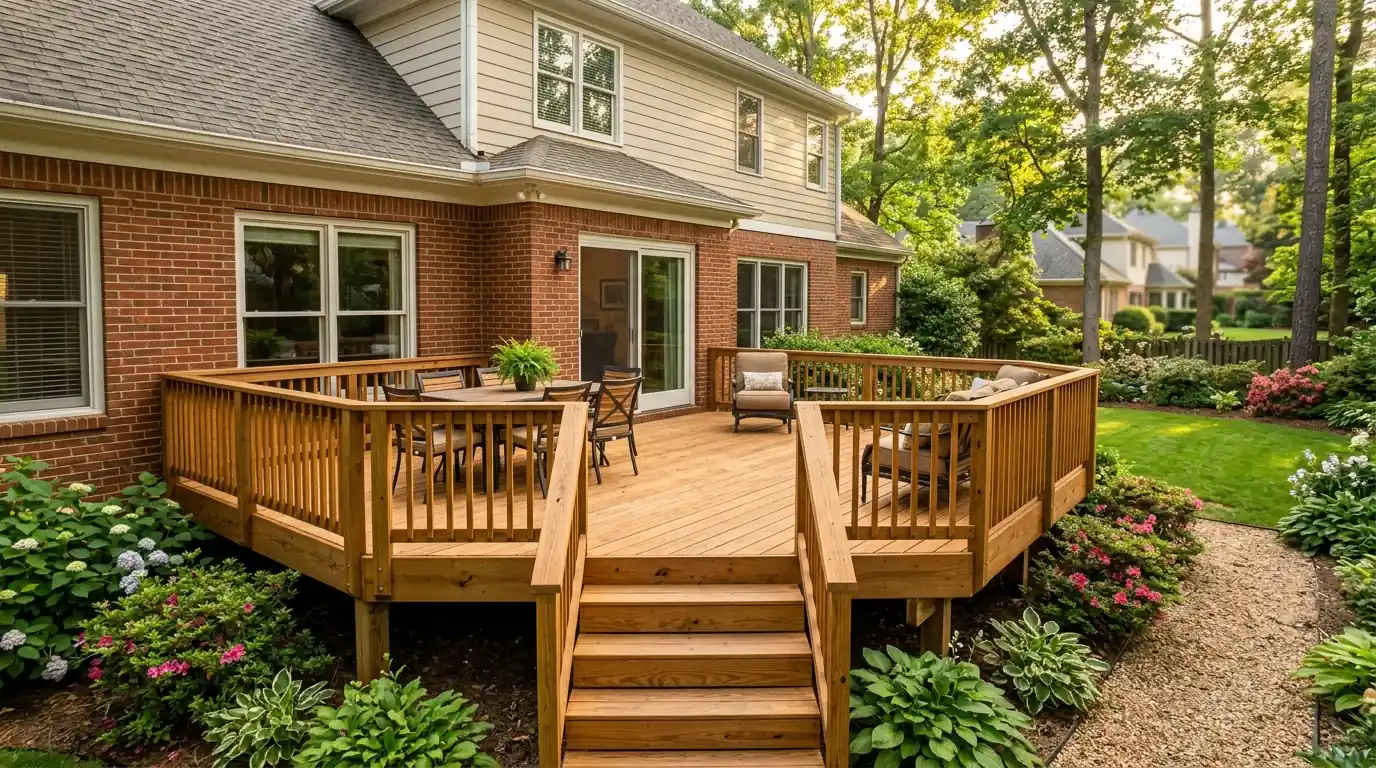
Transparent and semi-transparent stain
Penetrating stains soak into the wood rather than sitting on top, so they never peel. They wear away instead, which makes recoating simple: clean, brighten and apply again. Transparent stains show all the grain and need attention every year or two in full sun. Semi-transparent stains carry more pigment, hide some weathering and usually last two to three years on the floor boards, longer on railings. For pressure-treated pine decks, this is the finish we recommend most, because it can be renewed without stripping. Products like Cabot, Ready Seal and Sikkens penetrating stains are common choices.
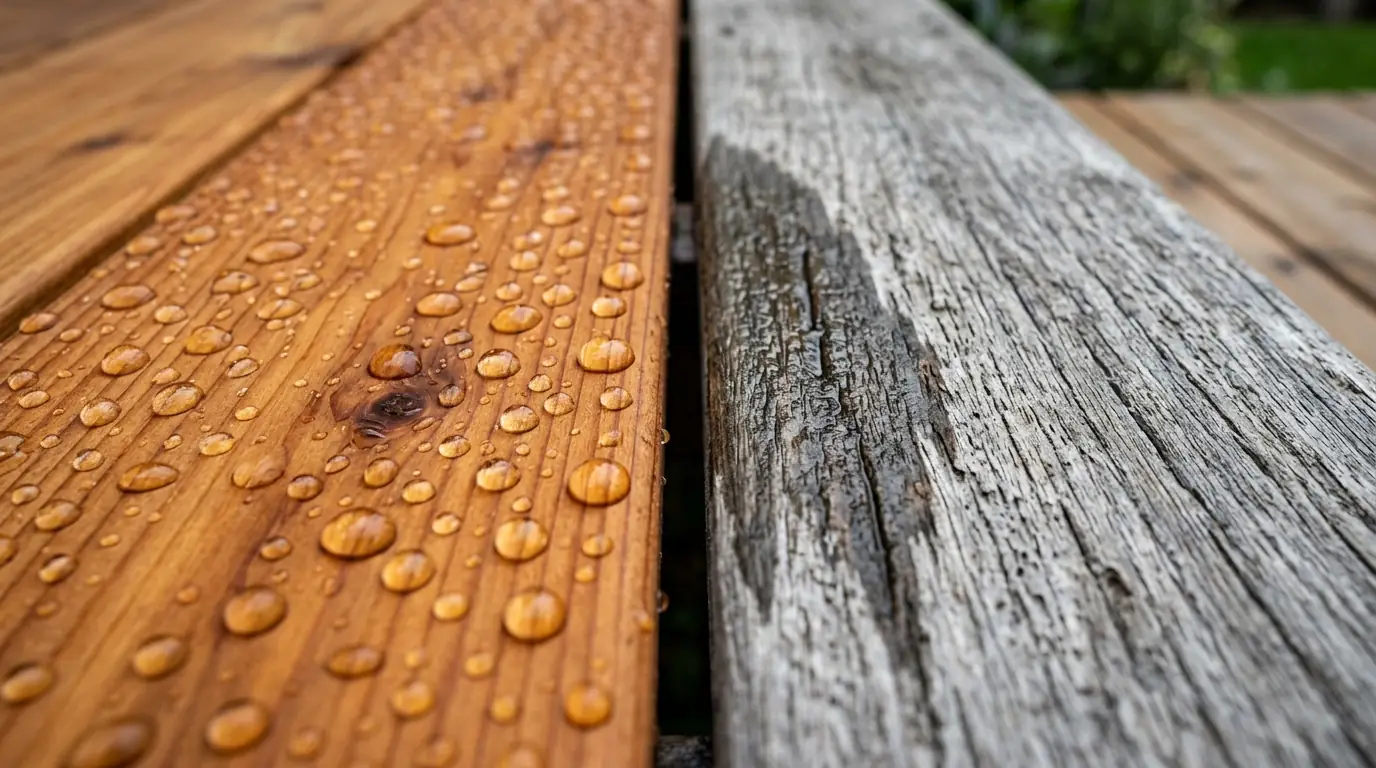
Solid color deck stain
Solid stain behaves more like paint. It hides the grain completely, covers mismatched replacement boards and older weathered wood, and lasts longer between coats. The trade-off is that it forms a film, and a film on a horizontal surface in a humid climate can peel where water sits or where the wood was not fully dry. When a deck already has solid stain, we stay with solid stain, scrape and sand any loose areas, and spot prime bare wood. Switching from solid back to a semi-transparent look means stripping the deck, which is a bigger and more expensive job.
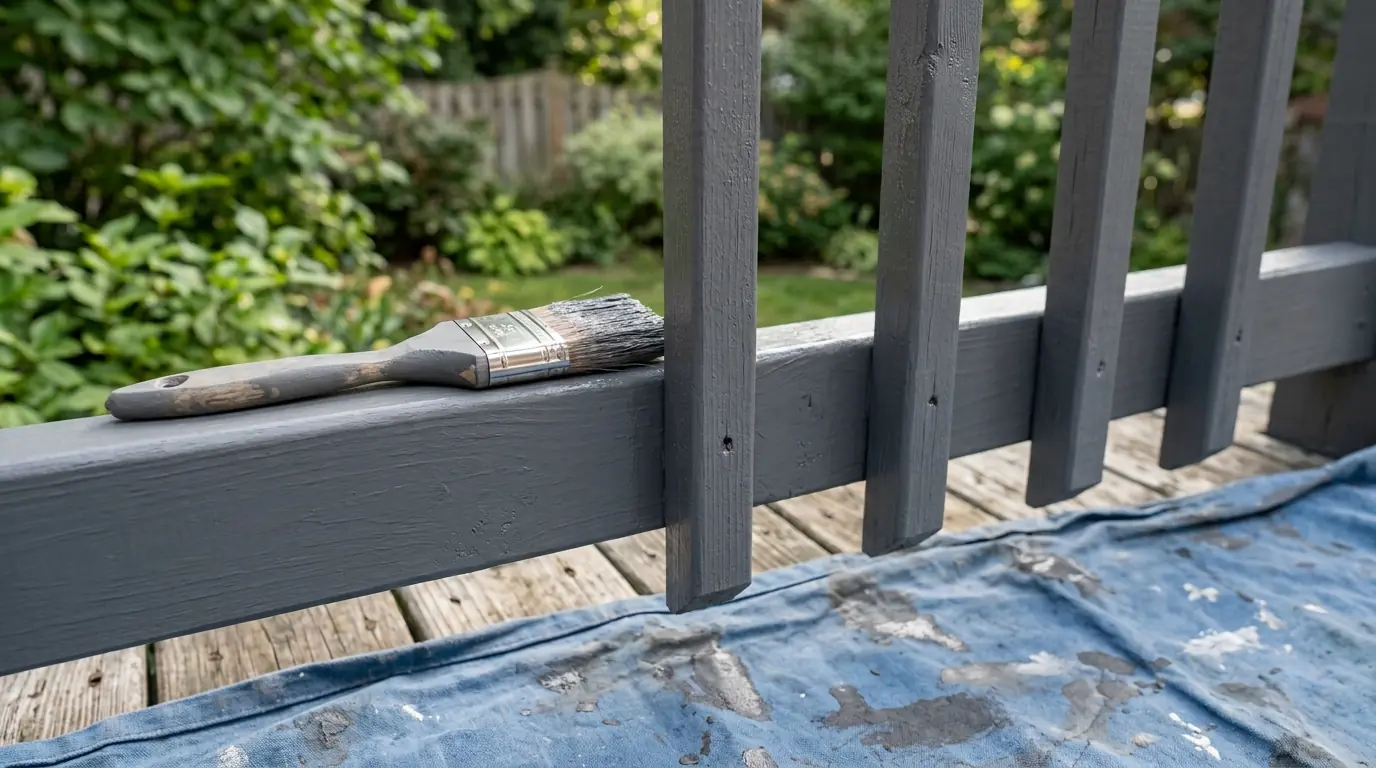
Deck cleaning and brightening
Every stain job starts here, and sometimes a deck only needs this step. A wood cleaner lifts dirt, pollen and mildew; a stripper removes failed stain; and an oxalic acid brightener restores the wood's color and opens the pores after cleaning. We use a controlled pressure and fan tip so the wood does not fur or gouge, and we rinse plants and siding around the deck before and after. Clean wood then needs about two dry days before stain. If you are not ready to stain yet, a cleaned and brightened deck still looks better and stays safer underfoot.
Signs your deck is due for stain
- Water soaks in Drops that darken the wood instead of beading mean the protection is gone.
- Gray boards Silver-gray color is sun-damaged fiber on the surface of the wood.
- Peeling film Solid stain lifting in sheets, usually on steps and in low spots.
- Black spots Mildew growing in shaded corners and between boards.
- Rough railings Raised grain and splinters on handrails and cap boards.
What we see on Atlanta homes
Timing does most of the work on a deck here. Atlanta's spring pollen from pine and oak leaves a yellow film on every board from late March through April, and summer brings hot, humid afternoons broken by thunderstorms, so we plan stain for the dry stretches and give the wood two full dry days after washing. The decks on the 2000s subdivision homes along Gratis Road and Bay Creek in Loganville are reaching twenty years old now, and most are pressure-treated pine that has been stained two or three times.
What changes the cost of staining a deck
Deck staining is priced by the square footage of floor and the linear feet of railing, and the prep condition swings it most.
- Floor area. Larger decks need more stain and more labor, but setup cost stays about the same.
- Railings and spindles. Hand-brushing every baluster often takes longer than the floor itself.
- Stain type. Solid stains cost more to apply well because every face needs full coverage.
- Old stain removal. Stripping failed solid stain or paint adds a full day and chemical cost.
- Board condition. Loose nails, split boards and raised grain need fixing and sanding first.
- Stairs and levels. Multiple levels and stair runs add cutting-in time around each tread.
- Access. Decks over a slope or a walkout basement need ladders and extra protection below.
The deck restain, step by step
- 1
Inspect the boards
We check for loose fasteners, soft boards and the type of stain already on the wood.
- 2
Protect around the deck
Plants, siding and patios are wetted and covered before any cleaner goes on.
- 3
Clean and strip
Wood cleaner for dirt and mildew, stripper where old stain is failing.
- 4
Brighten
Oxalic acid brightener restores the wood's color and opens the grain.
- 5
Dry
Two dry days so the wood reads dry on a moisture meter before stain.
- 6
Stain
Brushed along the grain on the floor, hand-brushed on railings and spindles.
- 7
Final check
Back-brush any puddles, wipe drips off siding and walk the deck with you.
Staining the deck yourself or calling us
Reasonable to do yourself
- Recoating a small, sound deck with the same penetrating stain
- Cleaning and brightening with a garden sprayer
- Touching up a railing cap in a weekend
Worth handing off
- Stripping failed solid stain or old paint
- Decks with many spindles, stairs or levels
- Second-story decks over a walkout
- Switching stain types or colors
The step homeowners skip is waiting for the wood to dry after washing. Staining damp wood is the most common reason a deck peels within a year.
Questions about deck staining and sealing in Atlanta
Transparent stain every year or two, semi-transparent every two to three years, solid stain every three to five, depending on sun exposure.
New treated pine needs to dry out first, often a few months, until water soaks in rather than beading.
Usually because it went on over damp wood or over old stain that was not removed, and water got under the film.
We replace a few split or soft boards as part of the job and tell you if the framing needs a carpenter.
High pressure with the wrong tip gouges and furs the wood. A cleaner and a controlled pressure does the work instead.
Yes. Fences are washed and stained with the same process; see our fence staining page.