Removing a popcorn ceiling in Atlanta starts with testing the texture for asbestos on homes built before the 1980s, because scraping disturbs it. Once it tests clear, the room is sealed in plastic, the texture is wetted and scraped, the ceiling is skim coated and sanded smooth, then primed and painted flat. A typical room takes two to three days.
Updated September 2026
What popcorn removal actually involves
Acoustic texture was sprayed on millions of ceilings from the 1960s through the 1980s because it hid drywall seams and was quick to apply. It also collects dust and cobwebs, yellows around light fixtures, and is hard to repaint without clumping. Most people remove it when they repaint or sell.
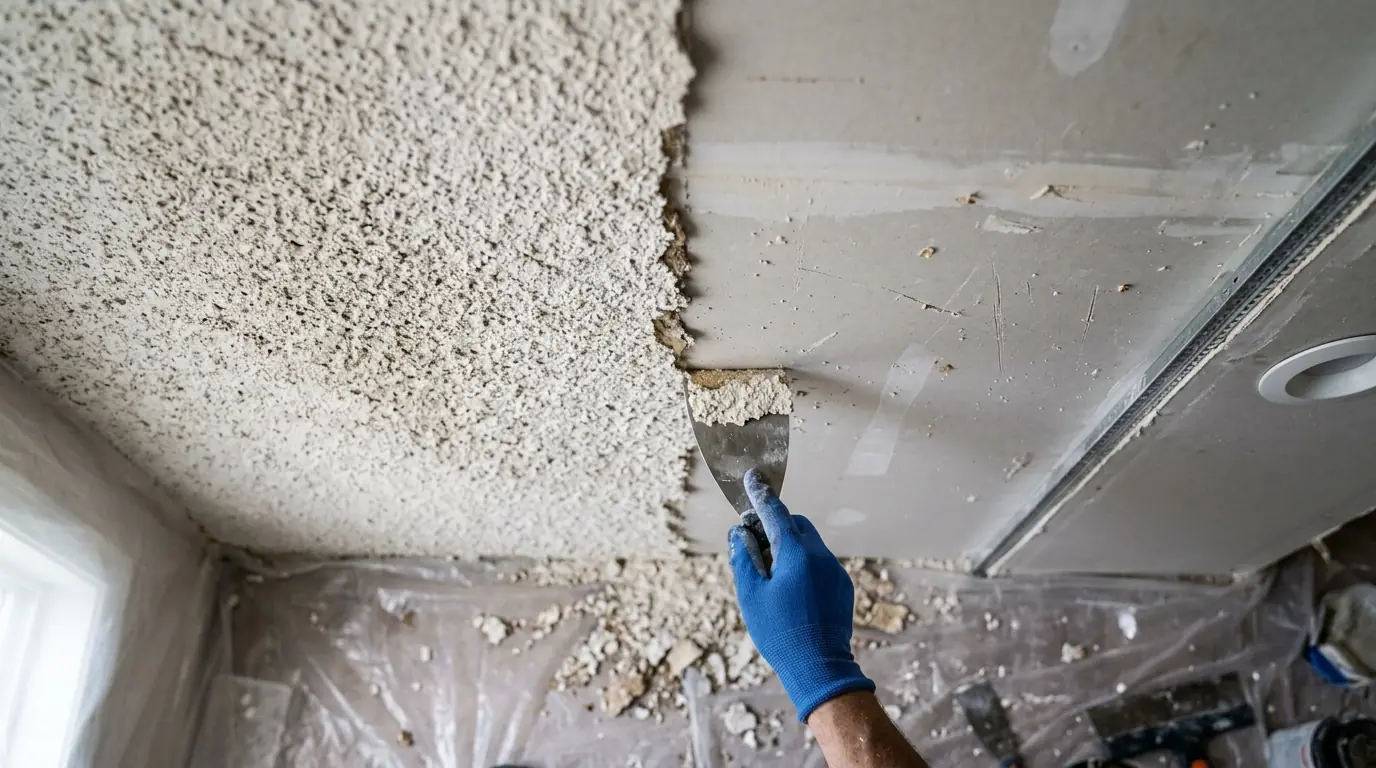
The scraping is only the first part. Under popcorn, drywall is usually taped roughly because the builder knew texture would hide it. Once the texture is gone, those seams, nail heads and patches show, and the ceiling needs a skim coat to look finished. We plan for that from the start rather than surprising you once the texture is down.

What changes the price of popcorn removal
Removal is priced by ceiling square footage, and what is under the texture changes the finish work most.
- Ceiling area. Square footage of every ceiling in scope, including closets and halls.
- Painted or unpainted texture. Painted popcorn resists water and takes longer to scrape.
- Test results. A sample that comes back positive moves removal to a licensed abatement contractor.
- Skim or knockdown. A level smooth finish needs more skim passes than a knockdown texture.
- Ceiling height. Vaulted and two-story ceilings need scaffolding or a rolling platform.
- Occupied rooms. Furnished rooms need more masking and moving than empty ones.
- Fixtures. Ceiling fans and light fixtures are removed and reinstalled around the work.
Scrape and skim coat
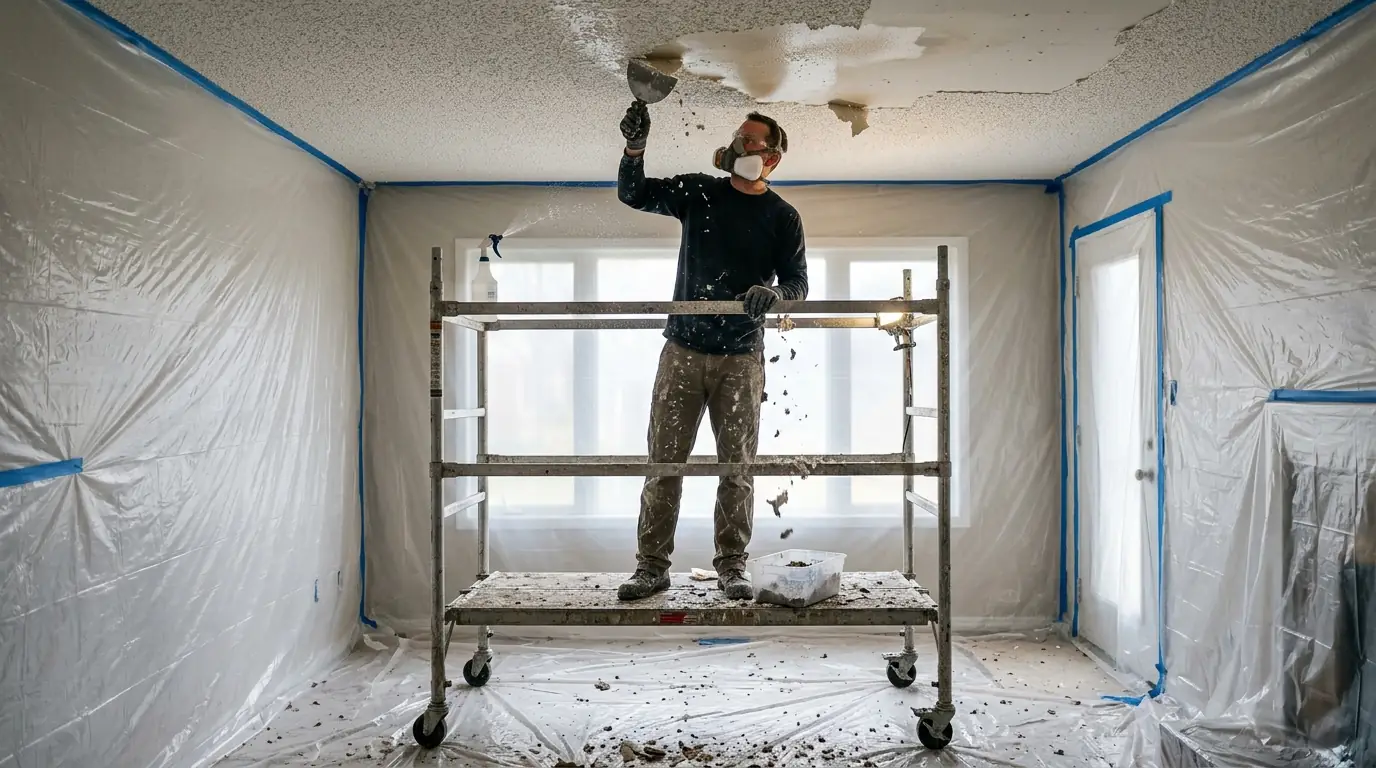
This is the standard route. Floors, walls and fixtures are covered in plastic, the texture is lightly misted with water to soften it and cut dust, and it is scraped off with a wide blade. The bare ceiling is then skim coated with joint compound in one or two thin passes, sanded with vacuum sanders, and primed with a sealer so the paint does not flash over patched areas. Two coats of flat ceiling paint finish it. Painted popcorn does not soak up water well, so those ceilings sometimes need a gel remover or dry scraping, which we test in a corner first.
Knockdown texture
Some homeowners want the popcorn gone but still want a textured ceiling, either to hide an imperfect ceiling or to match the rest of the house. After scraping, a knockdown texture is sprayed on and flattened with a knife as it sets, giving a mottled, low-profile finish. It takes less skim work than a perfectly smooth ceiling and hides small flaws, so it can save a day on ceilings with rough taping. The trade-off is style: knockdown looks like the 2000s to some buyers, while a smooth ceiling reads more current.
Pre-1980 ceiling testing
Acoustic texture from before the 1980s can contain asbestos, and scraping it releases fibers if it does. Before we quote scraping on an older home, a small sample is taken and sent to a lab. If it comes back clear, the job goes ahead as normal. If it contains asbestos, removal has to be done by a licensed abatement contractor, and we can paint or skim once they have finished. Testing costs little compared with the job and is the only way to know. Covering the texture with drywall is another option we can explain when abatement is not wanted.
DIY removal or professional
What a homeowner can do
- Order a lab test kit and send a sample
- Scrape a small closet ceiling that tested clear
- Clear the room and remove light fixtures
What to hand off
- Any ceiling that has not been tested
- Skim coating a full ceiling flat
- Painted popcorn and vaulted ceilings
- Whole-house removal in an occupied home
Scraping is hard work but simple. Getting a scraped ceiling flat enough to look good in raking light is the skilled part, and it is where most DIY jobs end up calling a painter.
What we see on Atlanta homes
Popcorn is most common in the Atlanta homes built from the 1960s through the 1980s, which is why testing is part of every quote on houses from that era. The late-1950s and early-1960s brick ranches in Ormewood Park are a good example of where we start with a sample rather than a scraper. Newer townhomes in Glenwood Park, redeveloped in 2003, generally have smooth or knockdown ceilings and come up for repainting, not removal.
How long the room is out of use
Plan on the room being closed for two to three days: one day to seal and scrape, one to skim and sand with drying time, and one for primer and paint. Several rooms can be worked in sequence, so a whole house usually takes a week or a little more.
From texture to smooth ceiling
- 1
Sample and test
A small sample goes to a lab on pre-1980s homes before anything is scraped.
- 2
Seal the room
Floors, walls, vents and doorways covered in plastic.
- 3
Mist and scrape
Texture softened with water and scraped with a wide blade.
- 4
Skim coat
Thin coats of joint compound to fill seams and flatten the surface.
- 5
Sand
Vacuum sanders keep dust down while the ceiling is smoothed.
- 6
Prime and paint
Sealer primer, then two coats of flat ceiling paint.
- 7
Clean up
Plastic removed, fixtures reinstalled and the room handed back.
Questions about popcorn ceiling removal in Atlanta
No. Most tested ceilings come back clear, but older texture can contain it, so testing is the only way to know.
Very, which is why the room is fully sealed in plastic. Wetting the texture keeps dust down during scraping.
It can be painted, but it often clumps and flakes, and it makes later removal harder.
Usually two to three days: scraping, skim coats with drying time, then primer and paint.
Smooth looks more current and costs a little more; knockdown hides flaws and saves skim work.
No, but the room being worked on is closed off, and you will want to keep pets and kids out.