Staining a wood fence in Atlanta means washing off mildew and gray fibers, letting the wood dry, then spraying stain and back-brushing it into every board face and edge. Semi-transparent stain lasts about two to three years on a fence in full sun. Iron and steel fences are wire-brushed, treated for rust and painted with a metal primer and enamel.
Updated September 2026
What makes a fence stain job last
Wood fences gray quickly in Georgia sun and turn green on the shaded side. The fibers on the surface break down, and stain sprayed over that weathered layer soaks in unevenly and washes off early. Cleaning removes the loose fibers and growth so the stain bonds to sound wood.
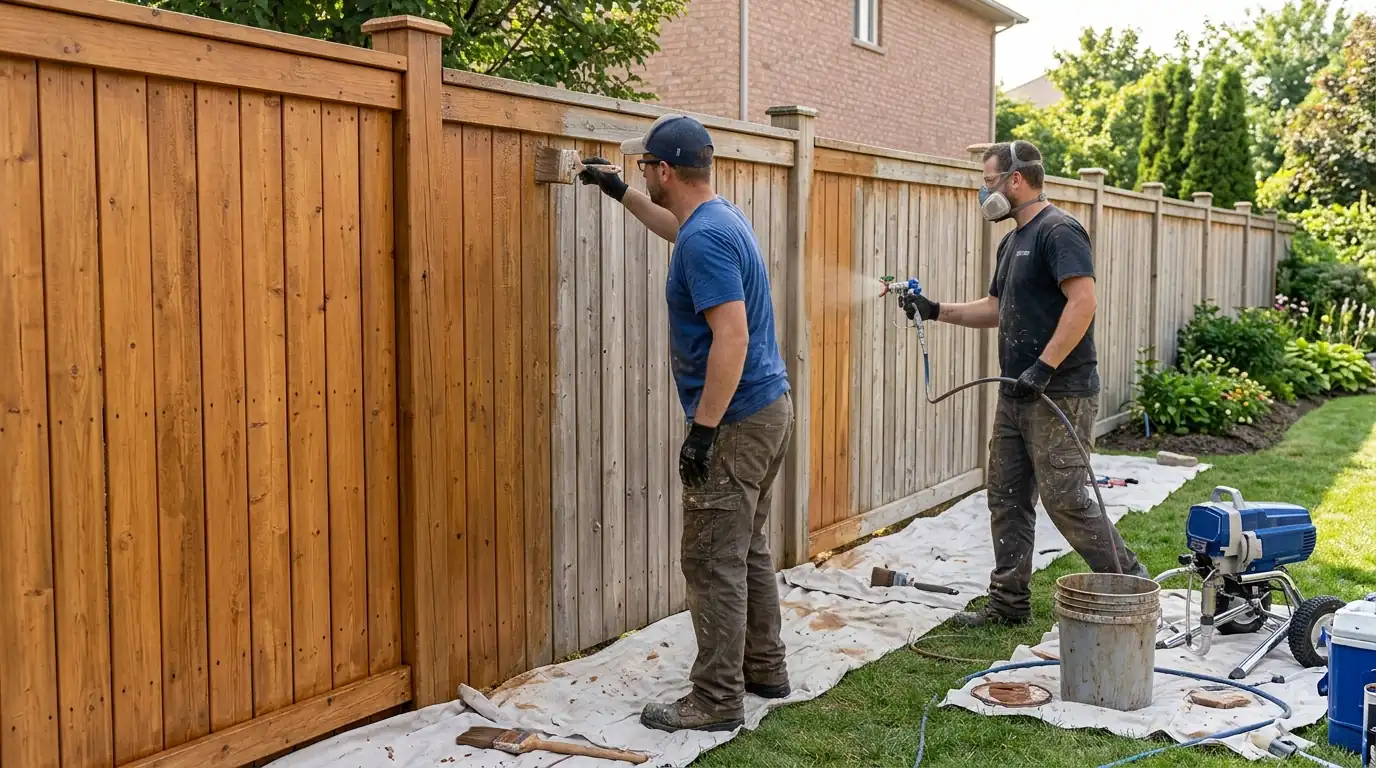
Application is the rest of it. Spraying alone puts stain on the face of each board and misses the edges and gaps. Back-brushing right behind the sprayer pushes stain into the grain and the joints, which is what keeps the fence from graying again in a year. Where a neighbor's side is involved, we agree access and overspray protection before starting.
What every fence quote includes
- Walk-through of every section and gate
- Loose boards fastened
- Broken boards replaced where agreed
- Plant and siding protection
- Clean and rinse
- Two-day dry time
- Sprayed and back-brushed stain
- Top edges sealed
- Ground line cleaned up
Privacy fence staining
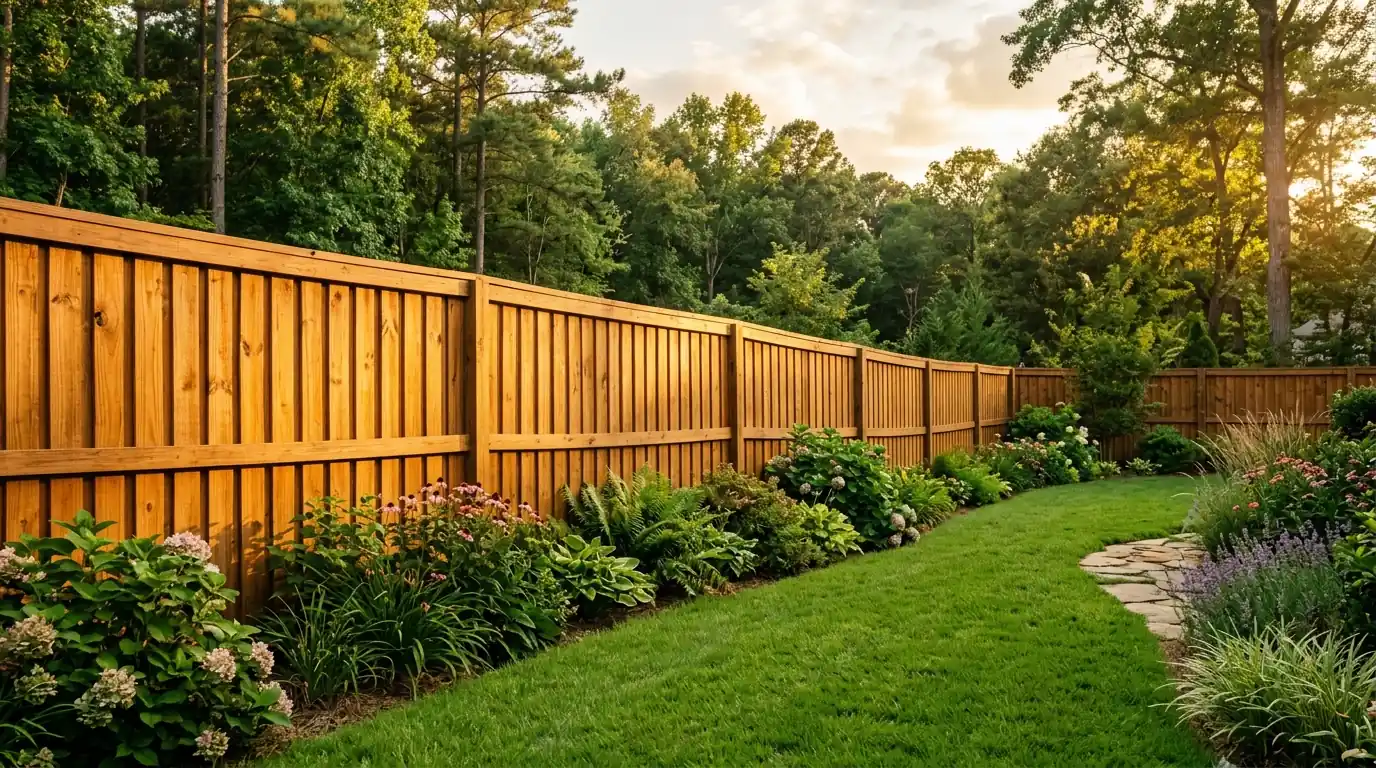
Six-foot privacy fences are the most common job. We check for loose pickets and leaning posts, reset or replace broken boards, then wash with a cleaner that removes mildew and graying. After two dry days, stain is sprayed and back-brushed on your side, and on the neighbor's side where they agree to it. Semi-transparent stains in cedar and redwood tones are the usual choice on new or recently stained fences; solid stains suit older fences with replaced boards of different colors. Plants and grass along the fence line are covered, and the stain line at the ground is kept clean.
Picket and horizontal fences
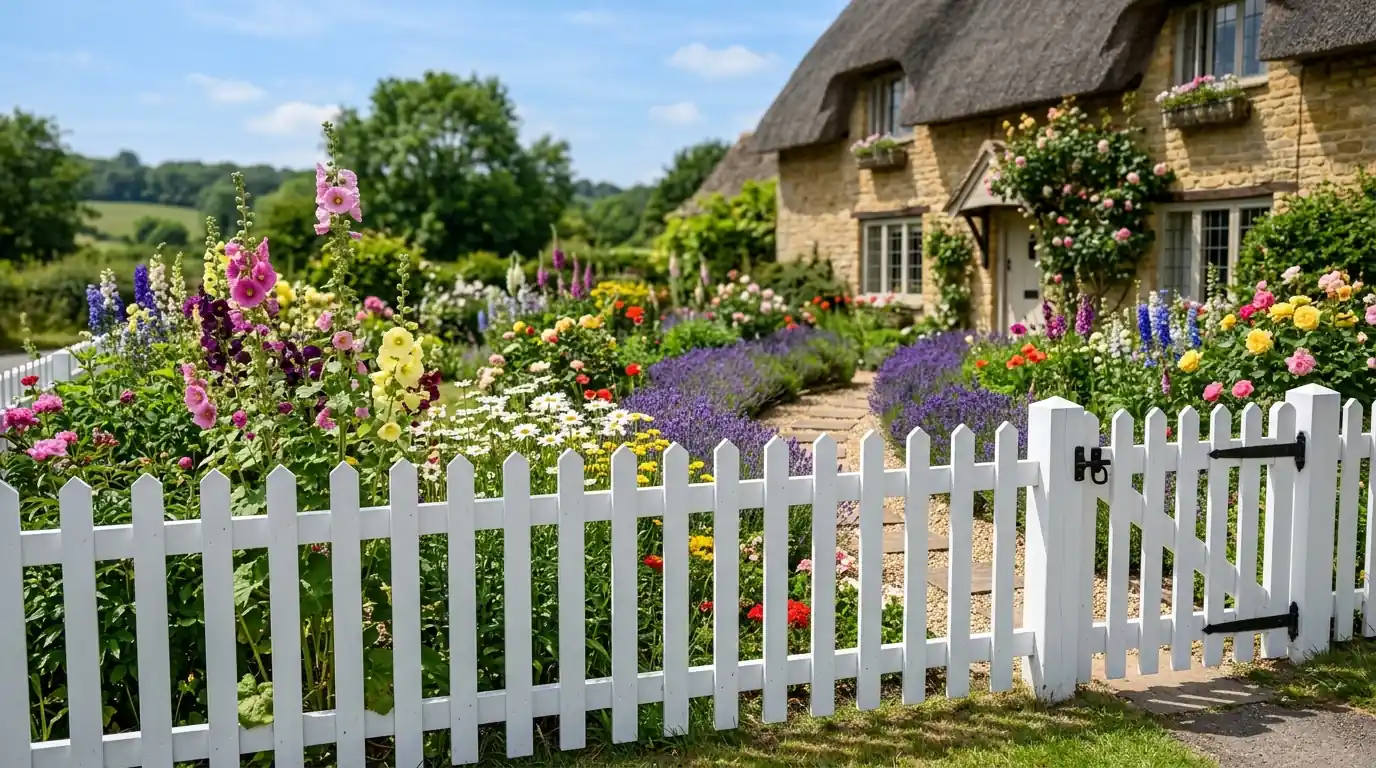
Picket fences are usually painted rather than stained, often white or to match the house trim. Each picket has four faces and a top, so the job is brush-heavy. Loose paint is scraped, bare wood primed and two coats of exterior enamel applied. Horizontal slat fences, common on newer builds, show every drip and lap line, so they get careful spraying with the slats worked end to end. Both styles benefit from sealing the top edges, where water sits and rot starts first.
Metal and iron fence painting
Wrought iron, steel and aluminum fences need the rust dealt with before any paint goes on. Loose rust and flaking paint are removed with wire brushes and sanding pads, bare spots are treated with a rust converter and primed with a metal primer, and two coats of a direct-to-metal enamel follow. Railings and gates get the same treatment, with hinges and latches masked. Aluminum needs a bonding primer rather than a rust primer. Metal fences brushed by hand take longer than wood per foot but last well once the rust is stopped.
What we see on Atlanta homes
Two things show up on fences across the east metro. Red clay splashes up from the ground in every storm and stains the bottom foot of the boards orange, and Walton County sees regular hail and straight-line wind events in spring and summer that loosen pickets and crack boards. Before staining, we clean the clay off the lower boards with a cleaner rather than high pressure, and we walk the fence after storm season for split or loose boards so they get replaced before the stain goes on.
What drives the cost of a fence job
Fences are priced by linear footage, height and whether one or both sides are included.
- Length and height. Total linear feet and whether the fence is 4, 6 or 8 feet tall.
- One side or both. Staining both sides roughly doubles the surface.
- Style. Pickets, shadowbox and lattice tops take more brush work than flat boards.
- Condition. Heavy graying, mildew or failing old stain adds cleaning and stripping.
- Repairs. Loose or broken boards replaced before stain.
- Material. Iron and steel need rust removal and primer, which is slower than wood.
- Access. Fences along slopes, gardens or tight side yards take more setup.
How a fence gets stained
- 1
Walk the fence
Boards, posts and gates checked; sides and access agreed.
- 2
Repair
Loose pickets fastened, broken boards replaced.
- 3
Protect
Plants, grass and nearby siding covered.
- 4
Wash
Cleaner for mildew and graying, gentle rinse.
- 5
Dry
Two dry days before stain.
- 6
Spray and back-brush
Stain sprayed and brushed into every face, edge and gap.
- 7
Check the line
Ground line cleaned up and the fence walked with you.
Staining it yourself or calling us
Reasonable to do yourself
- A short run of fence with a pump sprayer and brush
- Rinsing and cleaning with a garden sprayer
- Touching up gates and a few replaced boards
Worth handing off
- Long privacy fences with both sides
- Iron fences with heavy rust
- Changing from solid stain to a lighter look
- Fences along neighbors' gardens and cars
Most DIY fence jobs go wrong on overspray. Stain mist drifts onto cars, siding and a neighbor's patio further than people expect.
Questions about fence painting and staining in Atlanta
Semi-transparent stain every two to three years in full sun, solid stain a little longer.
Only with their agreement, since we need access to their yard. Many neighbors are happy to split it.
New pressure-treated wood needs to dry first, often a couple of months, until water soaks in.
Yes, with a primer and exterior paint. Painted fences need repainting on a similar cycle to trim.
Rust is removed and treated before a metal primer and enamel, or it bleeds through quickly.
Yes. Decks follow a similar process; see our deck staining page.