Electrostatic painting in Atlanta gives a positive charge to the paint as it leaves the spray gun while the metal object is grounded, so the paint is drawn onto every surface, including edges and backs. Doors, frames, lockers, filing cabinets, desks and railings are cleaned, scuffed and primed where bare, then refinished in place, usually after business hours.
Updated September 2026
How electrostatic painting works and when it makes sense
In electrostatic painting, the paint particles carry a charge and the metal being painted is grounded, so the paint is pulled toward the object and wraps around edges and corners. It puts more of the paint where it should go and less into the air, which is why it can be done indoors with careful masking.
It makes sense when replacing metal items would cost far more than refinishing them, or when removing them would disrupt a business: steel doors and frames in an office, a wall of lockers, rows of filing cabinets, elevator doors or stair railings. It only works on conductive metal, so wood, plastic and glass nearby are masked rather than painted.
What every electrostatic quote covers
- Item count and condition
- After-hours schedule
- Floor and wall protection
- Glass and hardware masking
- Cleaning and degreasing
- Rust treatment
- Primer on bare metal
- Electrostatic finish coat
- Cure time before use
What changes the price of electrostatic painting
Electrostatic work is priced per item or per linear foot of railing, with masking and scheduling as the main variables.
- Number of items. Doors, frames, lockers, cabinets or desks in scope.
- Condition. Rust, dents and chips that need sanding and priming first.
- Masking. Glass, hardware, carpet and walls protected around each item.
- Color change. Big color changes may need an extra coat.
- After-hours work. Evening and weekend scheduling to keep the space open.
- Indoor or outdoor. Exterior railings and fences depend on the weather.
- Access. Stairwells, tight offices and occupied buildings.
Refinish in place or replace
| Factor | Electrostatic refinishing | Replacement |
|---|---|---|
| Cost | A fraction of new | Full cost of new items |
| Disruption | Done after hours, items stay put | Removal, delivery and installation |
| Color | Any color | Limited to stock finishes |
| Best for | Sound metal with worn finish | Bent, rusted-through or broken items |
Metal doors and frames
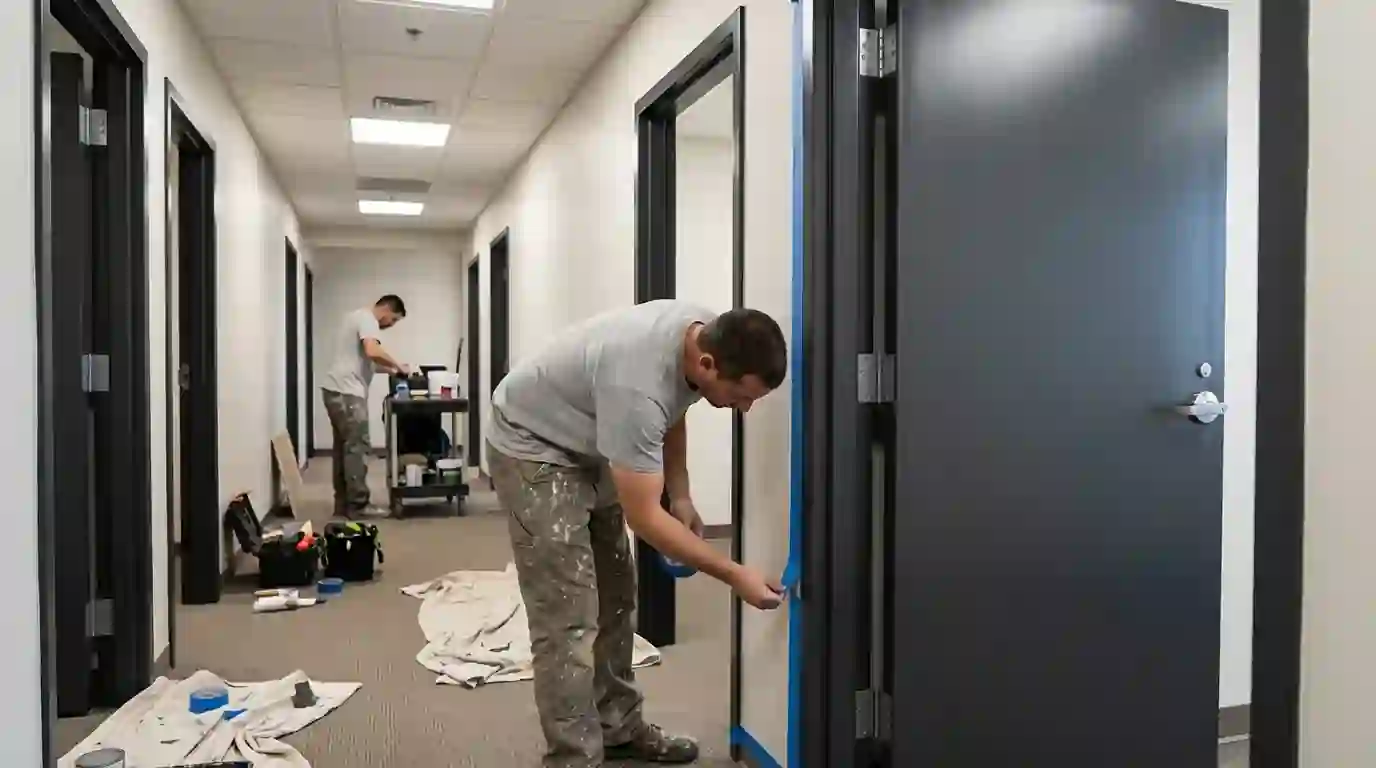
Hollow metal doors and frames in offices, schools, apartment buildings and warehouses scuff, chip and rust at the bottom edges. Each door is cleaned and degreased, rust spots are sanded and primed, and hardware, glass and closers are masked or removed. The door is then sprayed in place, front, back and edges, in the same color or a new one. Fire-rated labels on the door and frame are masked so they stay legible, and doors are left open to cure before they go back into use.
Office furniture, lockers and cabinets
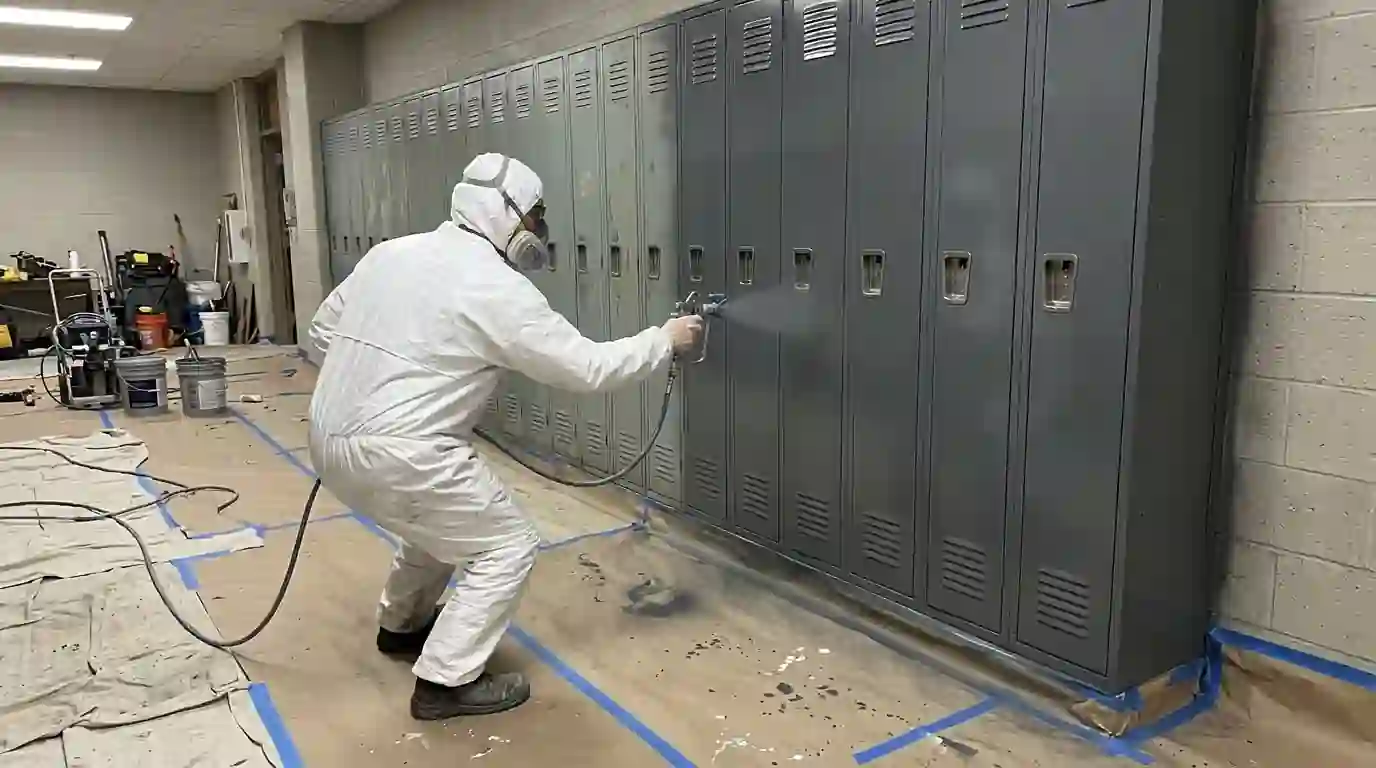
Filing cabinets, metal desks, lockers, shelving and partitions can be refinished without leaving the building. Items are emptied where needed, cleaned, scuffed and masked, and the surrounding floor and walls are protected. Work is usually done in the evening or on weekends, section by section, so the space is usable during business hours. A color change, such as dated beige to black or charcoal, is one of the most common requests and changes the look of a whole office without new furniture.
Railings, fences and metal fixtures
Stair railings, balcony rails, metal fencing, light poles and mailbox clusters are refinished where they are installed. Loose paint and rust are removed, bare metal is primed, and the electrostatic finish wraps around spindles and balusters that are slow and uneven to brush. Outdoor jobs follow the weather like any exterior painting, with dry days and the right temperature for the coating. Indoor railings are masked carefully from walls and treads. Mailbox clusters and light poles are done in sections so residents and visitors always have access.
What we see on Atlanta homes
Atlanta's office parks, apartment communities and older commercial buildings are full of steel doors, frames and railings that are sound but worn. Refinishing them in place avoids the cost of replacement and the disruption of removing them, and evening or weekend scheduling keeps a business open while the work is done. Outdoors, the same spring and fall windows that suit exterior paint suit metal railings and fences, while indoor work can run year-round.
How electrostatic refinishing runs
- 1
Walk the space
Items counted, condition and access noted.
- 2
Schedule
Sections planned around business hours.
- 3
Protect
Floors, walls, glass and hardware masked.
- 4
Prep
Cleaning, degreasing, scuffing and rust treatment.
- 5
Prime
Bare metal primed where needed.
- 6
Spray
Charged finish applied in place.
- 7
Cure and return
Items left to cure, then back in use.
Questions about electrostatic painting in Atlanta
Yes, when the metal is cleaned and prepped properly. It bonds well and wraps edges evenly.
No. That is the main advantage; doors, lockers and furniture are refinished where they stand.
Most work is scheduled after hours or on weekends, section by section.
No. It only works on conductive metal; nearby wood and plastic are masked.
Low-odor products and ventilation keep it manageable; work is timed so spaces air out before people return.
Yes. See our commercial interior painting page for walls and ceilings.