An HOA or multi-family repaint in the Atlanta area is run in phases: the community is split into buildings or rows, residents get notices before their phase starts, each phase is washed, repaired, primed and painted in the approved colors, and the board gets a written schedule and progress updates. Wood repair on trim and hardboard is scoped building by building before painting.
Updated September 2026
What a board needs from a community repaint
A board or property manager needs three things: a clear scope everyone can vote on, a schedule residents can plan around, and a finished result that matches the approved colors on every building. Getting those right up front avoids most of the complaints that follow a community paint job.
We start by walking every building, documenting wood rot, siding damage and caulk failure, and turning that into a scope with repairs listed separately from painting. Color samples go up on a real building for the board to see. Then the community is phased so no resident has scaffolding or masking for longer than necessary.
What a community proposal includes
- Photo survey of every building
- Wood and siding repair list
- Painting scope per building
- Color samples on site
- Phase map and dates
- Resident notice templates
- Sealant renewal scope
- Amenity and fencing scope
- Punch-list walk with the board
What drives the cost of a community repaint
Community projects are priced per building from the walk-through, with repairs listed separately.
- Number and size of buildings. Total wall area, stories and units.
- Wood and siding repair. Rotted trim and failed hardboard replaced before paint.
- Access. Lifts, scaffolding, balconies and tight spacing between buildings.
- Color scheme. Body, trim and accent colors, and how many units differ.
- Sealant renewal. Windows, doors and penetrations resealed.
- Amenities. Clubhouses, pool areas, gates, kiosks and fencing.
- Phasing. More phases means more setup cycles and resident coordination.
Townhome community repaints
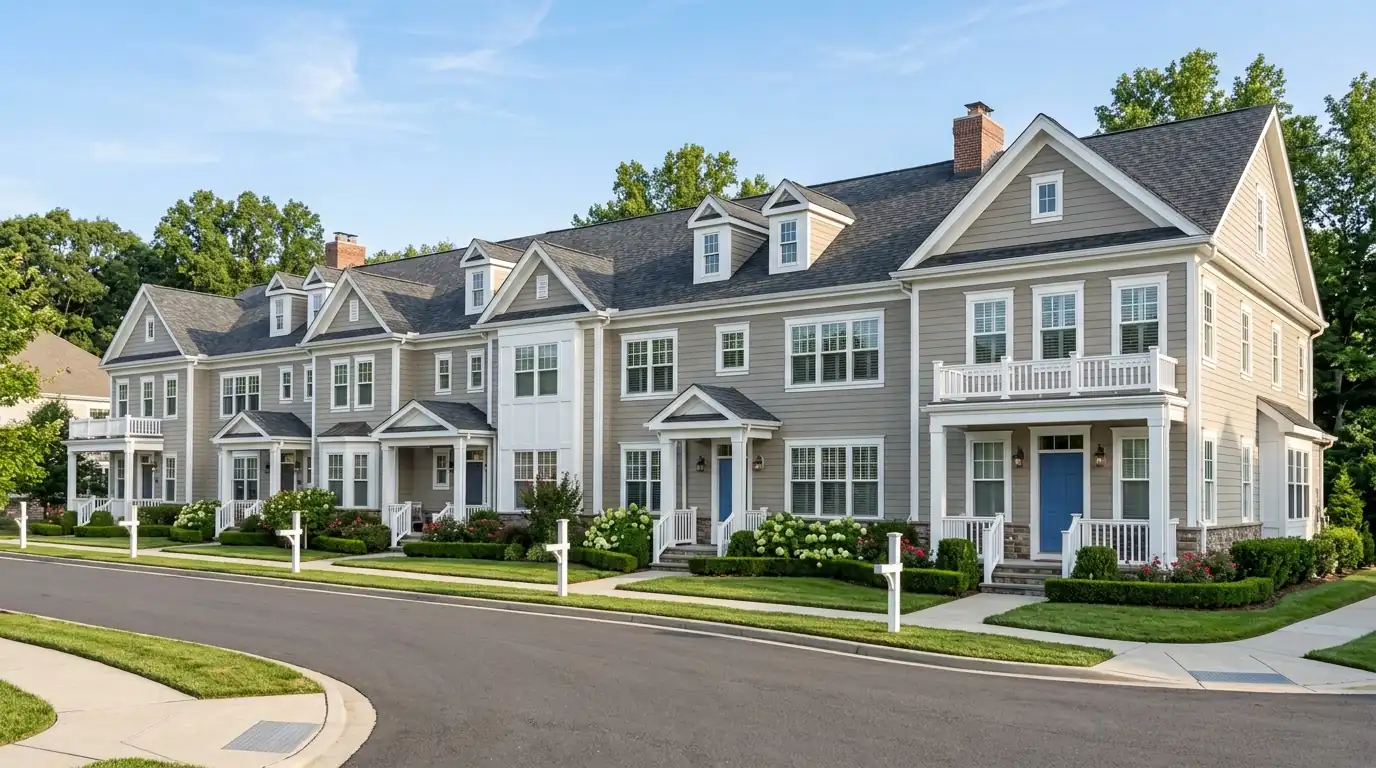
Townhome rows are painted one row at a time. Residents get notices a week ahead with the dates, what to move off patios and what to expect with windows and doors. Each row is washed, rotted trim is replaced, joints are caulked, bare wood is primed and siding and trim are painted in the approved scheme. Front doors and shutters are often in a separate accent color, which we track per unit. Owners who want work beyond the common scope, such as a deck, can arrange it with us directly while the crew is there.
Condo building exteriors
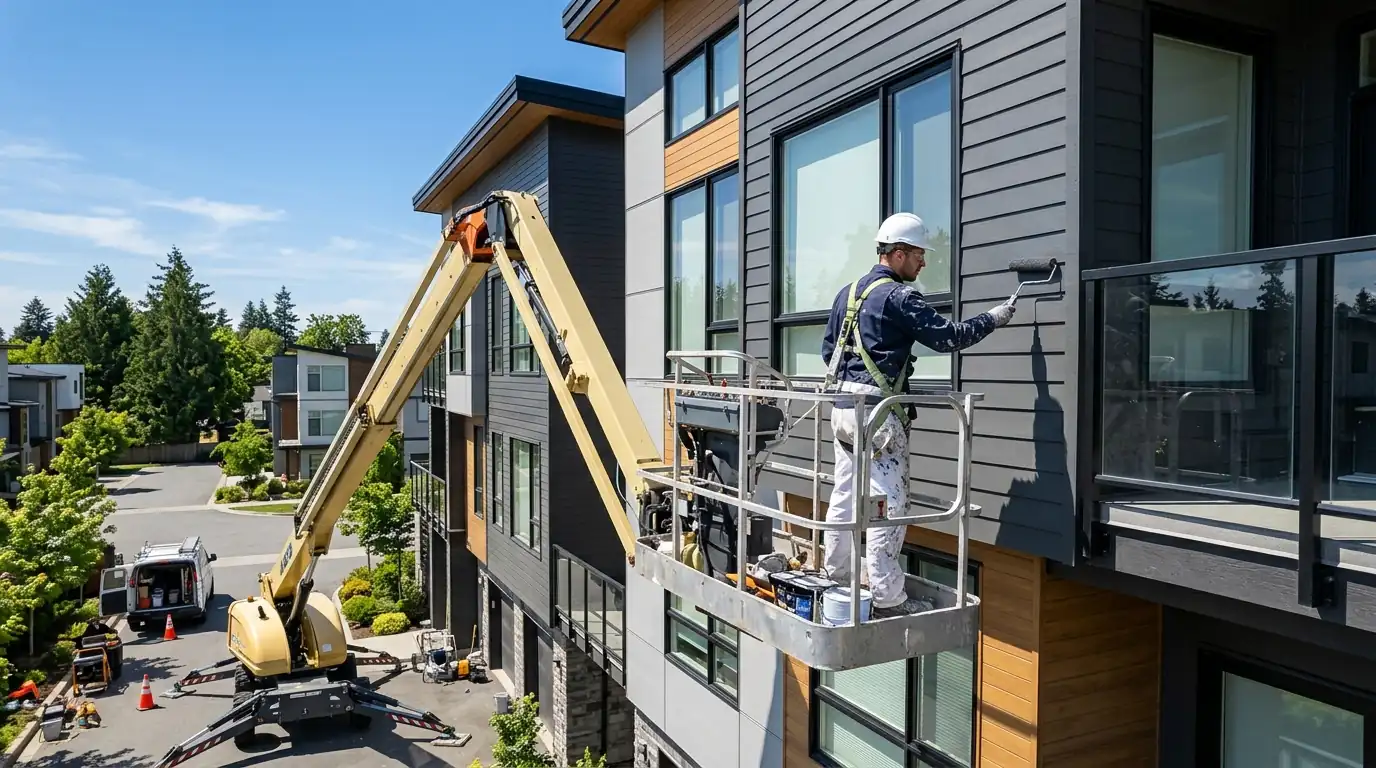
Condo buildings bring height, balconies and more residents per wall. Upper floors need lifts or scaffolding, balcony railings and doors need coordination with each owner, and parking may have to be closed in sections. Sealant around windows and penetrations is renewed as part of the job, because it is what keeps water out of units. The work is sequenced elevation by elevation so each side of the building is finished and cleared before the next one starts. Breezeways and stair towers are painted on weekends or early mornings when fewer residents are moving through them.
Clubhouse and amenity painting
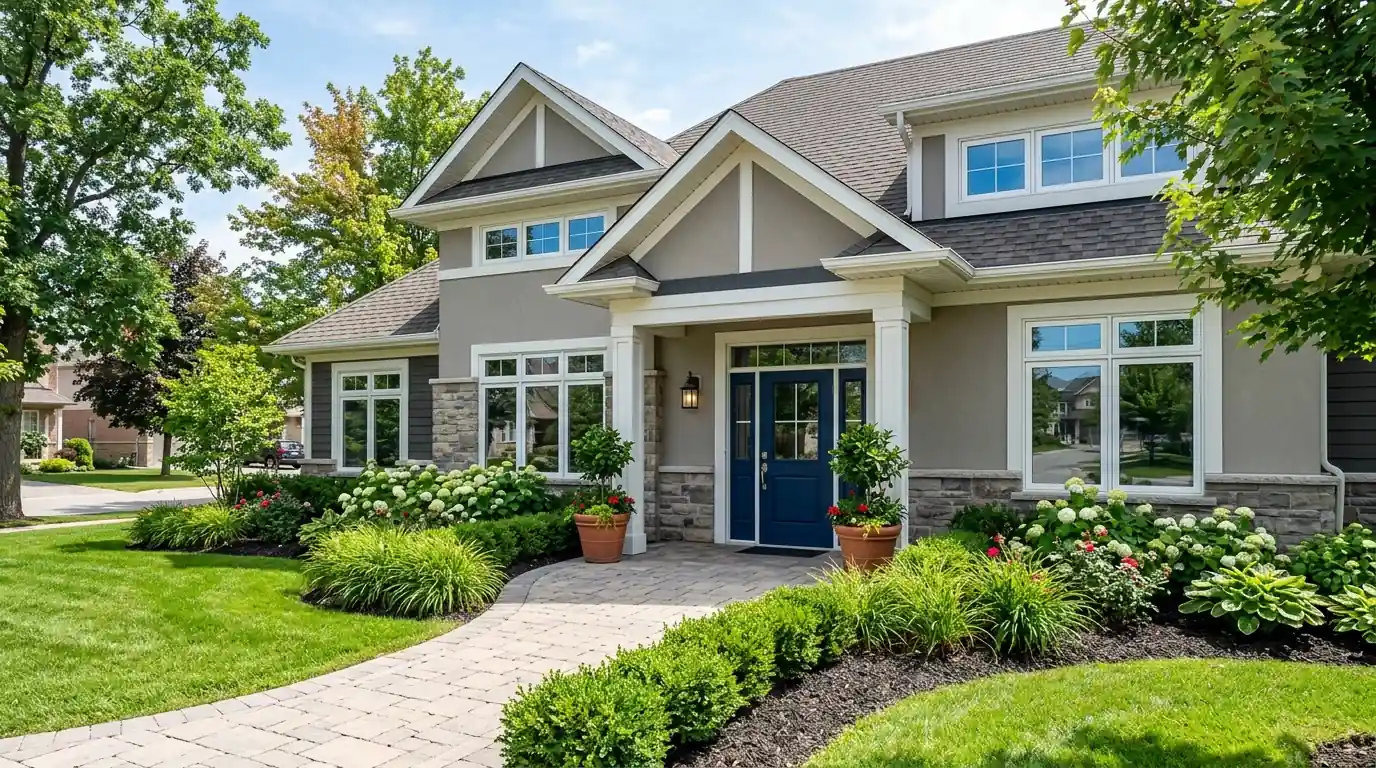
Clubhouses, pool houses, gates and mail kiosks are the common spaces residents notice most. Interiors are painted between events and outside rental hours, pool areas are done in the off-season or early morning, and gates and metal fencing get rust treatment and enamel. Mail kiosks and signage are masked and cleaned. Doing amenities during the same project as the buildings keeps colors consistent across the community and avoids paying for a second mobilization later. Tennis court fencing, pergolas and entry monument signs can be added to the same scope, each priced as its own line so the board can pick.
What we see on Atlanta homes
Many of the communities that call about repaints were built in waves. Peachtree Corners' original 1968 to 1985 housing is now in its forties and fifties, past the service life of the cedar shake, T1-11 and early hardboard it was built with, and across Gwinnett County the 1990s and 2000s subdivisions carry hardboard that fails once water gets behind a crack. On those communities we scope wood and siding repair building by building, because it often costs as much as the paint.
How long each phase takes
A typical row of townhomes or a small building is washed, repaired and painted in about a week, weather permitting. Residents in a phase usually have masking on windows for two or three days. The full community schedule depends on the number of buildings and is set in the phase plan.
How a community project runs
- 1
Walk every building
Rot, siding damage and caulk failure documented with photos.
- 2
Scope and bid
Painting and repairs priced separately for the board.
- 3
Color samples
Samples on a real building for the board to approve.
- 4
Phase plan
Buildings grouped into phases with dates.
- 5
Resident notices
Notices before each phase with what to move and when.
- 6
Repair and paint
Wash, repair, prime and paint phase by phase.
- 7
Punch list
Walk with the board and fix every item before closeout.
Questions about hoa and multi-family painting in Atlanta
Yes. We walk the community, then present the scope, phases and repairs so the board can compare bids line by line.
We prepare notices before each phase with dates and what to move off patios and balconies.
Yes. Wood repair is scoped building by building and listed separately from painting.
Yes. Owners can arrange extra work, like a deck or interior, directly while we are on site.
It depends on size; a row of townhomes is often a week, and a large community is planned over several weeks.
Yes. See our commercial exterior page for storefronts and metal buildings.