A color consultation in Atlanta starts with a walk through the rooms or around the house, looking at light, flooring, roof and brick colors that will not change. We narrow the choices to two or three per surface, paint large sample patches on the wall or siding, and confirm sheen for each room, so the final colors are chosen in your own light before any painting is scheduled.
Updated September 2026
Why colors look different once they are on the wall
A small chip under store lighting tells you very little. Wall color shifts with the direction a room faces, the time of day, the floor color and the trim next to it. North light makes most colors look cooler and darker; west light warms them. Outside, the roof, brick and stone are fixed colors that every siding choice has to work with.
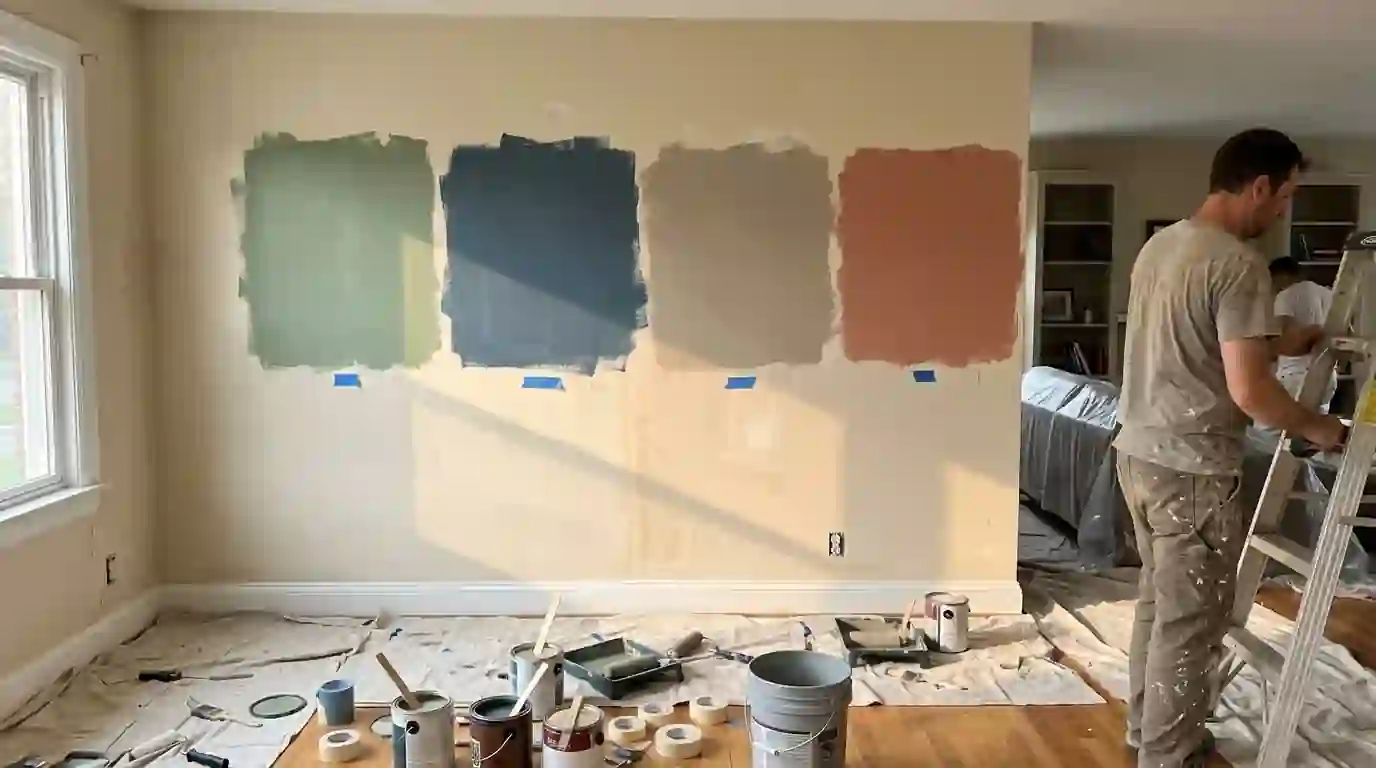
That is why the consultation happens on site. We look at what is staying, narrow the options, and paint patches big enough to judge, usually at least two feet square, on more than one wall. You live with them for a day or two and decide in morning and evening light.
What you leave with
- Colors chosen in your own light
- Large sample patches reviewed
- Sheen for every room
- One trim white for the house
- Ceiling color and finish
- Exterior body, trim and accent
- Color names and codes written down
- HOA or district paperwork ready
- A painting quote if you want one
What a color consultation involves
Consultations are scoped by how many surfaces are being chosen and how many samples it takes to decide.
- Rooms or elevations. Number of rooms, or how many sides of the house are being changed.
- Sample patches. How many colors go up and on how many walls.
- Sample boards. Large boards for exterior and HOA submissions.
- Sheen decisions. Matching sheen to each room's use and cleaning needs.
- Approvals. Preparing color names and codes for an HOA or district review.
- Follow-up visit. A second look once you have lived with the samples.
- Painting scope. Most consultations roll straight into a painting quote.
Paint chips or sample patches
| Factor | Paper chips | Painted sample patches |
|---|---|---|
| Size | An inch or two | Two feet square or larger |
| Light | Store lighting | Your rooms, morning and evening |
| Sheen | Not shown | Shown as it will be |
| Accuracy | A rough guide | What you will actually see |
Whole-home interior palettes
When several rooms are being painted, a palette keeps them from fighting each other where they meet at doorways and hallways. We usually set one main wall color for connected spaces, one or two accent colors for rooms that stand alone, and a single trim white for the whole house. Ceiling color and sheen are decided at the same time, along with which rooms need a washable finish. Samples go on the walls that get the most and least light, so you see the range a color will show through the day.
Exterior color schemes
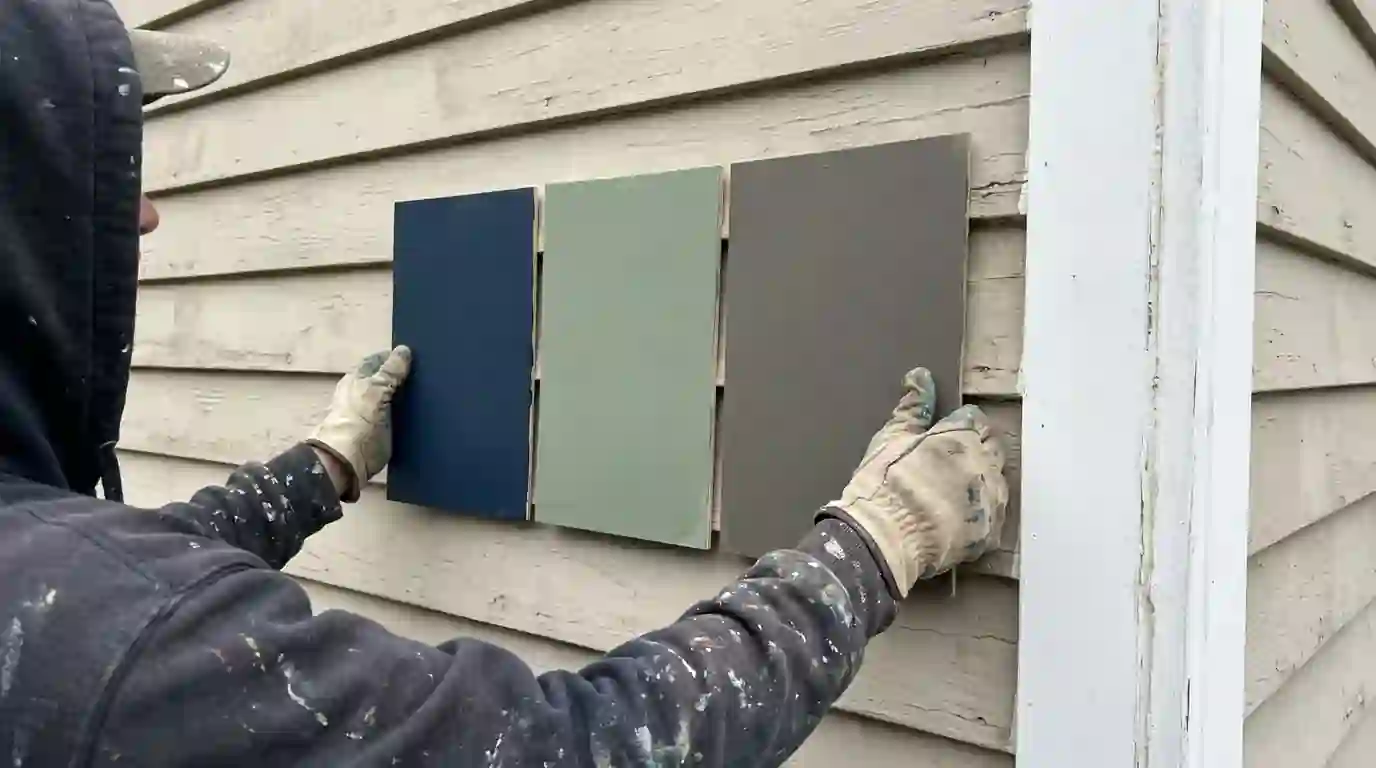
An exterior scheme has three parts: the body color on the siding, the trim color on fascia, windows and corners, and an accent for the front door and shutters. It has to sit with the roof, brick, stone and neighbors' houses. We look at the house from the street, put sample boards against the siding on sunny and shaded sides, and check the trim against window frames and gutters. A scheme that looks right at noon on the south wall can look washed out in evening light, so we compare both.
HOA and historic color approvals
Many Atlanta subdivisions require HOA approval of exterior colors, and some city neighborhoods sit in local historic districts with their own review rules. We help you assemble the color names, codes and sample boards the board or reviewer asks for, and we schedule the painting after approval rather than before. Where an HOA has a pre-approved palette, we work within it and show you how the approved colors look on your house before you choose. Approval letters are kept with the job file so the painting matches exactly what was approved.
What we see on Atlanta homes
Intown, the rules on color depend on the neighborhood. Atlanta's Urban Design Commission reviews Certificates of Appropriateness in local historic districts that include Grant Park, Inman Park, Cabbagetown and West End, but Inman Park's district regulations state that painting or repainting a structure does not require a certificate. So a color change in one district may need paperwork while the same change a mile away does not; we check which rules apply to your address before you fall in love with a color.
How a color consultation runs
- 1
Walk the house
Light, floors, roof, brick and fixed finishes noted.
- 2
Narrow the field
Two or three candidates for each surface.
- 3
Paint samples
Large patches on walls or boards against the siding.
- 4
Live with them
A day or two of morning and evening light.
- 5
Decide sheens
Flat, matte, eggshell, satin or semi-gloss by room.
- 6
Write it down
Colors, codes and sheens listed by room and surface.
- 7
Schedule painting
Approvals first where needed, then the work.
Questions about color consultation in Atlanta
At least two feet square, and on more than one wall, so you can judge it in different light.
Yes. We can match a color from one brand in another, though we recommend using the line the color was designed in.
Yes. We help gather the color names, codes and sample boards most boards ask for.
It can be, but most clients go straight from choosing colors to a painting quote.
We compare whites against the wall colors and floors in your light; one white for the whole house usually looks most finished.
Yes. See our kitchen cabinet painting page for how cabinet colors are sampled on a test door.