Staining an outdoor concrete patio or walkway in Atlanta starts with deep cleaning to lift clay, mildew and leaf stains, then repairing cracks, letting the slab dry and applying a penetrating concrete stain in one or two coats. A breathable sealer goes on top to resist water, staining and fading. Solid-color concrete coatings are used where the slab has patches or mismatched repairs.
Updated September 2026
Why outdoor concrete needs stain and sealer, not floor paint
Concrete is porous, so outdoor slabs absorb water, clay, leaf tannins and mildew. Ordinary floor paint forms a film that traps moisture rising through the slab, and it peels in sheets, especially on patios laid directly on soil. Penetrating stains soak into the concrete instead of sitting on top, so there is no film to peel.
The sealer on top is what keeps the color even and the slab easier to clean. It needs to breathe so moisture can escape, and it needs recoating every few years on surfaces that take sun and foot traffic. Garage floors are a different job, with heavier coatings for hot tires; this page is about patios, walkways, porch slabs and steps.
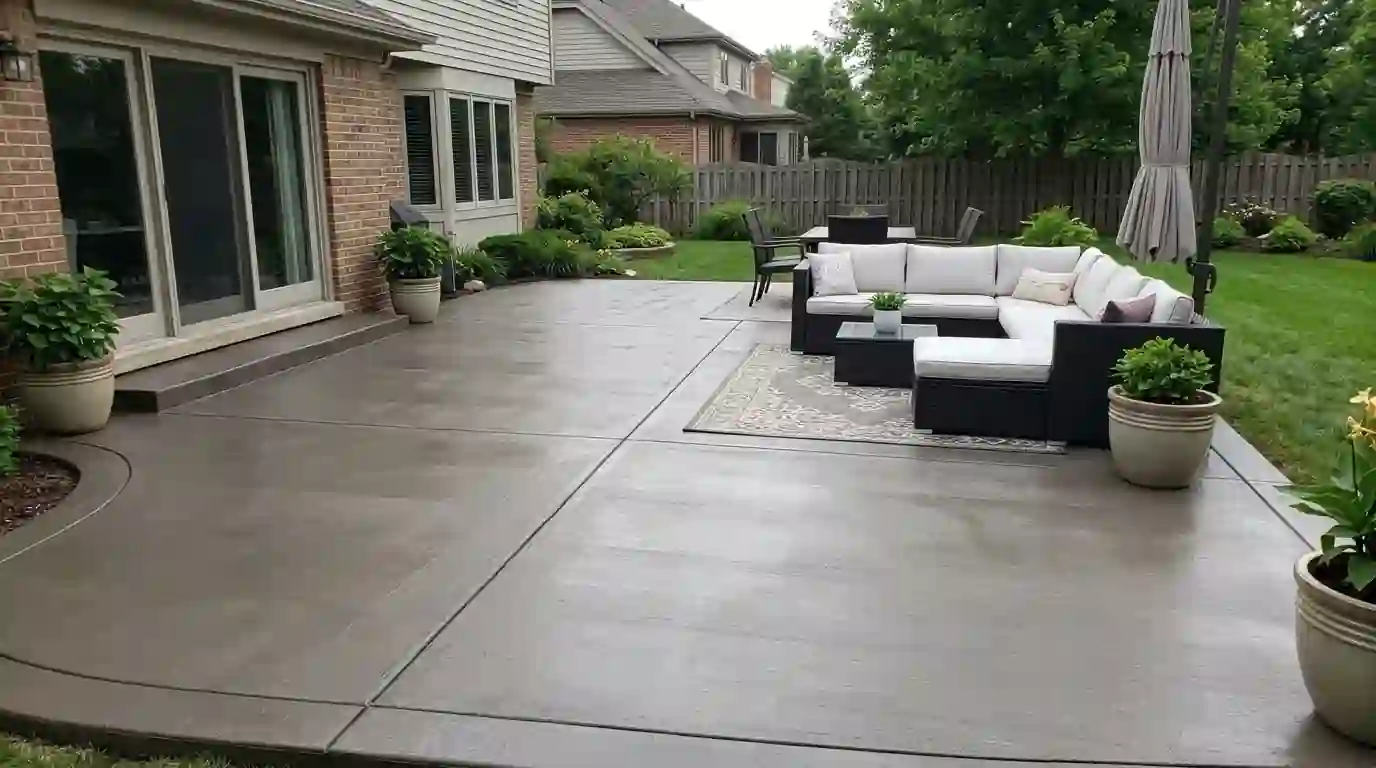
Patio and walkway stains
Patios and walkways are pressure cleaned with a degreaser and mildew treatment, and stubborn clay and leaf stains get a targeted cleaner. Cracks are filled with a flexible concrete repair product. After the slab dries, a penetrating stain is sprayed or brushed on in one or two coats, depending on the depth of color you want. Semi-transparent stains let the concrete's natural variation show; solid concrete stains give an even color across patched or mismatched areas. A border or contrasting band along walkway edges can be added for a finished look.
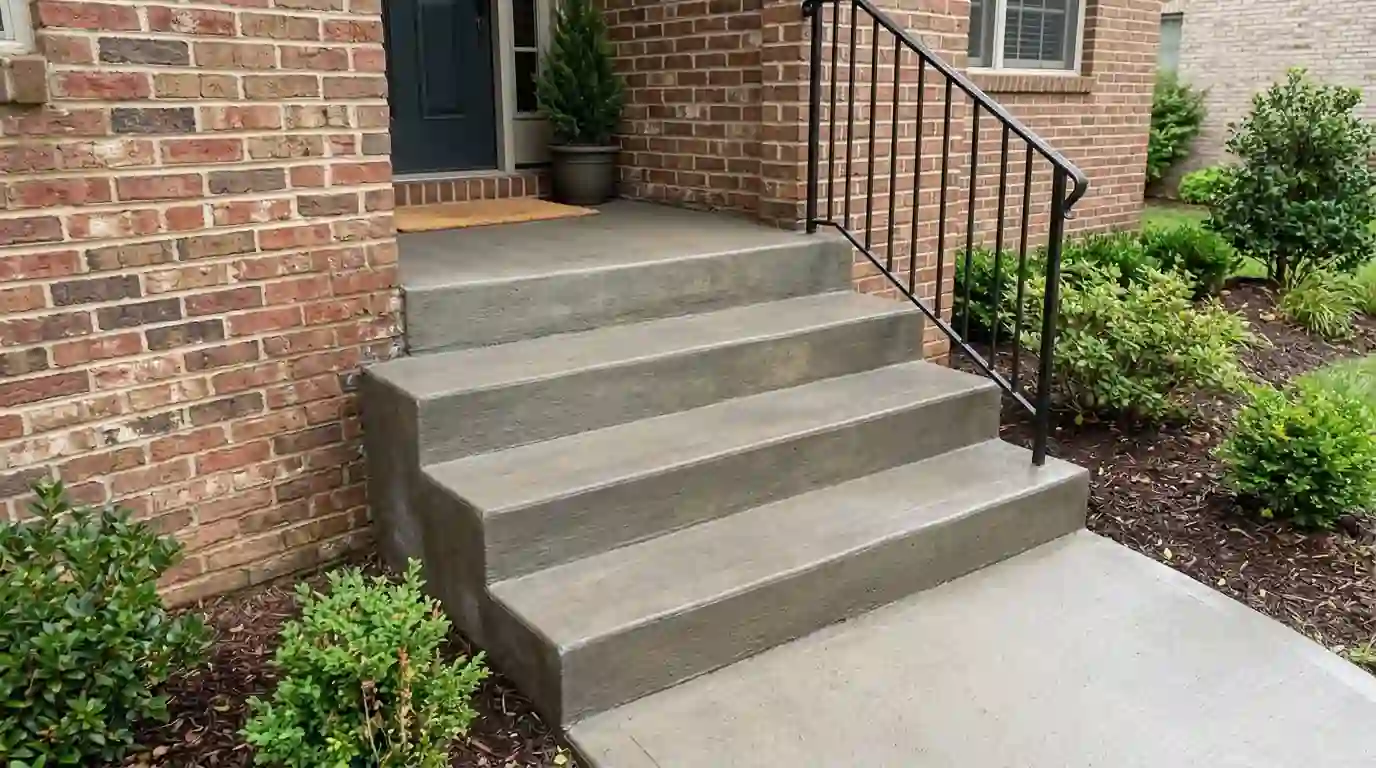
Porch slabs and steps
Front porch slabs and concrete steps take daily foot traffic and splash from planters and rain. They are cleaned, repaired at chipped edges and corners, and stained in a color that works with the house's brick and trim. Steps get a fine grit added to the sealer for traction. Railings are masked, and door thresholds and siding are protected. We plan the work so there is always a safe way in and out of the house while the steps dry, usually by doing half the steps at a time on wide stairs.
Concrete sealers
Sealing alone suits concrete that is already an acceptable color but stains easily. After cleaning and drying, a breathable penetrating sealer or a low-sheen acrylic sealer is applied, depending on whether you want the concrete to look natural or slightly enhanced. Sealed concrete sheds water, resists clay and leaf stains and cleans up with a garden hose. Most outdoor sealers need renewing every two to three years on sunny, busy surfaces. A water bead test tells you when: if water soaks in and darkens the concrete instead of beading, it is time.
What we see on Atlanta homes
Atlanta's outdoor concrete takes a beating that has little to do with cold. Heavy summer thunderstorms splash soil onto patios and walkways, oak and pine shed tannins and pollen across slabs every spring, and shaded concrete under trees grows mildew through the humid months. So the cleaning step carries most of the job here, and we time staining for dry stretches in spring or fall so the slab is fully dry before stain and sealer go on.
What drives the cost of concrete staining
Concrete staining is priced by square footage and the condition of the slab.
- Square footage. Total area of patio, walkways, porch slab and steps.
- Cleaning. Heavy clay, mildew or oil stains need more treatment.
- Crack repair. Filling cracks and chipped edges before stain.
- Stain type. Semi-transparent or solid concrete stain.
- Number of coats. Deeper colors may need a second coat.
- Sealer. Penetrating or acrylic sealer, with grit on steps.
- Old coatings. Removing peeling paint or old sealer first.
How outdoor concrete gets stained
- 1
Inspect
Cracks, old coatings and stains noted.
- 2
Protect
Siding, plants, railings and thresholds covered.
- 3
Clean
Pressure cleaning with degreaser and mildew treatment.
- 4
Repair
Cracks and chipped edges filled.
- 5
Dry
Slab left to dry fully.
- 6
Stain
Penetrating stain in one or two coats.
- 7
Seal
Breathable sealer, grit added on steps.
How long the patio is out of use
Most patios and walkways take two to three days: a day to clean and repair, drying time, then stain and sealer. Light foot traffic is usually fine within a day of sealing, and furniture can go back after a day or two.
Staining concrete yourself or calling us
Reasonable DIY
- Rinsing and sealing a small, clean walkway
- Spot cleaning leaf and clay stains
- Resealing a slab sealed before
Worth handing off
- Removing old peeling paint or sealer
- Even color across patched slabs
- Steps that need grit for traction
- Large patios and pool surrounds
The most common DIY failure is staining a slab that is still damp inside. It looks fine for a few weeks, then blotches and whitens.
Questions about concrete patio and walkway staining in Atlanta
Usually, yes. Stain soaks in and does not peel; paint forms a film that can lift on outdoor slabs.
Only after the paint is removed, since stain needs to soak into bare concrete.
Usually later the same day or the next day for foot traffic; furniture after a day or two.
We add a fine grit to the sealer on steps and slopes for traction.
Every two to three years on sunny, busy surfaces.
Yes. See our garage floor coating page for epoxy and flake floors.