Commercial exterior painting in Atlanta is scheduled around tenants and customers: work runs early mornings, evenings or weekends, entrances stay open, and each elevation is washed, repaired, primed and coated with a product matched to the surface, from elastomeric on masonry and stucco to direct-to-metal coatings on steel. The owner or manager gets a written schedule and one point of contact.
Updated September 2026
How a commercial exterior gets painted without closing
Commercial exteriors carry more surfaces than homes: split-face block, stucco, metal panels, painted steel doors, canopies and signage. Each surface needs its own prep and coating, and the building usually has tenants who need their doors open and their parking usable.
We start with a walk of every elevation, a surface list and a phasing plan: which side is painted when, which entrances are affected and for how long, and where lifts and materials are staged. The coating spec is written per surface so the bid you compare is clear.
What a commercial exterior proposal covers
- Photo survey of every elevation
- Surface-by-surface coating spec
- Phase plan around tenants
- Color samples on the building
- Wash and chalk removal
- Crack, sealant and rust repair
- Priming of bare and repaired areas
- Finish coats per spec
- Punch-list walk and closeout
What drives the cost of a commercial exterior
Commercial exteriors are priced from the walk-through, per surface type and per phase.
- Wall area and height. Square footage and parapet heights set lift and labor needs.
- Surface mix. Block, stucco, metal and trim each take different prep and coatings.
- Repairs. Crack filling, sealant replacement and rust treatment before paint.
- Coating system. Elastomeric and urethane systems cost more than standard acrylic.
- After-hours work. Early, evening and weekend shifts to keep tenants open.
- Access. Lifts, traffic control and tight service alleys.
- Phasing. Tenant-by-tenant or elevation-by-elevation schedules add setups.
Storefront and strip center exteriors
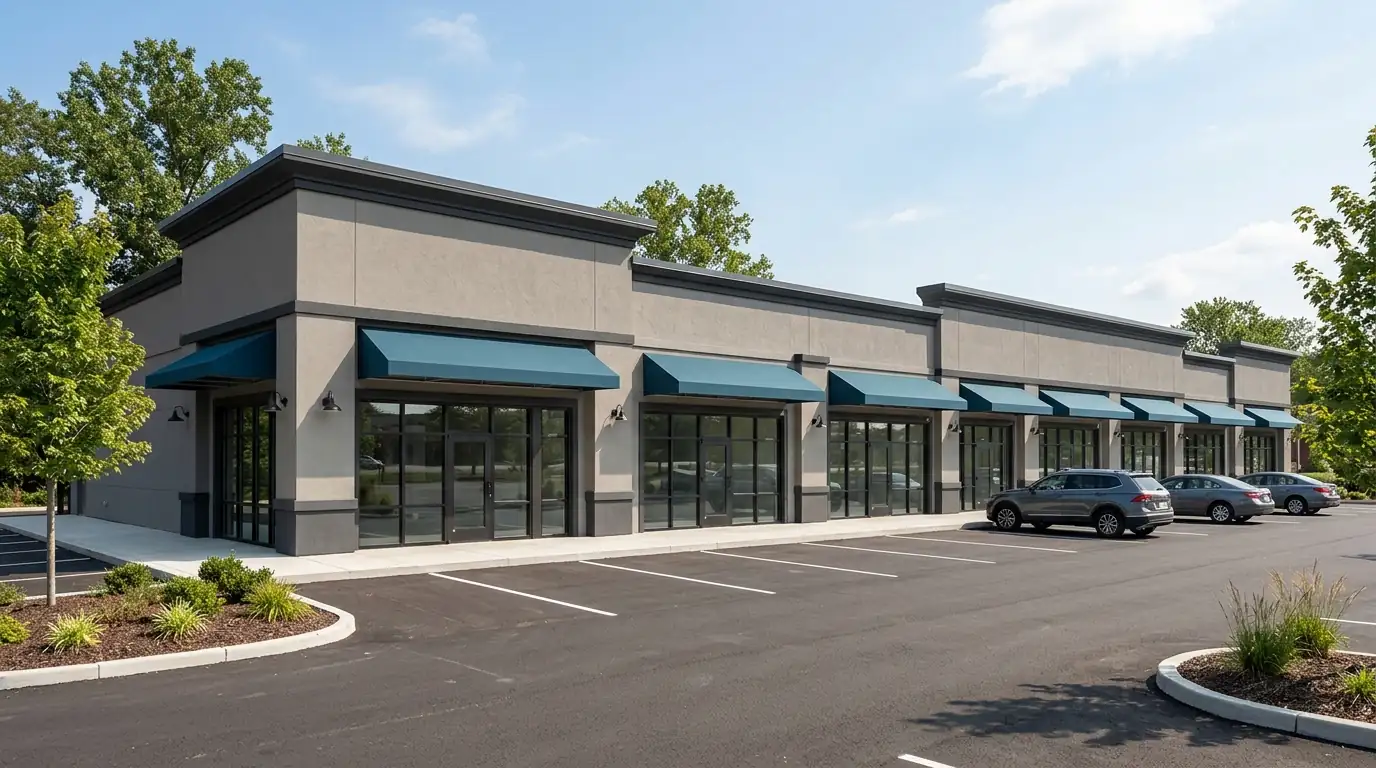
Strip centers and storefronts are painted tenant by tenant. Facades, parapets, canopies and rear service walls are washed, cracks in masonry and stucco are filled, and bare metal on doors and frames is primed. Work around entrances happens before opening or after closing, with doors kept usable. Center owners often use a repaint to refresh a color scheme, so we put samples on the building for approval before the full job. Sign faces and tenant fixtures are masked, not painted.
Warehouse and metal buildings
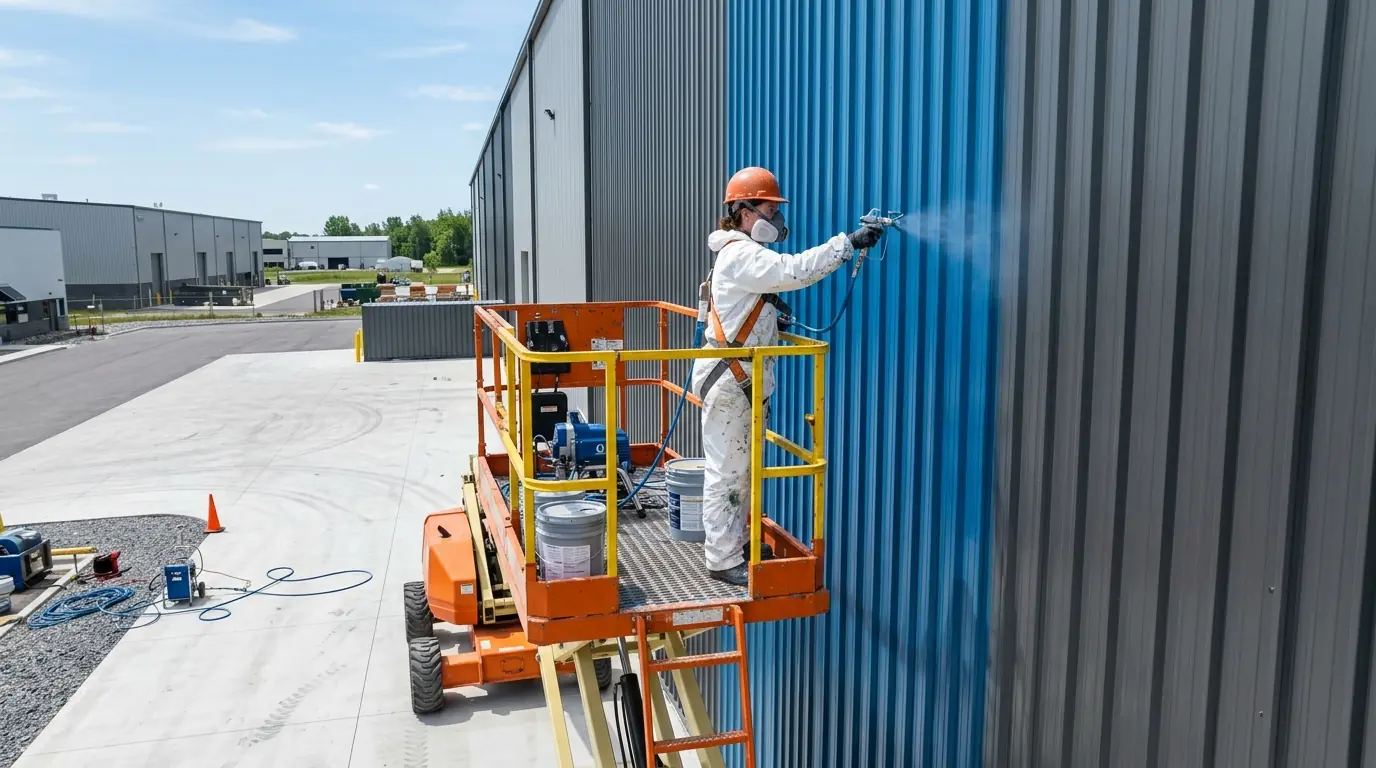
Pre-finished metal buildings chalk and fade, and exposed fasteners rust. Panels are washed with a cleaner that removes chalk, rust spots are wire-brushed and treated, fasteners are primed, and a direct-to-metal acrylic or urethane coating is sprayed. Roll-up doors, man doors and bollards get the same metal treatment. Warehouses are usually painted in sections so loading docks stay in use, and lift work is scheduled around truck traffic. Trim flashing and gutters are coated to match the panels, so the building reads as one finished color.
Church and community buildings
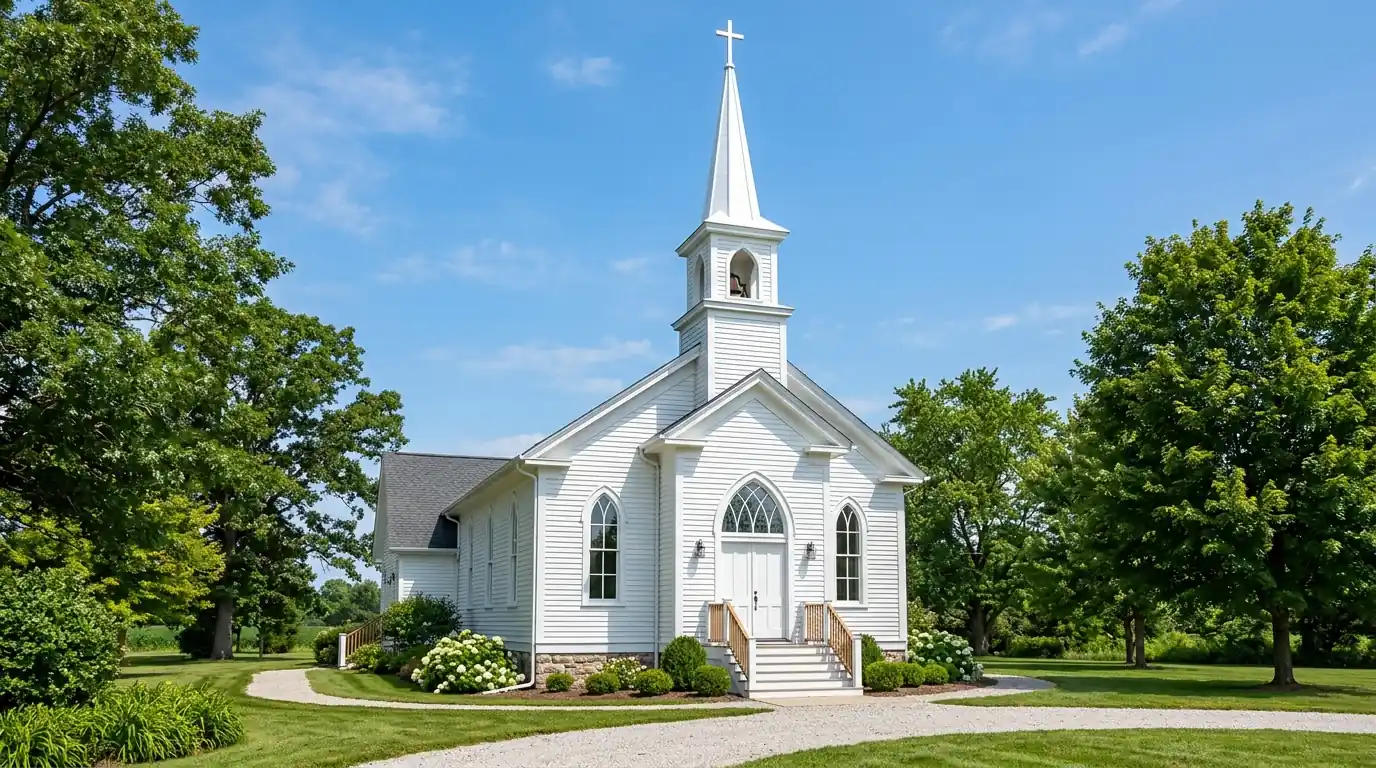
Churches, fellowship halls and community centers are painted around services and events. Brick and stone are cleaned rather than painted unless already painted, wood trim and steeples need careful scraping and priming, and older buildings may need lead-safe work practices during scraping. We coordinate the schedule with the facilities committee and keep entrances and parking clear on service days. Stained glass and memorial plaques are protected throughout. Steeples and high gables are reached by lift, and we share the lift schedule with the committee so nobody is surprised by equipment in the parking lot.
What we see on Atlanta homes
Storefronts in Atlanta's older commercial pockets sometimes sit inside a local historic district. East Atlanta and West End are among the districts where the Urban Design Commission reviews Certificates of Appropriateness, so a building owner there should confirm with the city whether a new exterior color needs review before we start. Timing matters too: we aim commercial exteriors at the April to June and September to November windows, and after pollen season every wall is washed and left two dry days before primer.
How long the building is under way
A single storefront is often a few days. A strip center or metal building usually takes one to three weeks, painted elevation by elevation so no tenant is affected for more than a few days. The phase plan in the proposal gives the dates.
From walk-through to closeout
- 1
Walk every elevation
Surfaces, damage and access documented with photos.
- 2
Spec and phase
Coating per surface and a phase plan around tenants.
- 3
Samples
Colors applied on the building for approval.
- 4
Wash and repair
Chalk and dirt removed, cracks and rust treated.
- 5
Prime
Bare metal, patches and chalky masonry primed.
- 6
Coat
Sprayed or rolled finish coats, elevation by elevation.
- 7
Closeout
Punch-list walk with the owner or manager.
Questions about commercial exterior painting in Atlanta
Yes. Work is phased and scheduled around business hours, and entrances stay usable.
A direct-to-metal acrylic or urethane over cleaned panels, with rust spots treated and primed first.
Unpainted brick is usually better cleaned and left natural. Painted brick is repainted with a breathable masonry coating.
Yes. The phase plan shows which elevation is painted when and which entrances are affected.
Usually one to three weeks depending on size, phasing and weather.
Yes. See our commercial interior painting page for offices, clinics and restaurants.