Wallpaper installation in Atlanta starts with the wall: holes and cracks are patched, glossy paint is scuffed, and a wallpaper primer is rolled on so the paper sticks now and strips cleanly later. Then the room is laid out so the pattern is centered on the main wall and the last seam falls in a corner, and each strip is booked, hung and smoothed.
Updated September 2026
What makes wallpaper look professionally hung
Most wallpaper problems trace back to the wall underneath. Paper hung over bare drywall bonds to its paper face and tears it off years later. Paper hung over glossy paint lifts at the seams. A wall with dents or ridges shows them through thin papers. So every job begins with patching, sanding and a primer made for wallcoverings.
The second part is layout. The pattern has to be plumb even where walls and ceilings are not, centered where the eye lands first, and planned so the final, mismatched seam hides in a corner behind a door. We measure the room, check the roll lot numbers match and plan the drops before cutting.
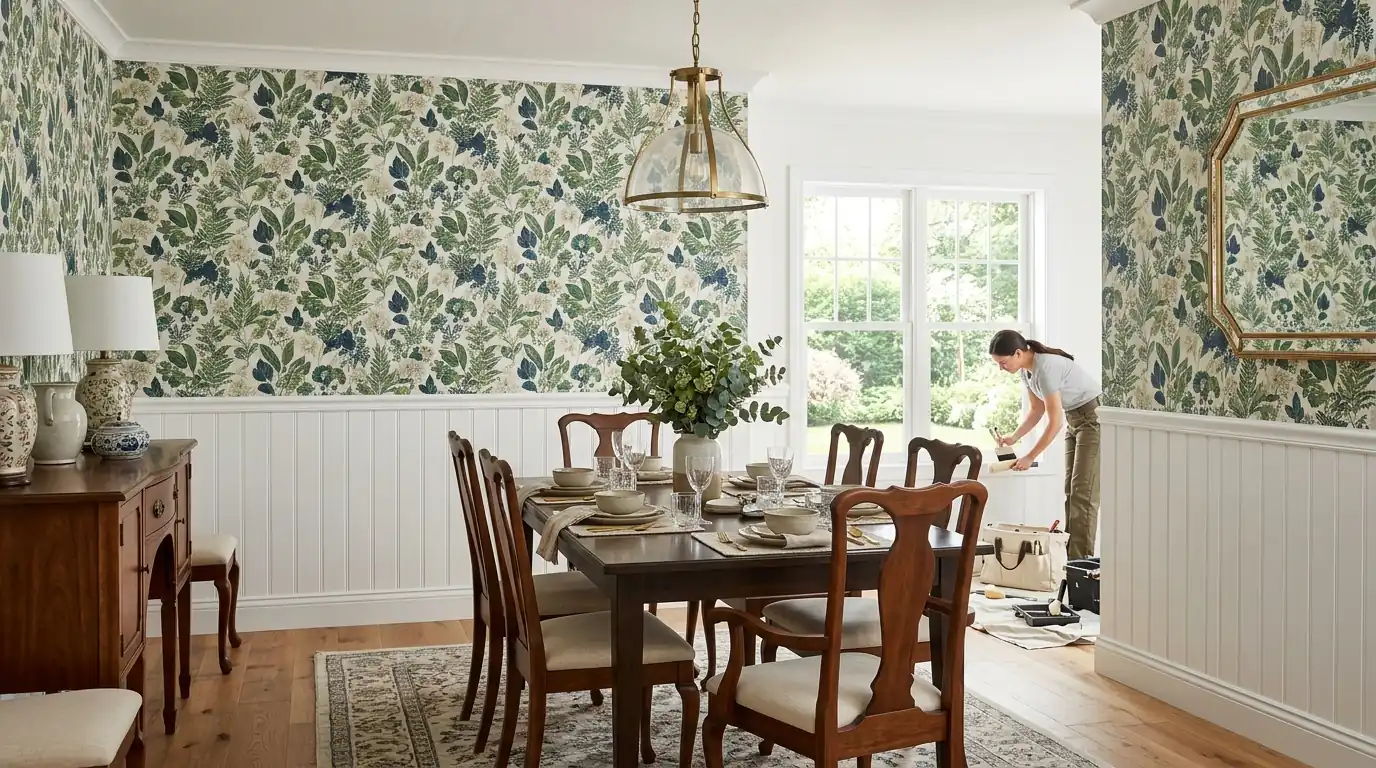
What every wallpaper quote includes
- Room measurement and roll count
- Lot number check
- Patching and sanding
- Wallpaper primer
- Layout plan and plumb line
- Booking and hanging each strip
- Seam rolling and paste cleanup
- Plates and fixtures reinstalled
- Final walk in raking light
What changes the price of wallpaper installation
Installation is priced by the number of rolls and the difficulty of the room, not just its size.
- Number of rolls. Wall area plus waste for pattern matching.
- Pattern repeat. Large repeats waste more paper and take longer to match.
- Paper type. Grasscloth, murals and heavy vinyl take more time than standard papers.
- Wall prep. Patching, sanding and priming, or removing old paper first.
- Room shape. Stairwells, sloped ceilings, windows and many outlets add cuts.
- Ceiling height. Tall walls and stairwells need platforms.
- Removal later. Primed walls strip cleanly; unprimed walls tear when paper comes off.
Traditional and pasted papers
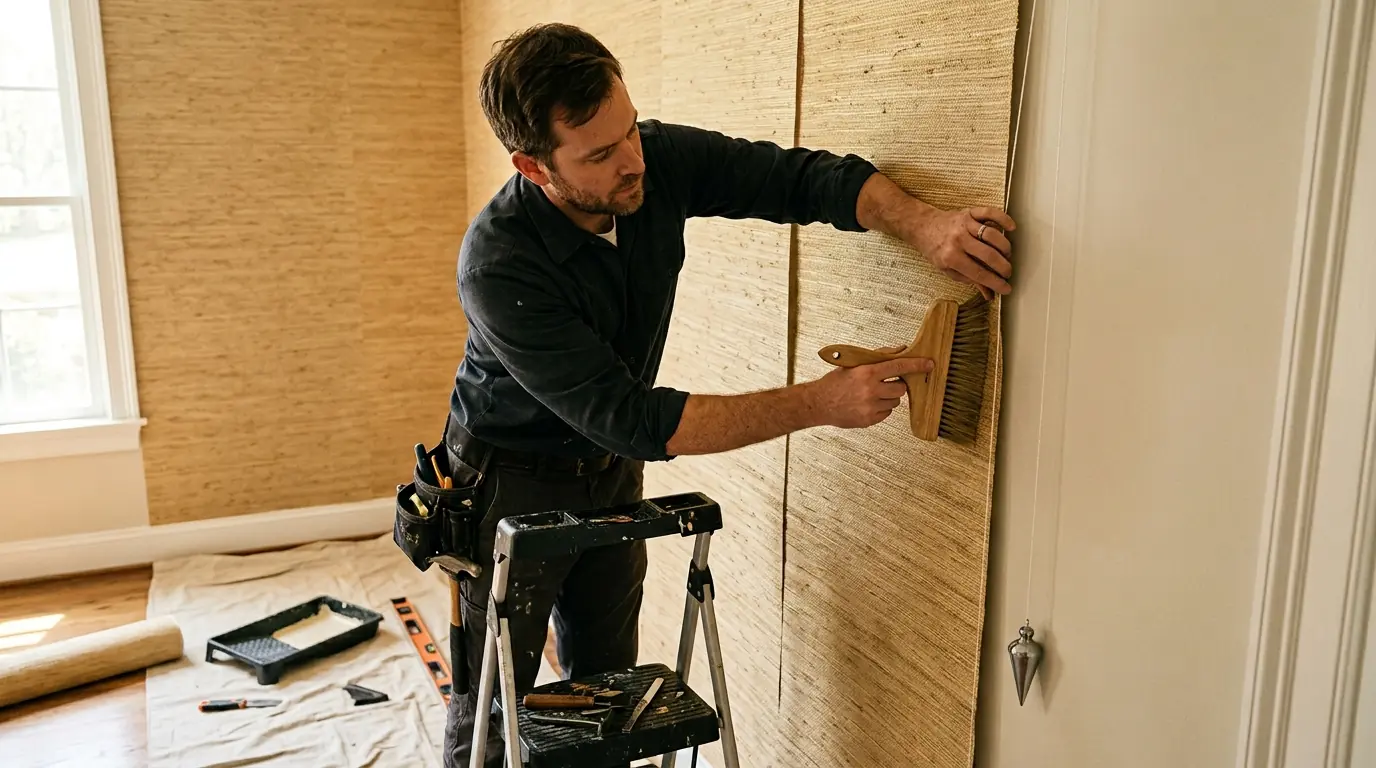
Unpasted papers are rolled with adhesive, folded and left to book for the time the maker specifies so the paper relaxes before it goes on the wall. Each strip is hung to a plumb line, smoothed from the center out, trimmed at the ceiling and baseboard, and the seam is rolled lightly so it lies flat without squeezing out paste. Excess adhesive is sponged off the face and trim straight away. Heavier vinyl and commercial-weight papers use a stronger clear adhesive and are common in hallways and dining rooms that take bumps.
Peel-and-stick and prepasted papers
Prepasted papers are activated with water and booked briefly, and peel-and-stick papers go on dry. Both are popular for accent walls, rentals and powder rooms because they are quicker to hang and to remove. They are less forgiving of rough walls and slightly more prone to seams lifting in humid rooms, so wall prep and a primer still matter. We use a seam roller and, on peel-and-stick, a small overlap or a straight butt seam depending on the product, following the maker's instructions for each brand.
Grasscloth and specialty wallcoverings
Grasscloth, cork and other natural wallcoverings are hand-made, so color varies from strip to strip and seams show by design. They cannot be washed like vinyl, and paste on the face stains them. We hang them with extra care, reverse alternate strips when the maker calls for it to balance shading, and plan the layout so the most noticeable seams fall away from windows and focal points. Specialty papers such as metallics and murals get a test strip and a mapped layout before the first panel goes up.
Hanging it yourself or calling us
Reasonable DIY
- A single accent wall in peel-and-stick paper
- A small powder room with a small-repeat pattern
- Removing outlet plates and clearing the room
Worth handing off
- Grasscloth, murals and metallic papers
- Stairwells and tall walls
- Large pattern repeats across a full room
- Walls that need patching and priming first
The step most DIY jobs skip is the wallpaper primer. Without it, paper can pull the drywall face off when it is removed years later.
What we see on Atlanta homes
Atlanta homes run the full range of wall surfaces, from plaster in older intown houses to fresh drywall in new builds, and each takes paper differently. On plaster, we fill cracks and seal the surface so the paste does not soak in unevenly. In bathrooms and laundry rooms, where humid summers keep the air damp for months, we use papers and adhesives rated for moisture and make sure the exhaust fan works before we hang anything, since steam is what lifts seams first.
How a room gets papered
- 1
Measure and check rolls
Room measured, roll count and lot numbers confirmed.
- 2
Prep the walls
Patch, sand and remove plates; glossy paint scuffed.
- 3
Prime
Wallpaper primer rolled on and left to dry.
- 4
Lay out
Plumb line set and pattern centered on the main wall.
- 5
Hang
Strips booked, hung, smoothed and trimmed one by one.
- 6
Seams and cleanup
Seams rolled, paste wiped off, plates reinstalled.
- 7
Final check
Every seam and corner checked in raking light with you.
Questions about wallpaper installation in Atlanta
Only after the wall is cleaned, scuffed and primed with a wallpaper primer, or it may lift or be hard to remove later.
Usually 10 to 15 percent more, and more for large pattern repeats. We confirm the count before you buy.
For accent walls, rentals and small rooms, yes, if the wall is smooth and primed.
Yes, with moisture-rated paper and adhesive and a working exhaust fan.
Yes. See our wallpaper removal page for stripping and skim coating.
Most accent walls take a few hours and a full room a day or two, depending on the paper.