Painting trim, baseboards and doors in Atlanta means sanding the old finish, filling dents and nail holes, caulking gaps where trim meets the wall, priming, and applying two coats of a hard-drying enamel. When the old trim is oil-based paint, it needs a bonding primer before waterborne enamel or the new coat will peel. Doors are often sprayed for the smoothest finish.
Updated September 2026
Why trim needs a different paint and a different process
Trim and doors take hands, feet, vacuum cleaners and furniture. Wall paint on trim scuffs and stays slightly soft, so trim gets an enamel that cures hard and levels out brush marks. Satin and semi-gloss are standard, and the higher sheen shows every flaw, which is why prep matters more here than anywhere else.
A lot of older homes have oil-based paint on their trim. It yellows over time and does not accept waterborne paint directly. We test the trim, scuff sand and prime oil-painted surfaces with a bonding primer, then apply a waterborne or hybrid enamel that does not yellow. Gaps where trim meets the wall are caulked so the finished line looks crisp.
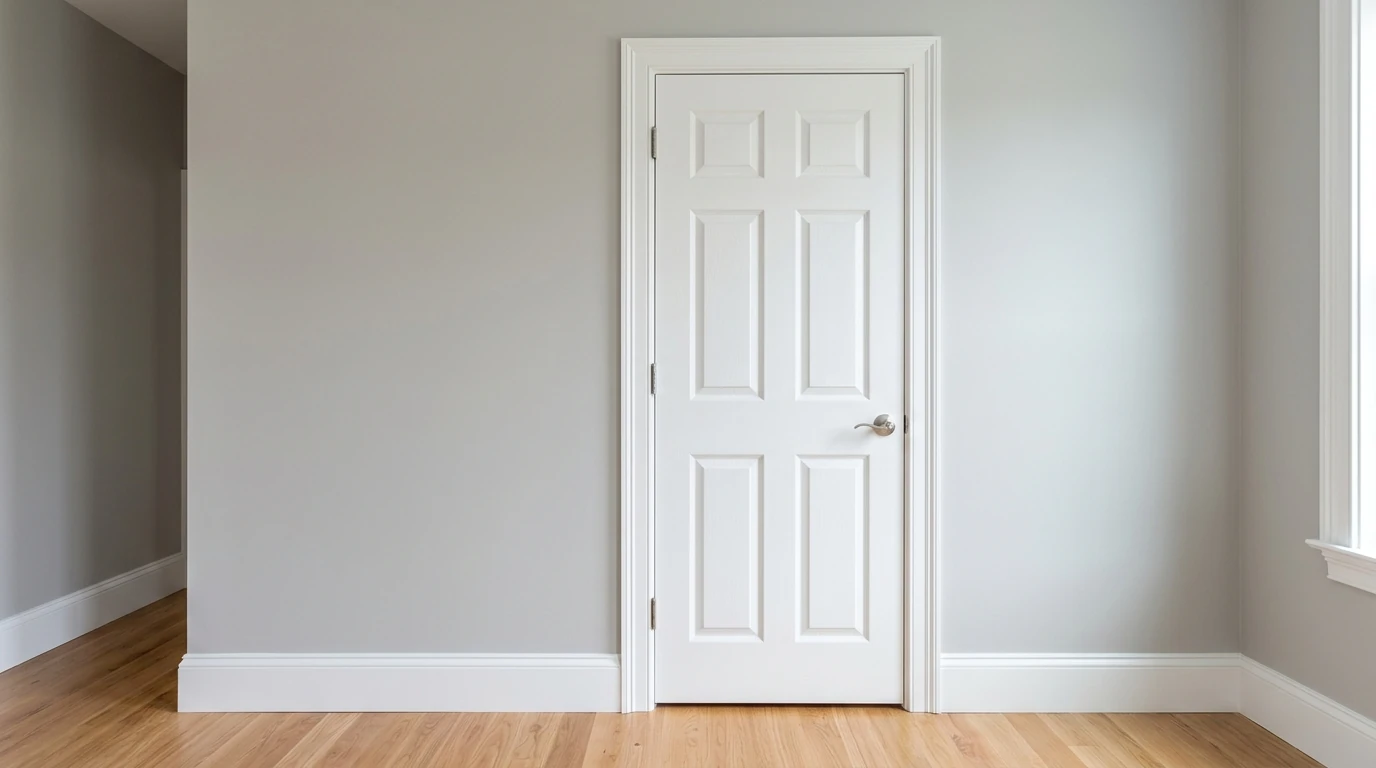
What changes the cost of trim and door painting
Trim is mostly brush labor, so linear footage, detail and prep drive the price.
Planning range from published Atlanta figures: $25 to $110 per hour per painter; labor is the bulk of the bill. That is a market range, not our quote; the factors below move a real price up or down.
- Linear footage. Total feet of baseboard, crown and casing in scope.
- Door count. Each door and frame, and whether doors are sprayed or brushed.
- Oil to waterborne. Converting oil-based trim needs scuff sanding and bonding primer.
- Condition. Dents, chips, gaps and failing caulk add prep time.
- Detail. Tall crown, wainscoting and divided-light windows take longer.
- Color change. Going from stained wood to painted needs priming and extra coats.
- Lead-safe work. Pre-1978 trim that will be sanded needs containment and cleanup.
Crown molding and baseboards
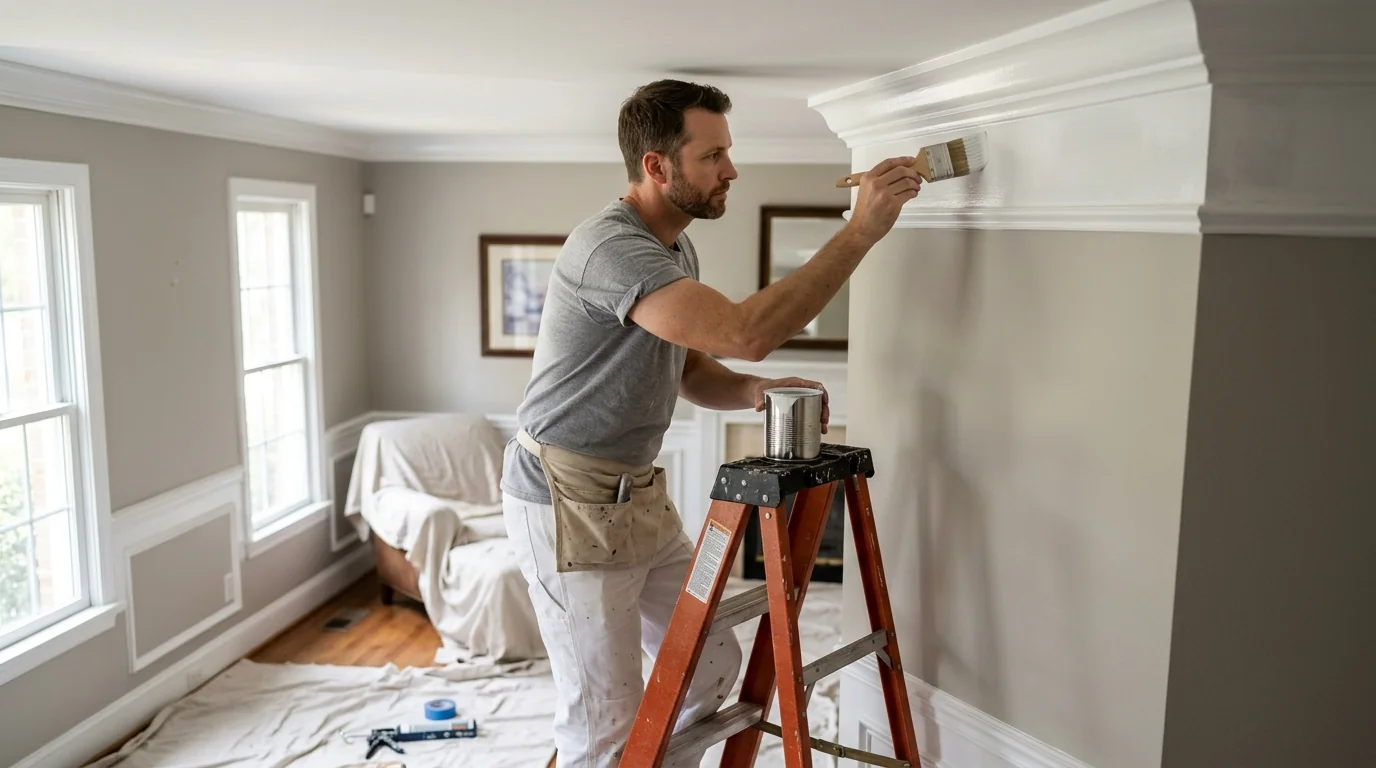
Baseboards take the most scuffing and collect years of dust and dents. We vacuum and degrease them, fill dents and nail holes, sand, caulk the top edge where it meets the wall, prime bare spots and brush on two coats of enamel. Floors are protected with tape and paper so the bottom edge stays clean. Crown molding is done from a ladder, with careful cut lines against the ceiling and wall. Where crown has separated at corners, the joints are filled and caulked before paint so the corners read as one piece.
Interior door painting
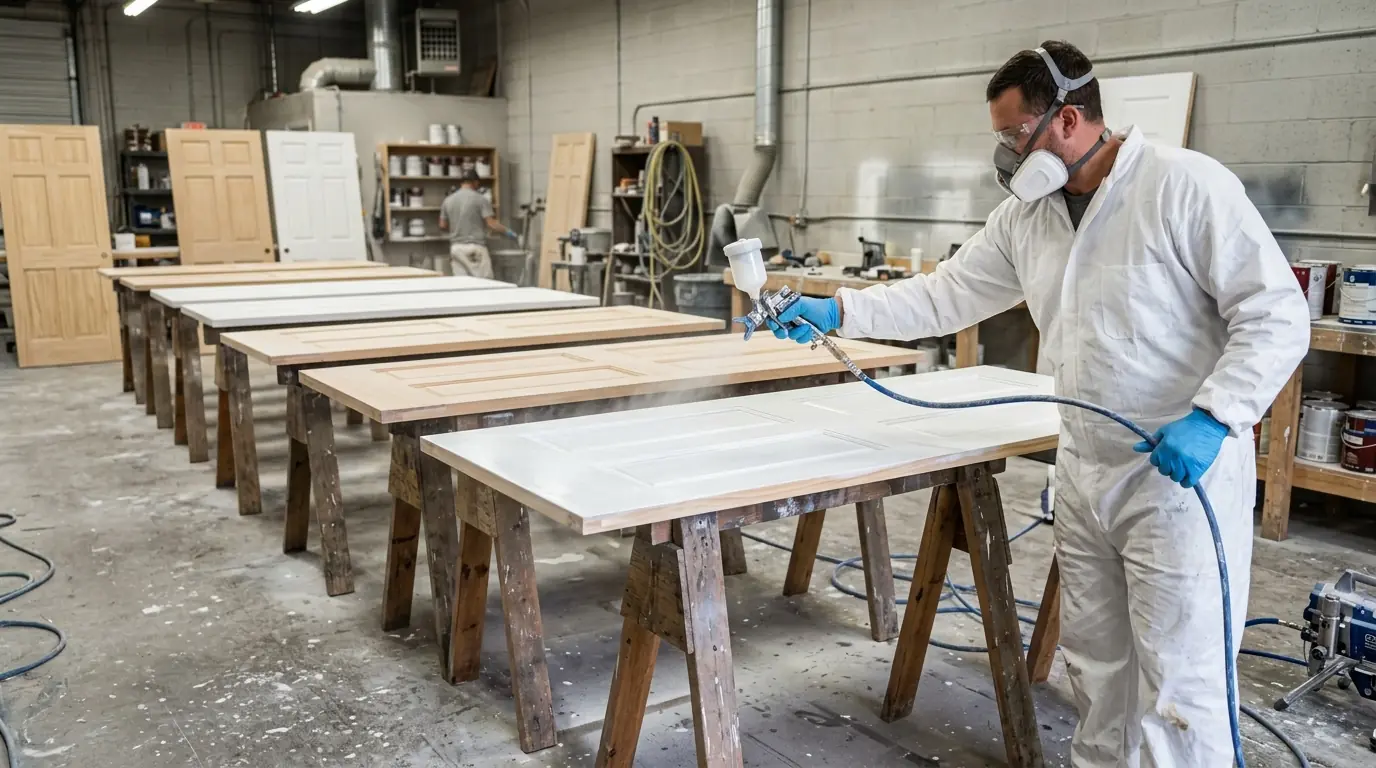
Interior doors can be painted on their hinges or taken down and sprayed flat for the smoothest finish. Hardware comes off, the door is cleaned and sanded, dents are filled, and bare wood or old oil paint is primed. Six-panel doors are painted in a set order so the panels and rails show no lap marks. Sprayed doors come back looking factory finished. Door frames and jambs are brushed to match, and doors are rehung and adjusted so they close without sticking to fresh paint.
Window casings and sills
Window trim is the most detailed trim in a room. Casings, stools, aprons and sills all get sanded and caulked, and sills, which take condensation and sun, often need bare spots primed and small cracks filled. Muntins on divided-light windows are brushed by hand with the glass masked or cleaned with a razor afterwards. On older windows, we check that sashes still open after painting and free any that were painted shut before. Sills that have split or softened are filled with epoxy and sanded flush, so the enamel sits on a surface that will not keep cracking.
Trim yourself or hire it out
Doable yourself
- Touching up scuffed baseboards in the same enamel
- Recaulking a few gaps
- Painting one or two flush doors
Worth handing off
- Converting oil trim to waterborne enamel
- Whole-house trim and doors
- Stained trim going to white
- Pre-1978 trim that needs sanding
The most common DIY trim failure is skipping the bonding primer on old oil paint. The new coat looks fine for weeks, then scratches off with a fingernail.
What we see on Atlanta homes
Trim is where the oldest paint in an Atlanta house usually sits. The Victorian cottages and 1920s and 1930s Craftsman bungalows in Ormewood Park carry wide original casings and baseboards under many coats, and pre-1940 houses like those in Druid Hills need lead-safe scraping and containment before old trim paint is disturbed. On those homes we test the old finish, contain the room and prime with a bonding primer so the new enamel does not peel off the layers underneath.
How trim and doors get painted
- 1
Test the old finish
We check whether the trim is oil or latex and look for lead-era paint.
- 2
Protect
Floors taped and papered, hardware removed, walls masked where needed.
- 3
Clean and sand
Degrease, then scuff sand to dull the old sheen.
- 4
Fill and caulk
Dents and nail holes filled, gaps at walls caulked.
- 5
Prime
Bonding primer on oil paint and spot primer on bare wood.
- 6
Enamel
Two coats brushed on trim; doors sprayed or brushed.
- 7
Rehang and check
Hardware back on, doors adjusted and every room walked with you.
Questions about trim, door and baseboard painting in Atlanta
Usually because waterborne paint went directly over oil-based paint without a bonding primer.
Semi-gloss is more durable and washable; satin shows fewer flaws. Both are common.
Yes. It needs cleaning, sanding and a stain-blocking primer so the wood tannins do not bleed through.
Often, yes. Doors are taken down and sprayed for the smoothest finish, then rehung.
Doors can be closed carefully the same evening; enamel keeps hardening for a week or two.
Yes. See our interior painting page; many customers do walls and trim together.