Repainting after fire or smoke damage in Atlanta means cleaning soot from walls and ceilings first, then sealing every affected surface with a shellac-based or odor-blocking primer so stains and smoke smell cannot come back through the new paint, and finally repainting in two coats. Ceilings stained by water from fire suppression are dried, sealed and painted the same way.
Updated September 2026
Signs a room still holds smoke damage
- Odor on humid days A smoky smell that returns when the house warms or the air turns damp.
- Yellow-brown film Discoloration that wipes off on a white cloth.
- Dark ceiling corners Gray shadowing where smoke collected near the ceiling.
- Stains through paint Spots showing through a quick coat of new paint.
- Sticky trim A tacky residue on doors, casings and cabinet faces.
Why smoke damage needs more than a fresh coat
Smoke leaves an oily, acidic film on walls, ceilings and trim, often far from the room where the fire started. Paint rolled over that film does not bond well, the yellow-brown stain bleeds through, and the smell returns whenever the house warms up or the air turns humid.
The repaint is the last step of a sequence: soot removal, cleaning, drying, sealing and then finish coats. If the fire caused structural damage or the house still needs cleanup, that work comes first, and the painting is planned to follow it so the new finish goes onto surfaces that are clean and dry.
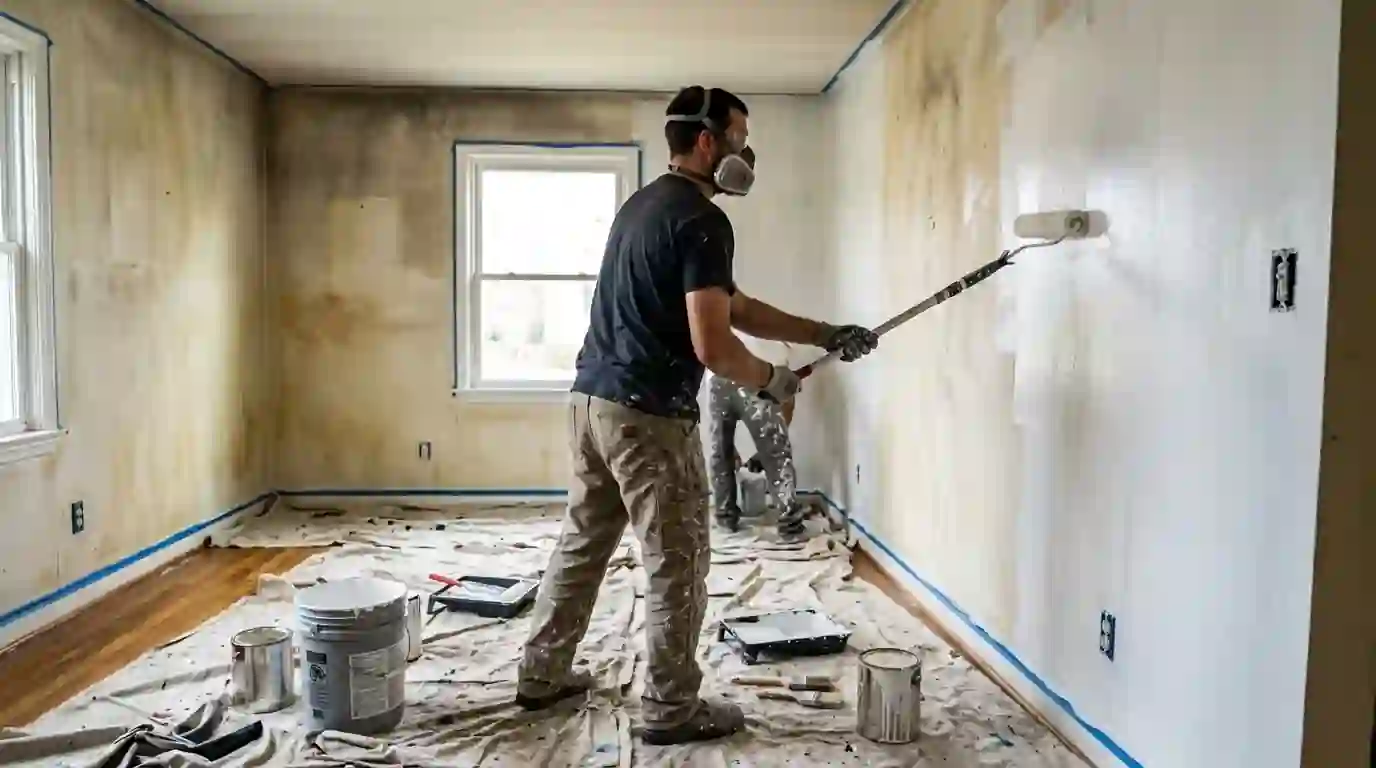
Smoke odor and soot sealing
Walls and ceilings with smoke film are cleaned with a degreasing cleaner and dry sponges where soot is loose, then rinsed and dried. Every affected surface then gets a shellac-based or odor-blocking primer, which locks residual smell and staining behind a barrier. Closets, ceilings above doorways and the inside of cabinets are easy to miss and often hold the strongest smell, so they are sealed too. Two finish coats go on only after the primer has cured fully, which is what keeps the smell from coming back.
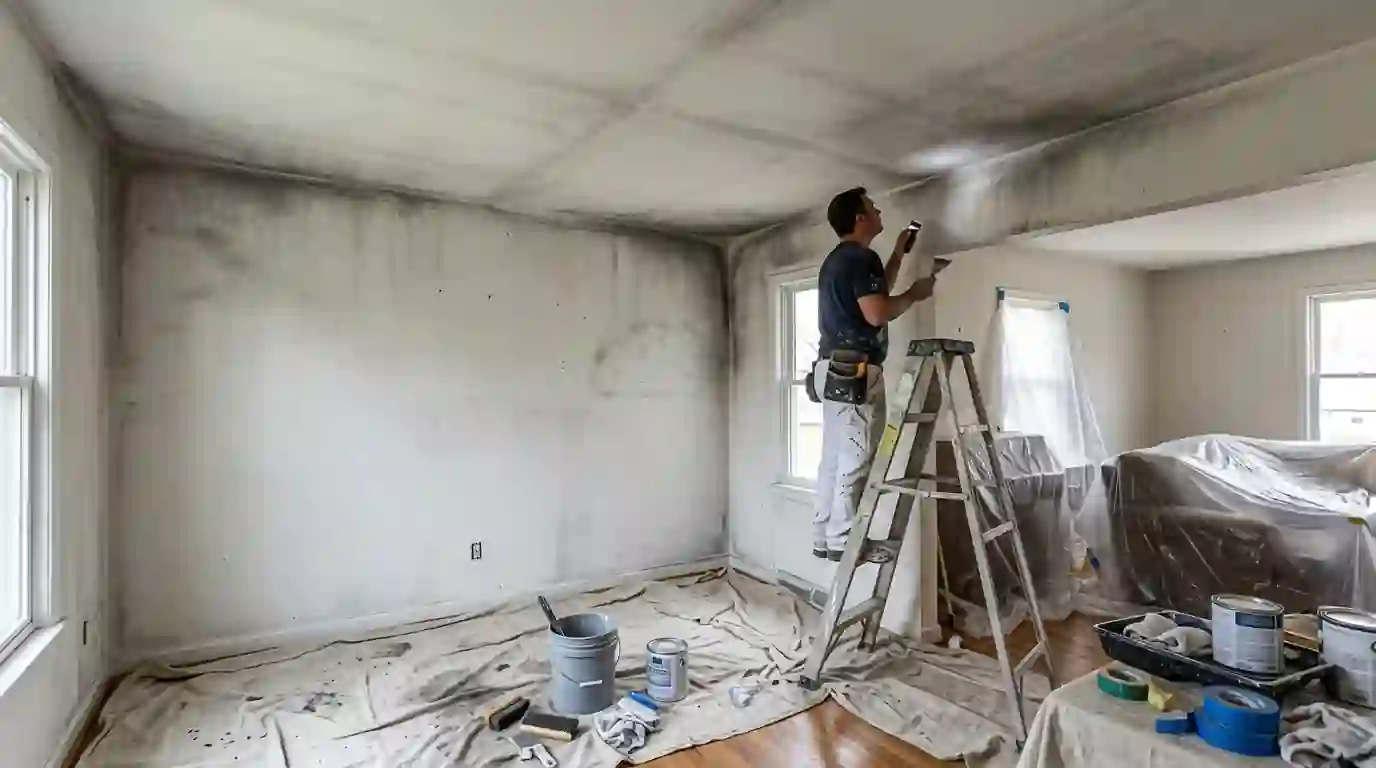
Water-stained walls and ceilings after a fire
Water from fire hoses and sprinklers often damages rooms the fire never reached. Ceilings and walls are checked with a moisture meter and left to dry fully before any sealing, since sealing in moisture invites mildew. Stained areas get a stain-blocking primer, soft or sagging drywall is replaced, and the room is then repainted corner to corner so patched areas do not show as brighter spots. We coordinate with whoever is handling drying and drywall so painting starts when the surfaces are ready.
Exterior smoke and heat damage
Fire on a neighboring property or a garage can blister siding paint, stain soffits with smoke and craze trim enamel from heat. Blistered paint is scraped back to sound paint, smoke residue is washed off siding and soffits, and heat-damaged trim is sanded, primed and repainted. Vinyl siding that has warped from heat cannot be painted flat again and has to be replaced first. Exterior repainting follows the same weather rules as any outside job, with dry days for primer and paint.
How a fire and smoke repaint runs
- 1
Walk the house
Every room checked for film, odor and water staining.
- 2
Coordinate
Painting scheduled after cleanup, drying and repairs.
- 3
Clean
Soot removed, surfaces degreased and rinsed.
- 4
Dry
Moisture meter checks before sealing.
- 5
Seal
Odor- and stain-blocking primer on every affected surface.
- 6
Repaint
Two finish coats on walls, ceilings, trim and doors.
- 7
Final check
Every room walked for odor and bleed-through.
How long a fire repaint takes
Once cleanup and drying are finished, a single room often takes two to three days because the sealing primer has to cure before the finish coats. A whole floor or house is planned room by room over one to two weeks, with the most affected rooms first.
What we see on Atlanta homes
Humidity is what brings smoke odor back in an Atlanta house. A room can smell fine on a dry spring afternoon and then smell of smoke again in July once the air turns damp, because odor trapped in porous drywall and unsealed wood releases as moisture rises. That is why we seal every affected surface, including closets and the inside of cabinets, rather than only the walls that look stained, and why we let primer cure fully before the finish coats go on.
What drives the cost of a fire repaint
Fire and smoke repaints are priced from a walk-through, by area and by how deep the residue and staining go.
- Area affected. Rooms with smoke film, which is often more than the fire room.
- Soot load. Heavy soot needs more cleaning before any primer.
- Odor sealing. Shellac-based or odor-blocking primer on every affected surface.
- Water damage. Drying time, stain blocking and drywall replacement.
- Cabinets and closets. Interiors that need sealing as well as faces.
- Ceilings. Smoke rises, so ceilings usually need the most work.
- Exterior. Blistered siding paint, soffits and trim outside.
Questions about fire and smoke damage repainting in Atlanta
It can if surfaces are painted without cleaning and sealing. A shellac-based or odor-blocking primer stops it.
We provide a detailed written scope you can share with your adjuster; the claim itself stays between you and your insurer.
Often yes. Smoke film travels through the house, and closets and ceilings far from the fire can hold odor.
After cleanup, drying and any structural repairs. We schedule the repaint to follow those steps.
Yes, when smoke reached them. Cabinet interiors often hold odor longer than walls.
Soft or sagging drywall is replaced before painting; see our drywall repair page for patching.