By Conrad Redmond, Painting Guides Editor. Updated September 2026
Atlanta's pine and oak pollen season runs roughly from late March through April and coats siding, decks and windows in a yellow-green film. Paint applied over that film does not bond properly, so exteriors should be washed after the heaviest pollen and left about 48 hours to dry before primer. Pollen landing on wet paint also sticks to the surface.
Why pollen and paint do not mix
Paint needs a clean, sound surface to grip. Pollen is a fine, slightly oily dust that settles into the texture of siding and the grain of wood. Paint sprayed or rolled over it bonds to the pollen instead of the siding, and when the pollen layer lets go, so does the paint.
The damage does not show on day one. It shows the next summer as small peeling patches, often on the sides of the house that faced the heaviest trees.
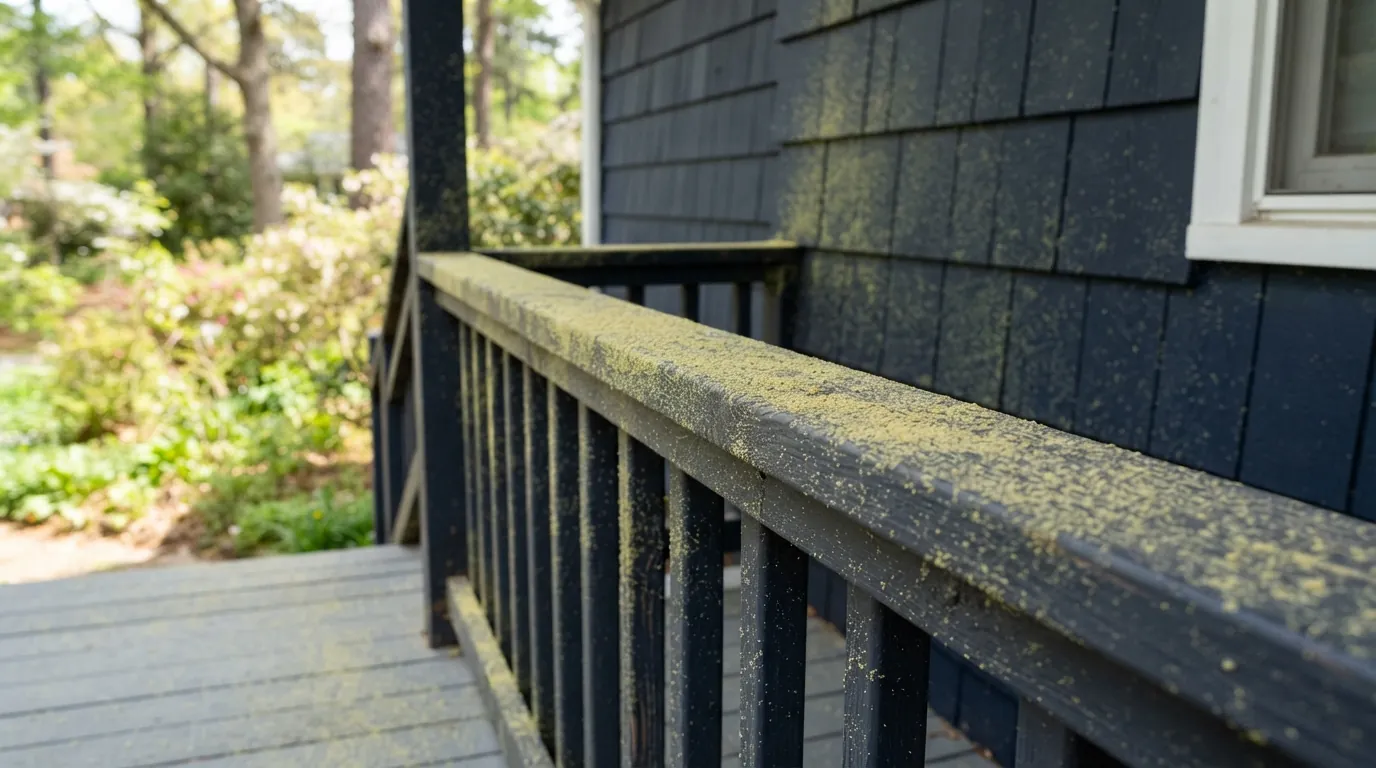
Pollen feeds mildew
The second problem is biological. Pollen that sits on shaded walls through a humid Atlanta spring gives mildew and algae something to grow on. By early summer, north walls and eaves can show gray and green streaks that were not there in winter.
Painting over mildew without killing it lets it grow back through the new coat. A wash with a mildew cleaner, not just water, is part of every exterior we do. See pressure washing for how siding is cleaned without damage.
Planning an exterior around pollen season? Call now and we will schedule the wash and paint around the heaviest weeks.
Call (470) 741-8134The wash and the wait
The fix is simple and takes time. After the heaviest pollen has fallen, siding, trim and soffits are washed with a cleaner at low pressure and rinsed from the top down. Then the house needs about two dry days before primer, longer on shaded walls and after rain.
Rushing this step is the most common reason spring paint jobs fail. A house that looks clean can still be damp in the laps and at the bottom edges of boards.
- Wait for the heaviest pollen to pass.
- Wash with a mildew cleaner at low pressure.
- Rinse plants and glass after the wash.
- Allow about 48 hours of dry weather before primer.
- Check shaded walls and bottom courses before painting.
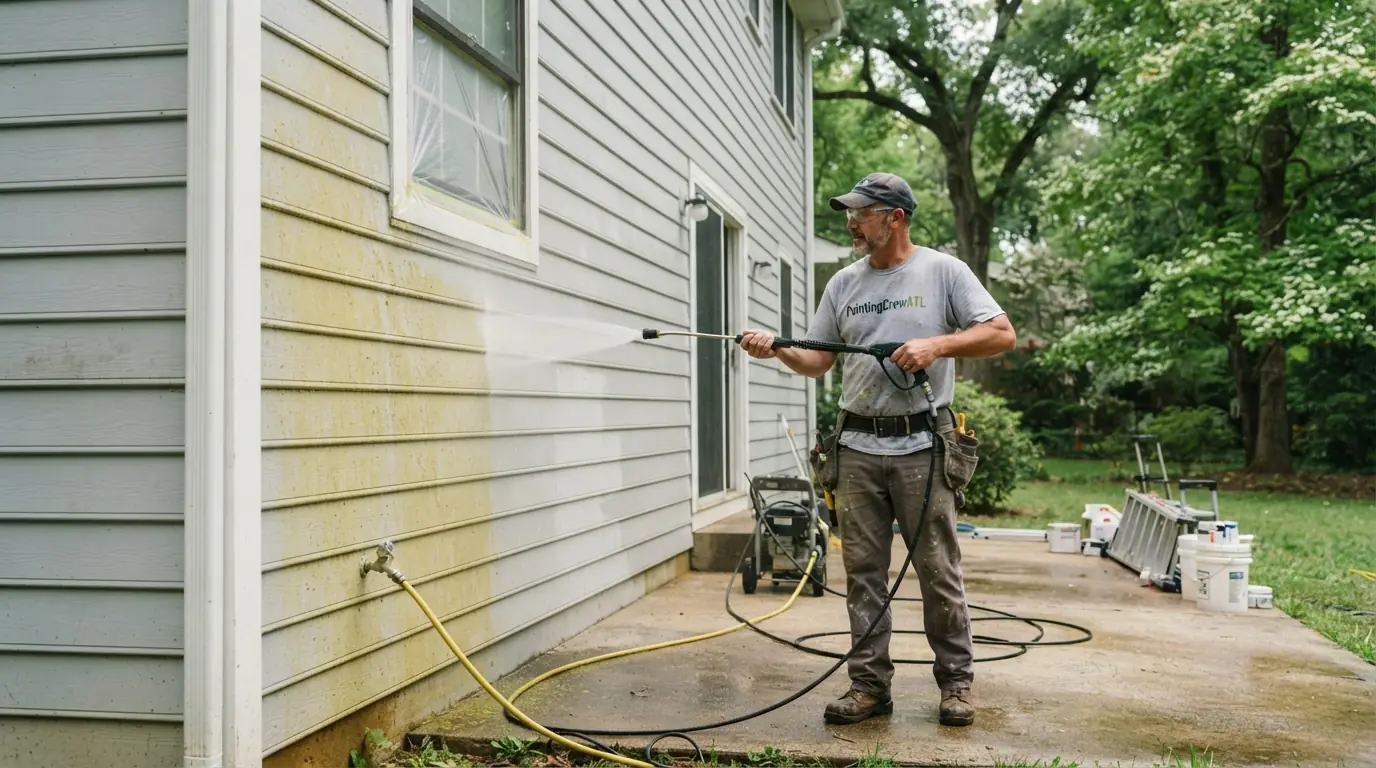
A spring schedule that works
Spring is still one of the two good painting windows here, so the goal is to work with the pollen rather than around it. Planning the steps in order keeps the job inside the window without painting over a yellow film.
- Late winter: walk-through, colors on sample boards, rot repair scheduled.
- Late March to April: carpentry and repairs that do not need a clean surface.
- After the heaviest pollen: full wash with a mildew cleaner.
- Two dry days later: primer, then finish coats, starting early in the day.
- Late spring: decks and fences, once they are washed and dry.
Protecting fresh paint during pollen season
Pollen that lands on wet paint gets stuck in the film and leaves a gritty, yellow-tinted surface. Local guidance notes that pollen levels are often lower after rain or later in the day, which is when fresh coats have the best chance of skinning over clean.
For decks, fences and porch floors, the same rule applies: wash, dry and coat once the heaviest pollen has passed, or plan the job for fall.
What to do if paint went on over pollen
If a recent paint job is peeling in small patches, especially on walls facing the trees, pollen or mildew under the film is a likely cause. The affected areas have to be scraped back to sound paint, washed, dried, spot primed and repainted. Our guide to when to paint an exterior covers how to plan the next job around the season.
Questions readers ask
Roughly late March through April, driven by pine and oak.
It can be done with a thorough wash and dry time, but painting just after the heaviest pollen is more reliable.
Not usually. A cleaner removes the oily pollen film and kills mildew; water alone leaves both behind.
About two dry days, longer on shaded walls or after rain.
Yes. Stain over pollen soaks in unevenly and wears early; decks should be cleaned first.