Venetian plaster in Atlanta homes is applied in several thin layers of lime-based plaster with a steel trowel, then burnished to a soft sheen that looks like polished stone. Interior limewash and glazes are brushed in overlapping strokes for a cloudy, hand-made look. Every decorative finish starts with a primed, smooth wall and a sample board you approve in your own light.
Updated September 2026
What decorative finishes are, and where they work
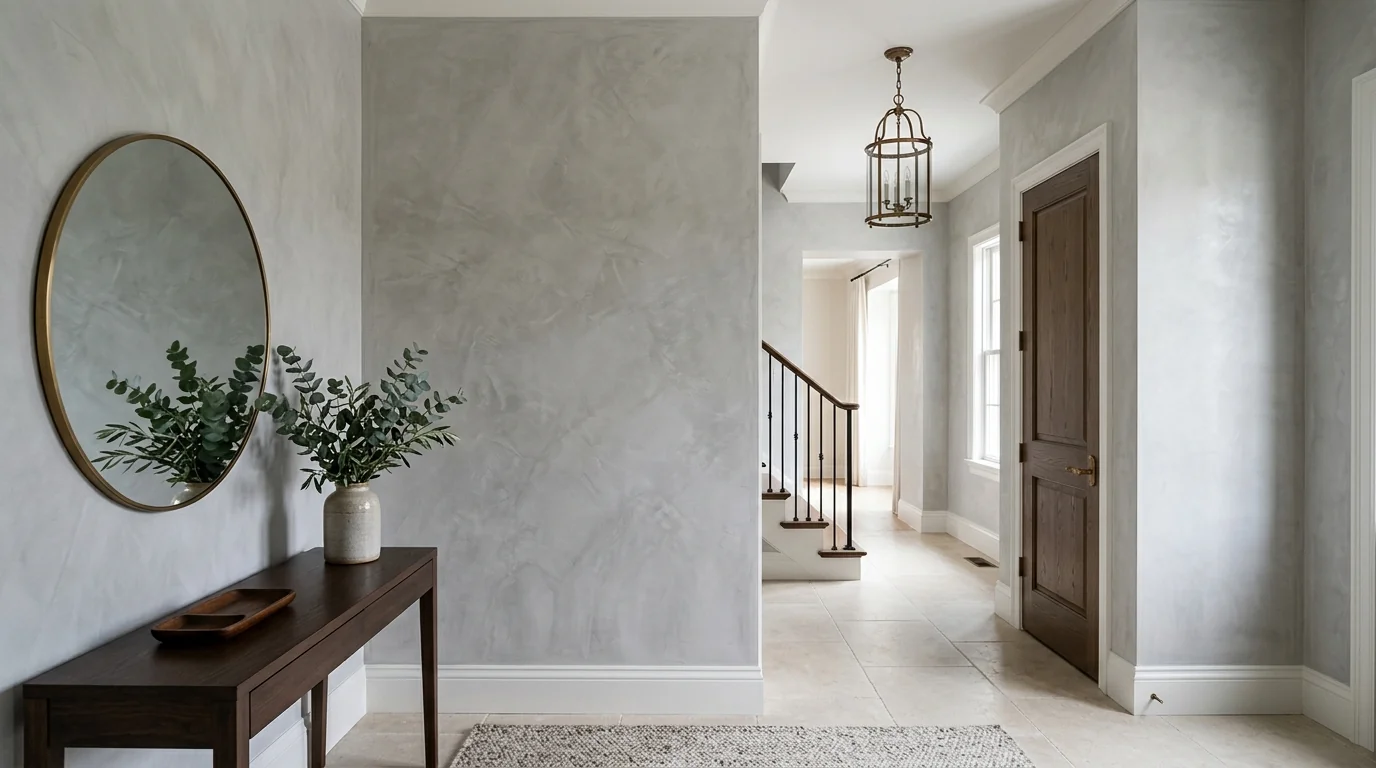
Decorative finishes replace the flat uniformity of paint with depth and movement. Venetian plaster reads like marble or polished stone, limewash reads like soft, chalky old plaster, and glazes add a translucent layer of color over a base coat. They suit feature walls, entries, powder rooms, fireplace surrounds, dining rooms and ceilings.
Because each finish is applied by hand, no two walls look exactly alike, and that is the point. What has to be consistent is the prep underneath, the thickness of each coat and the look you agreed on from the sample. We make sample boards first, so the finish is chosen on your wall color, under your lights, before a single wall is touched.
What changes the price of a decorative finish
Decorative finishes are priced by area and by the number of hand-applied layers.
- Finish type. Venetian plaster takes more coats and burnishing than limewash or glaze.
- Wall area. One feature wall costs far less than a whole room or ceiling.
- Wall prep. Walls must be flat and crack-free; repairs come first.
- Samples. Sample boards and color adjustments before the job.
- Protection. Wax or sealer in bathrooms and high-touch areas.
- Height and access. Ceilings, stairwells and tall walls need platforms.
- Detail. Arches, niches and corners take more trowel work.
Venetian plaster or limewash
| Factor | Venetian plaster | Interior limewash |
|---|---|---|
| Look | Polished stone, soft sheen | Chalky, matte, cloudy |
| Coats | Two to four troweled layers | Two or more brushed coats |
| Durability | Very hard once cured | Softer, marks more easily |
| Best for | Feature walls, entries, powder rooms | Bedrooms, living rooms, ceilings |
Venetian plaster
Venetian plaster is a lime-based material troweled on in two to four very thin coats. The first coats build texture and color; the final coat is pressed hard with the trowel to burnish it to a soft sheen. A protective wax or sealer can be added in wet areas. The wall must be flat, primed and free of cracks first, because plaster highlights every flaw. It suits feature walls, entries, powder rooms and fireplace surrounds more than whole houses, and it lasts for decades when protected from constant knocks.
Interior limewash walls
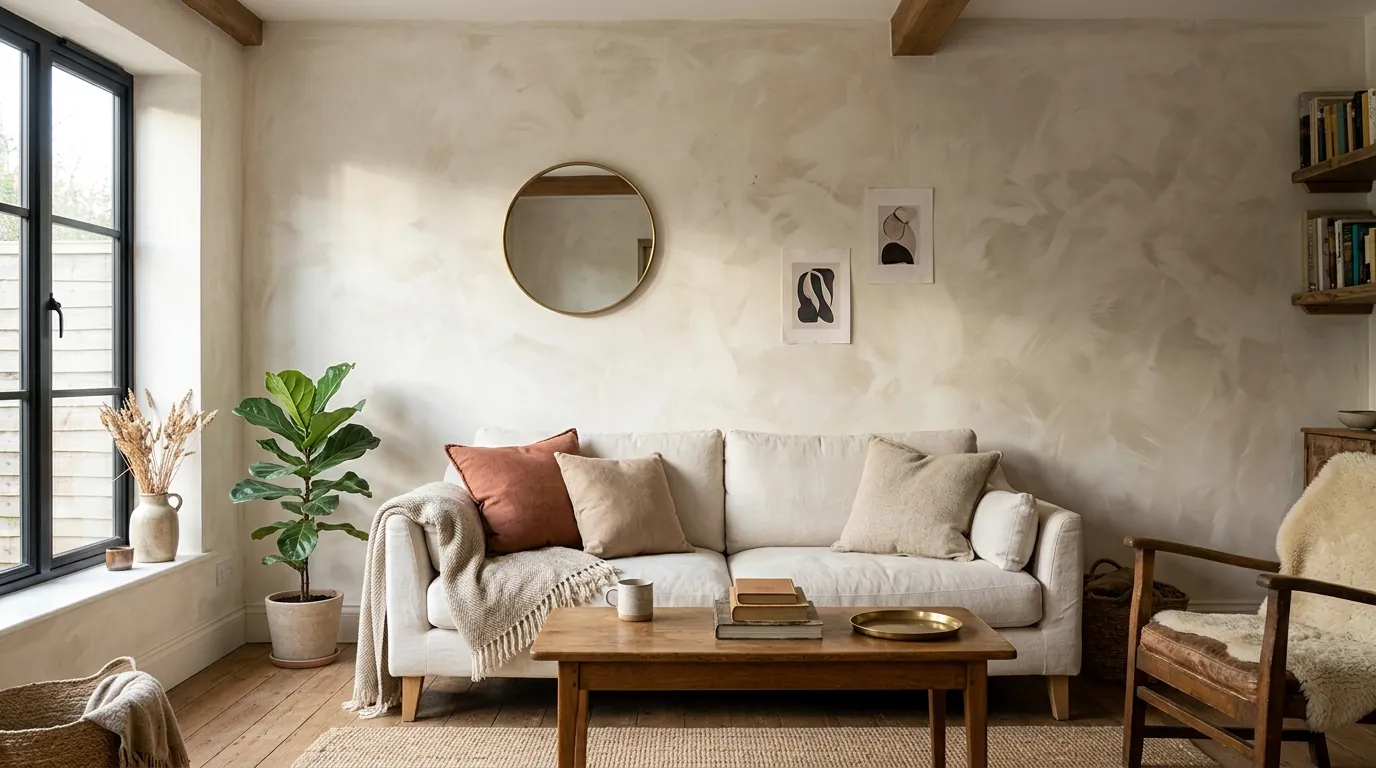
Interior limewash, or a lime-based paint, gives a chalky, cloudy finish with visible brush movement that changes with the light through the day. It is applied over a mineral primer in two or more coats, brushed in random crossing strokes, and it dries lighter than it goes on. It is breathable and matte, suits bedrooms, living rooms and ceilings, and pairs well with older houses. It marks more easily than washable paint, so busy hallways and kids' rooms are usually better in a scrubbable finish.
Color washing and glazes
Color washing and glazing layer a thinned, translucent color over a painted base coat, then rag, brush or sponge it to soften and blend. The result ranges from a subtle aged look to a stronger, mottled effect. Glazes are slower-drying so they can be worked, and they are applied section by section so wet edges do not show. We seal glazed finishes in areas that get touched, and we keep a record of the colors and glaze mix so future touch-ups match.
What we see on Atlanta homes
Some Atlanta houses are natural homes for these finishes. The Mediterranean Revival houses in Ansley Park often have arched openings, stucco exteriors and rooms where Venetian plaster or limewash suits the architecture better than flat paint. In newer homes, the same finishes are usually kept to one feature wall, an entry or a powder room, where a hand-made surface stands out against painted drywall around it.
How long a decorative finish takes
Most feature walls take two to three days because each layer needs to dry before the next. A full room can take most of a week. The room can usually be used in the evenings with care, and full cure takes a couple of weeks before sealing or heavy use.
How a decorative finish is applied
- 1
Sample boards
Two or three versions made on boards for you to compare in place.
- 2
Protect
Floors, trim and furniture covered.
- 3
Prep
Walls patched, sanded flat and cleaned.
- 4
Prime
Primer matched to the finish system.
- 5
Build coats
Thin layers applied by trowel or brush, with drying time between.
- 6
Finish or burnish
Plaster burnished; limewash and glazes blended and evened.
- 7
Seal and record
Sealer where needed, and colors and mix recorded for touch-ups.
Questions about venetian plaster and decorative finishes in Atlanta
Yes. Once cured it is hard and long-lasting, and small marks can often be buffed or touched in.
Yes, over a mineral or bonding primer made for lime finishes.
Close. Hand-applied finishes vary slightly, which is why we sample in your light first.
Yes, with a protective wax or sealer suited to moisture.
Usually two or three days because of drying time between layers.
Yes. See our brick painting and limewash page for exterior masonry.