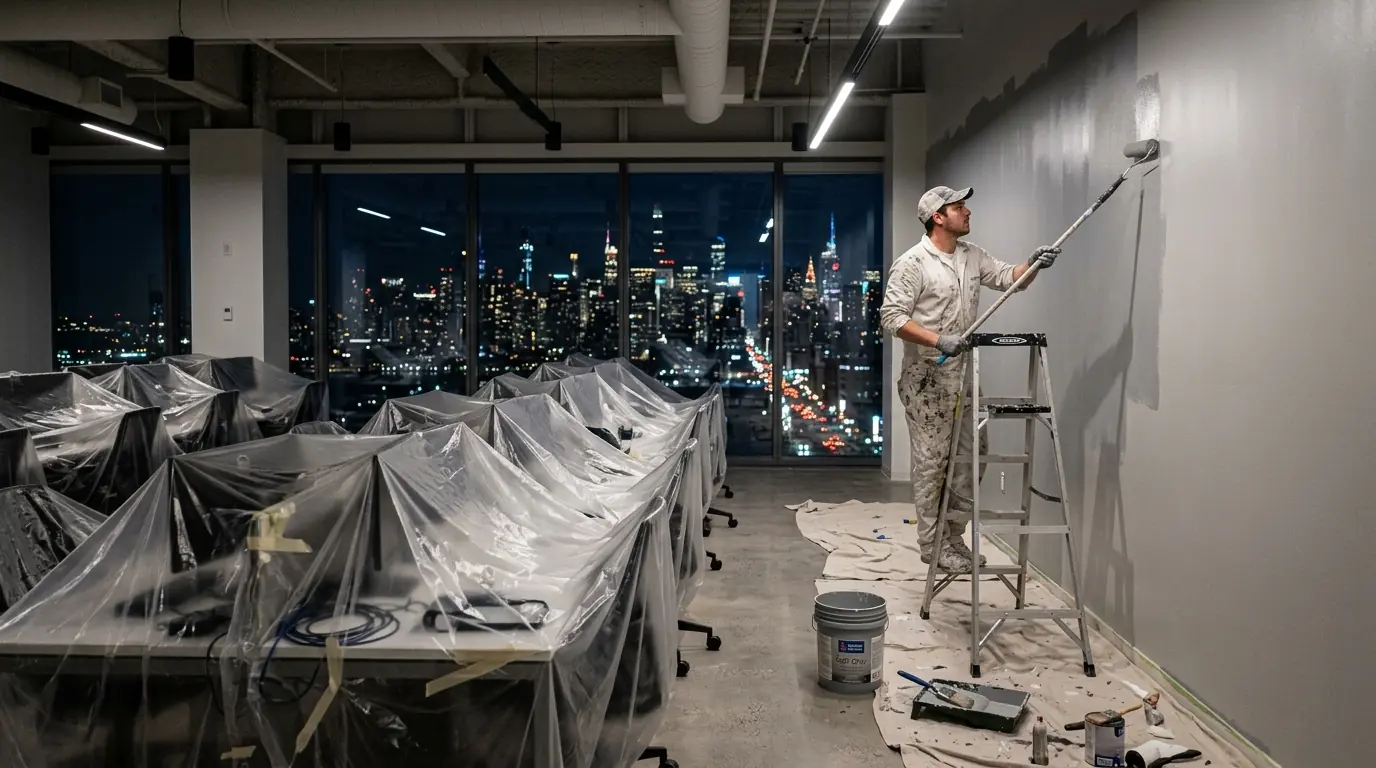
Commercial interior painting in Atlanta usually runs after hours: crews start when the office, clinic or dining room closes, work in zones so each area reopens the next morning, and use low-odor, scrubbable coatings that are dry before staff arrive. We walk the space first, map the zones and hand you a written schedule with the quote.
Updated September 2026
How a commercial repaint works when the business stays open
Most commercial calls come from a property manager or an owner who needs walls refreshed between leases, before an inspection, or because scuffed corridors are starting to hurt first impressions. The painting itself is familiar work. What changes is the planning: which rooms can be closed and when, where the crew stages ladders and materials, and how the space looks at 7 a.m. when people walk back in.
We break the space into zones that can be finished and cleaned in one shift, choose coatings for the traffic each zone gets, and protect floors, fixtures and equipment with the same care as a home. Corridors and break rooms get washable finishes, exam rooms and restrooms get coatings that stand up to disinfectant wipes, and ceilings stay flat so light fixtures do not show every roller mark.
What a commercial interior quote from us covers
- Walk-through during business hours
- Zone map and written schedule
- Coating spec per room type
- Floor, fixture and equipment protection
- Drywall and corner repair
- Stain blocking and spot priming
- Two finish coats on walls
- Doors and frames in enamel
- Nightly cleanup and reopening check
What drives the price of a commercial interior
Commercial work is priced from the walk-through, and the schedule matters as much as the square footage.
- Paintable area. Wall and ceiling square footage, plus the number of doors and frames.
- After-hours work. Night and weekend shifts cost more than daytime work in an empty space.
- Zones and phasing. More zones means more setup and cleanup cycles, even when total area is the same.
- Coating type. Scrubbable enamels and specialty coatings cost more per gallon than standard wall paint.
- Ceiling height. Open ceilings, high lobbies and exposed ductwork need lifts or scaffolding.
- Furniture and equipment. Moving, covering and resetting desks, shelving and fixtures adds labor.
- Surface repair. Drywall patching, corner bead repair and stain blocking come before paint.
Standard wall paint or scrubbable enamel
| Factor | Standard acrylic eggshell | Scrubbable enamel |
|---|---|---|
| Best for | Offices, conference rooms, low-traffic walls | Exam rooms, restrooms, kitchens, corridors |
| Cleaning | Gentle washing | Repeated disinfectant wiping |
| Sheen | Low, hides wall texture | Satin or semi-gloss, shows texture more |
| Material cost | Lower | Higher per gallon |
Office and medical suites
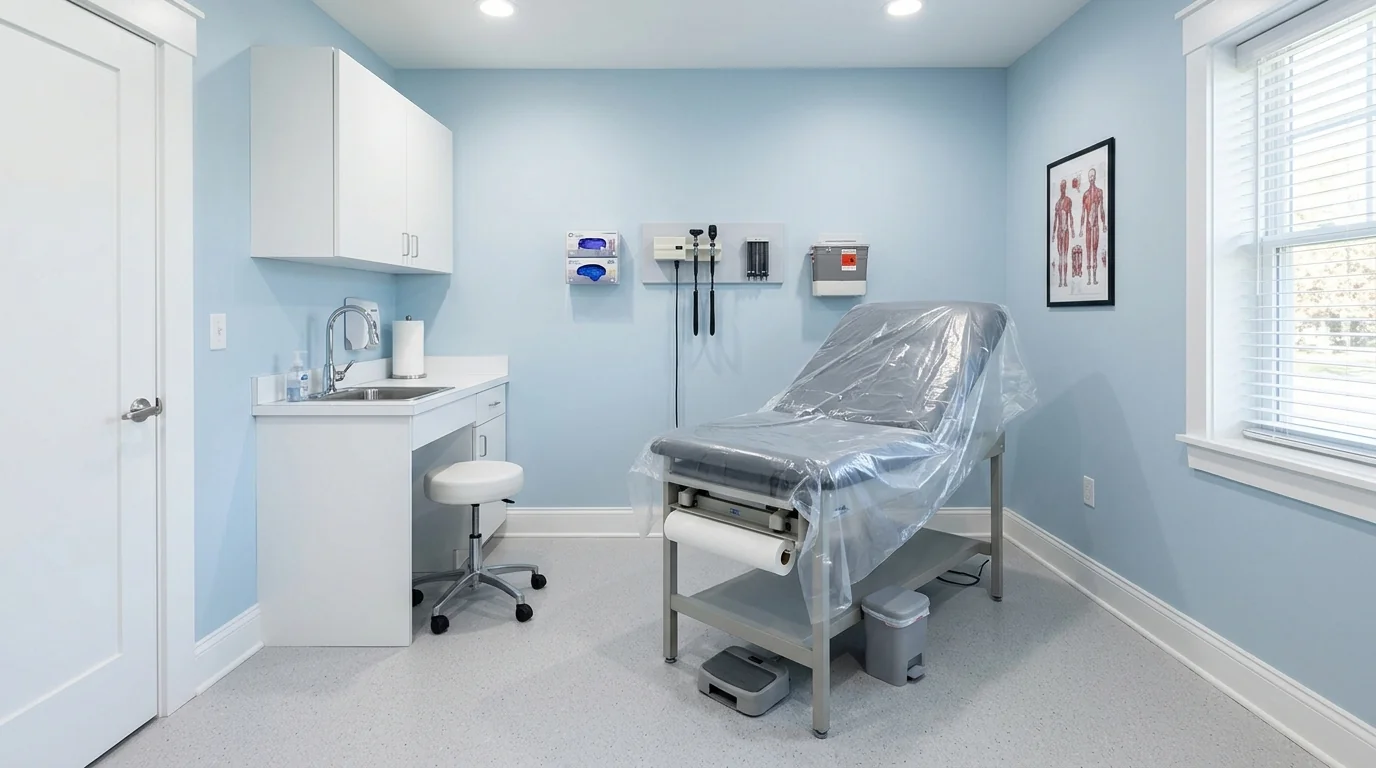
Offices and clinics are mostly walls, doors and frames in constant use. Hallways take hand marks and cart scrapes, so they get an eggshell or satin finish that washes. Exam rooms and procedure rooms are wiped with disinfectant every day, which breaks down flat paint quickly, so those walls get a scrubbable enamel rated for repeated cleaning. We paint around desks and cabinetry that cannot move, cover computers and equipment in place, and keep one route through the suite clear so after-hours staff or cleaners can still get through. Doors and frames are done last in each zone so they cure overnight.
Retail and restaurant interiors
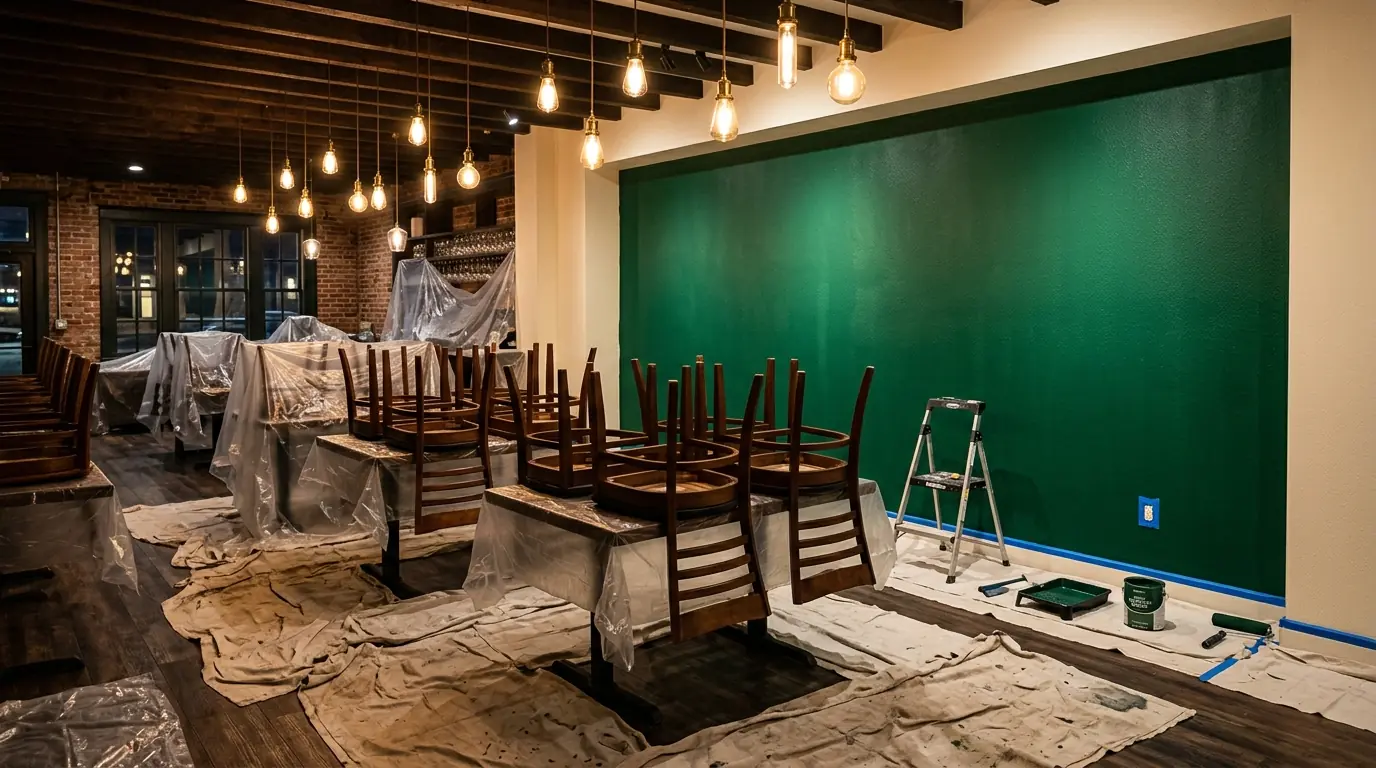
Retail floors and dining rooms are about the look customers see and the hours you cannot lose. Accent walls, brand colors and feature ceilings are common requests, and sample patches go up before the full job so you can see the color under your own store lighting. Kitchens and back-of-house walls need washable, grease-resistant finishes, and dining rooms often get a low-sheen finish that hides texture. Restaurant jobs usually start after the last table turns and finish before prep begins, with every surface wiped down so nothing smells of paint by lunch.
After-hours scheduling
Night and weekend work is how most commercial interiors get painted without lost revenue. The crew arrives as you close, sets up in the first zone, and leaves each area masked or reopened by morning depending on the plan agreed on the walk-through. Low-odor coatings dry fast enough to reopen, and doors are left propped with signs where needed. You get a zone-by-zone schedule in writing, a single contact for the whole job, and a daily note on what was finished, so nobody arrives to a surprise.
What we see on Atlanta homes
One rule catches older commercial spaces here more than people expect. Federal lead-safe work practices apply to child-occupied facilities built before 1978 as well as homes, so a day care center or preschool classroom in an older Atlanta strip center falls under the same requirements as a pre-1978 house once more than 6 square feet of painted surface per room is disturbed. We ask the building's age on the first call, because that decides how prep is set up before any sanding starts.
From walk-through to reopening
- 1
Walk-through
We see the space during business hours so we know what has to stay open and what can close.
- 2
Zone plan and schedule
The space is split into zones that can be finished in one shift, with dates in writing.
- 3
Coating selection
Finishes are matched to traffic, cleaning routines and the look you want.
- 4
Protection
Floors, fixtures, equipment and furniture covered or moved and reset.
- 5
Repair and prime
Holes, dents and stains fixed and primed so the finish coat reads even.
- 6
Two finish coats
Walls rolled, doors and frames brushed, ceilings sprayed or rolled flat.
- 7
Reopen and walk
Each zone cleaned and reopened on schedule; a final walk with you at the end.
Questions about commercial interior painting in Atlanta
Some areas can, but most commercial interiors are painted after hours so staff and customers are not working around ladders and wet walls.
Low-odor coatings, fans and a cleaning pass before reopening keep the smell to a minimum by the time you arrive.
Scrubbable enamel on walls that are wiped with disinfectant, washable eggshell in corridors, and flat on ceilings.
Yes. We coordinate with building management on access, elevator use, parking and after-hours security.
A suite of a few thousand square feet is often two or three night shifts, depending on zones and repairs.
Yes. Storefronts, strip centers and metal buildings are covered on our commercial exterior page.