Staining cedar siding in Atlanta means washing off mildew and gray fibers, brightening the wood so the stain absorbs evenly, letting it dry for about two days, and applying a penetrating stain matched to the look you want. Semi-transparent stains show the grain and need recoating every few years; solid stains hide weathering and last longer but form a film.
Updated September 2026
Why cedar needs stain rather than paint
Cedar is naturally rot-resistant, but sun turns its surface gray and humidity grows mildew in its grain. Paint forms a film that can trap moisture in the wood and peel, while penetrating stain soaks in, protects the surface and wears away gradually, which makes recoating easier.
Restaining cedar is mostly a cleaning job. The weathered layer has to come off, the wood has to be brightened to a consistent color, and the siding has to be dry. Stain applied over gray, dirty cedar looks blotchy and fails early; stain applied over clean, bright cedar looks rich and even.
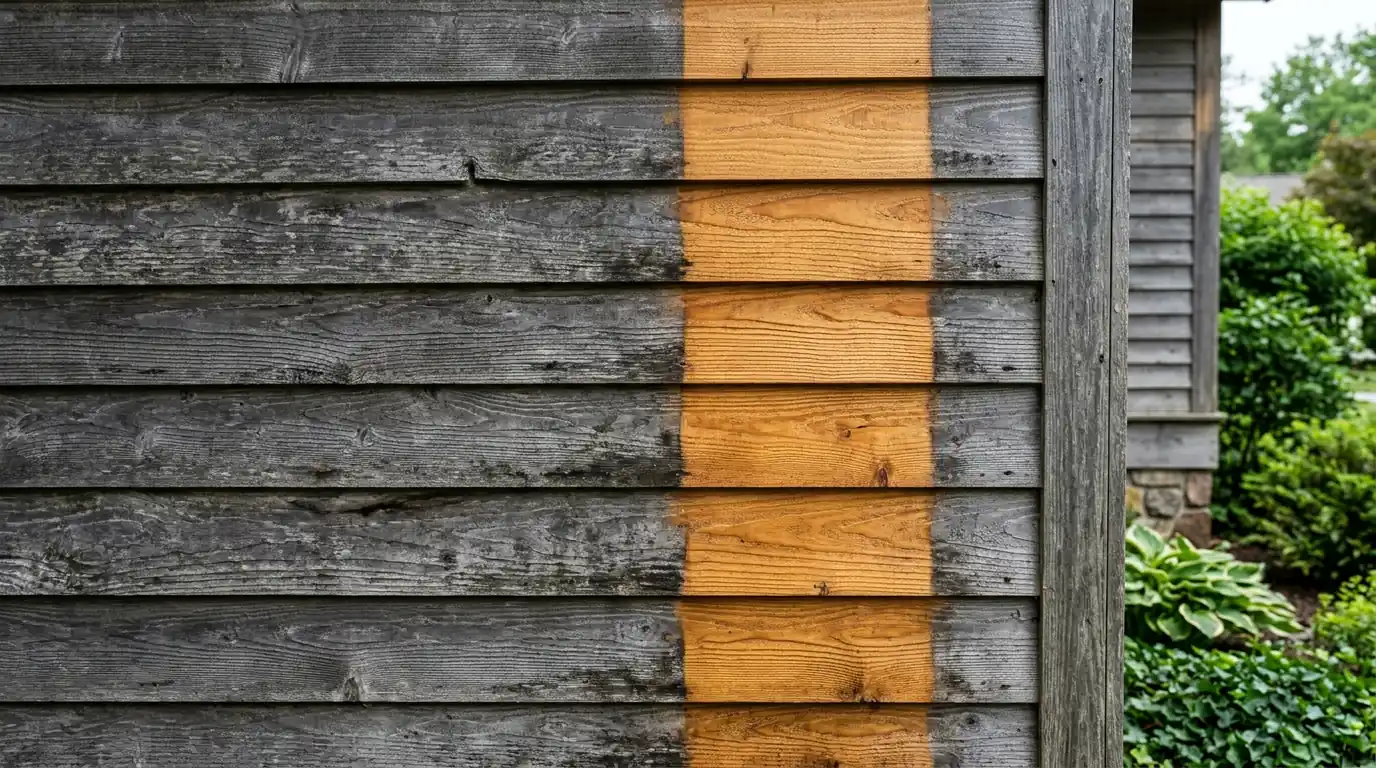
Cedar lap siding staining
Lap siding is washed with a cleaner that lifts mildew and gray fibers, brightened with an oxalic acid product to even out the color, and left to dry. Stain is then sprayed or brushed and back-brushed into each course, working along the full length of a board to avoid lap marks. Semi-transparent stains let the grain show and suit well-kept siding; solid stains even out patchy, repaired or older siding. Knots and bare end grain get extra attention because they soak up stain and water fastest.
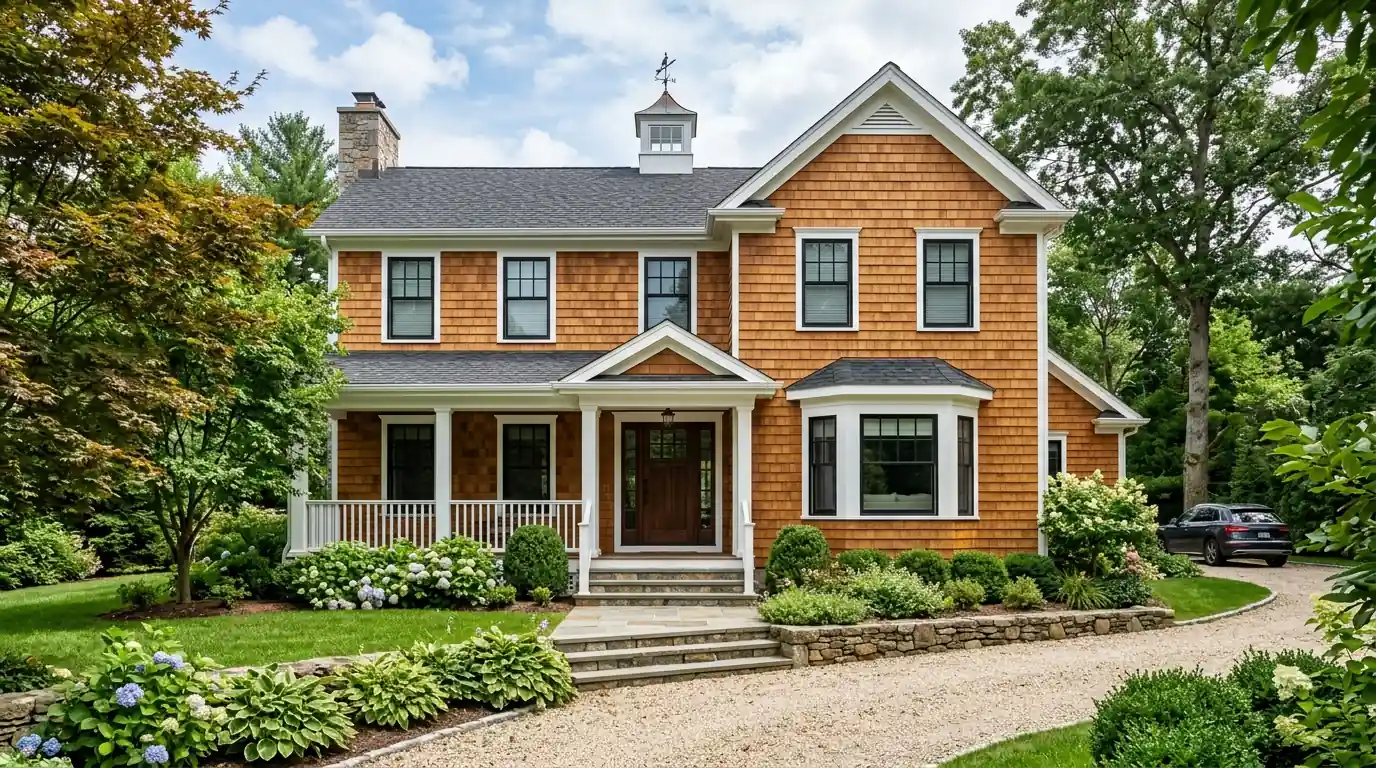
Cedar shake and shingle siding
Shakes and shingles have rough, uneven surfaces and hundreds of overlaps where water and mildew collect. They are cleaned gently, since high pressure splits shakes and forces water behind them, then brightened and dried. Stain is sprayed and back-brushed so it reaches the butt ends and the gaps between shingles. Split, cupped or missing shakes are replaced first. Shake gables and dormers are common on older homes and take more careful ladder work than lap siding. Corner boards and trim around shake walls are stained or painted to match so the finished wall reads as one surface.
Board and batten and T1-11
Board-and-batten and T1-11 plywood siding hold water in their vertical grooves and at the bottom edges, where rot usually starts. We probe the bottom of each panel, replace soft sections, seal the edges and prime any bare plywood before staining. T1-11 is often better finished with a solid stain because its face veneer weathers unevenly. Batten strips are fastened back tight where they have pulled away so water cannot run behind them. The bottom edges of panels sit above soil, mulch and roof lines so they can dry, and we point out any spot where they do not.
Signs cedar is due for stain
- Silver-gray color The wood surface has weathered and lost its protection.
- Black spotting Mildew growing in the grain, usually on shaded walls.
- Water soaking in Rain darkens the wood instead of beading off.
- Split shakes Cracked or curling shakes on sunny walls.
- Peeling film A solid stain or paint lifting in sheets.
What we see on Atlanta homes
Cedar shows up most on the older master-planned houses in Peachtree Corners, where the original 1968 to 1985 homes were built with cedar shake and T1-11 that are now well past their original service life. On those homes, the south and west walls usually look worst first because sun breaks the finish down faster there, so we check those elevations for split shakes and soft panels before quoting a restain.
What changes the price of cedar staining
Cedar staining is priced by siding area and the condition of the wood.
- Siding area. Square footage of cedar in scope, including gables.
- Siding type. Shakes take more time than lap siding because of their texture.
- Condition. Heavy graying and mildew need more cleaning and brightening.
- Repairs. Split shakes, soft T1-11 and loose battens replaced first.
- Old film. Removing a failing solid stain or paint adds stripping.
- Stain type. Solid stains need more even coverage than semi-transparent.
- Height. Second-story walls and gables need ladders or lifts.
How cedar gets restained
- 1
Inspect
Probe for rot, check old stain type and note split or missing shakes.
- 2
Repair
Replace damaged boards and shakes; fasten loose battens.
- 3
Clean
Gentle wash with a cleaner that removes mildew and gray fibers.
- 4
Brighten
Oxalic acid brightener to even the wood color.
- 5
Dry
About two dry days before stain.
- 6
Stain
Sprayed and back-brushed along each board or course.
- 7
Walk
Every wall checked with you in daylight.
Questions about cedar siding and shake staining in Atlanta
Semi-transparent stains every few years; solid stains last longer. Sunny walls need it sooner.
It can, but paint can trap moisture and peel. Stain is usually the better choice.
Cleaning and brightening remove most graying; solid stain hides what remains.
Yes, split or missing shakes are replaced before staining.
Usually. We test on a small area first to confirm the match.
Yes. See our deck staining and fence staining pages.