By Conrad Redmond, Painting Guides Editor. Updated September 2026
To choose exterior paint colors in Atlanta, start with the fixed colors on the house, the roof, brick and stone, and pick a body, trim and accent that work with them. Test large samples on sunny and shaded walls, remember that red clay and pollen show on very light and very dark lower walls, and check HOA or historic district rules before you commit.
Start with what is not changing
Every exterior already has colors you will not repaint: the roof, the brick or stone, the gutters if they are staying, sometimes the windows. The body color has to sit comfortably with all of them. A warm brown roof pulls toward warm grays, greiges and creams; a cool gray or black roof leaves more room for cool whites and blue-grays.
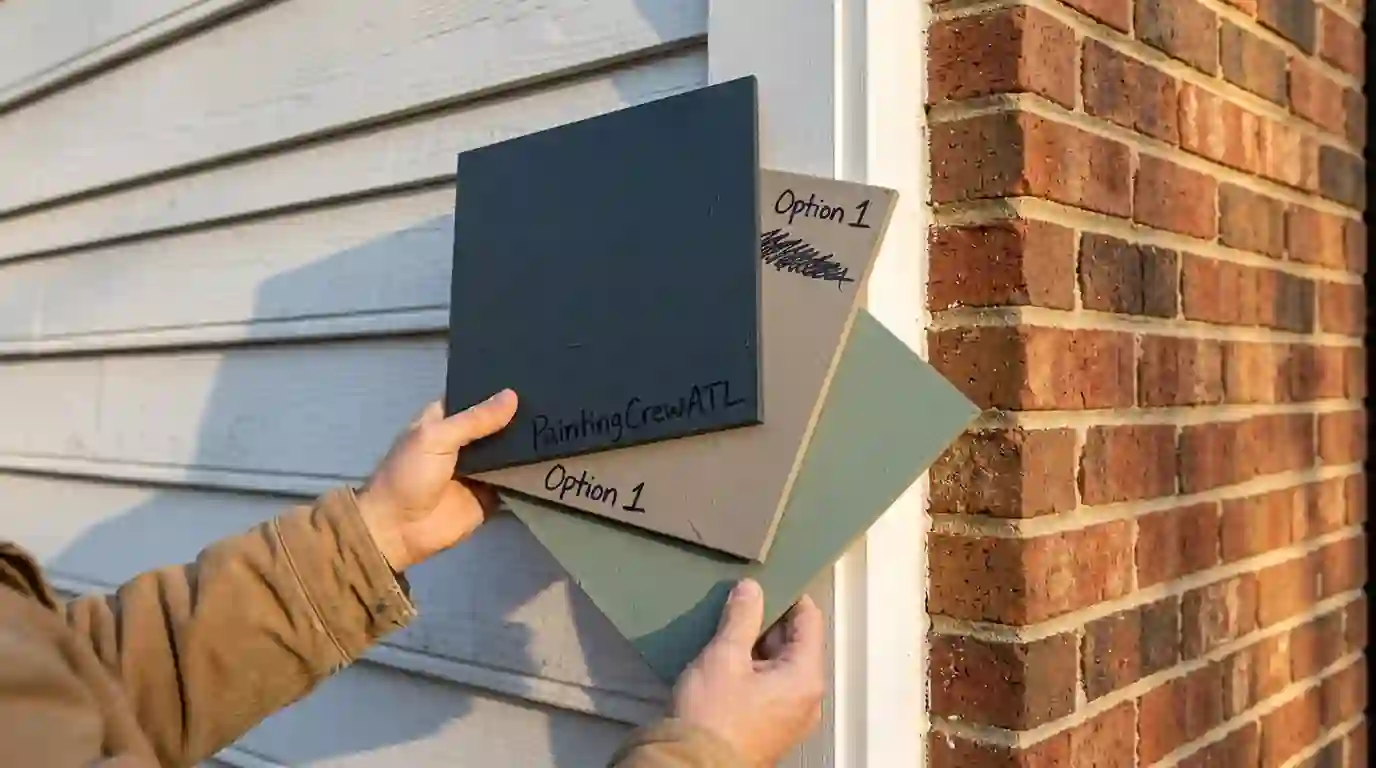
Brick is the strongest fixed color on many Atlanta houses. Red-orange brick usually looks best with trim colors drawn from its mortar or its darker bricks, rather than a stark white that makes the brick look orange.
Body, trim and accent
Most schemes have three parts. The body color covers the siding and sets the overall tone. The trim color outlines windows, fascia and corners. The accent goes on the front door and sometimes the shutters. A useful rule is to keep two of the three quiet and let one carry the character, often the front door.
- Body: the largest area, usually a mid-tone or soft light color.
- Trim: a clear contrast to the body, often a white or a deep shade.
- Accent: the front door and shutters, where a bolder color works.
- Ceilings of porches: a soft pale color that keeps the porch bright.
Atlanta light, clay and pollen
Strong sun on south and west walls bleaches colors and makes them look lighter than the chip; shaded north walls make the same color look darker and cooler. That is why samples go on more than one side of the house.
Georgia red clay splashes up onto the lowest courses of siding in every storm, and pine pollen coats everything in spring. Very light colors show both quickly, and very dark colors show pollen. A mid-tone body with a slightly darker lower trim or skirt can hide the worst of it between washes.
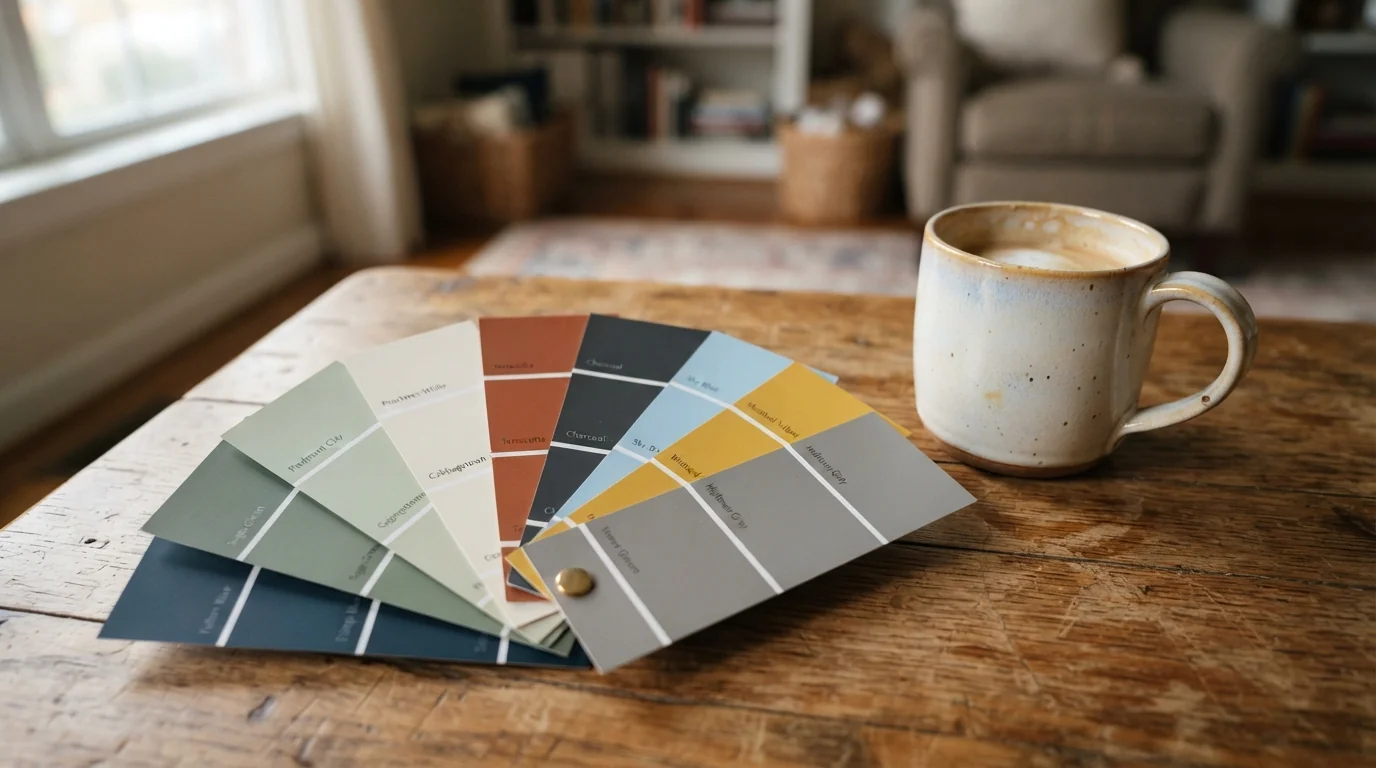
Want to see colors on your own siding? We bring sample boards and test them on your sunny and shaded walls.
Call (470) 741-8134Test big, in place
Color chips are too small to judge a whole wall. Paint sample boards at least two feet square, hold them against the siding on a sunny and a shaded side, and look at them in the morning, at midday and in the evening. Put the trim sample right next to the body sample, since contrast is what makes a scheme work.
Our color consultation does exactly this on site, with boards made in the paint line that will be used.
HOA and historic district rules
Many Atlanta-area subdivisions require HOA approval for exterior colors, and some city neighborhoods sit in local historic districts with their own review. Rules differ by district, so check before you choose: for example, Inman Park's regulations say repainting does not require a certificate, while other districts review more changes.
If you live in a district, our guide to painting in an Atlanta historic district explains what to check before work starts.
Questions readers ask
Mid-tone colors on the lower walls, or a slightly darker skirt color, show clay splash less than very light or very dark paint.
Not always. A trim color drawn from the mortar or darker bricks often looks better than stark white.
At least two feet square, placed on both sunny and shaded walls.
Possibly. Many HOAs and some historic districts review color changes, so check first.
Yes. The body color should work with the roof, since the roof is not changing.